STATEMENT FROM THE OFFICE OF GLOBAL COORDINATION
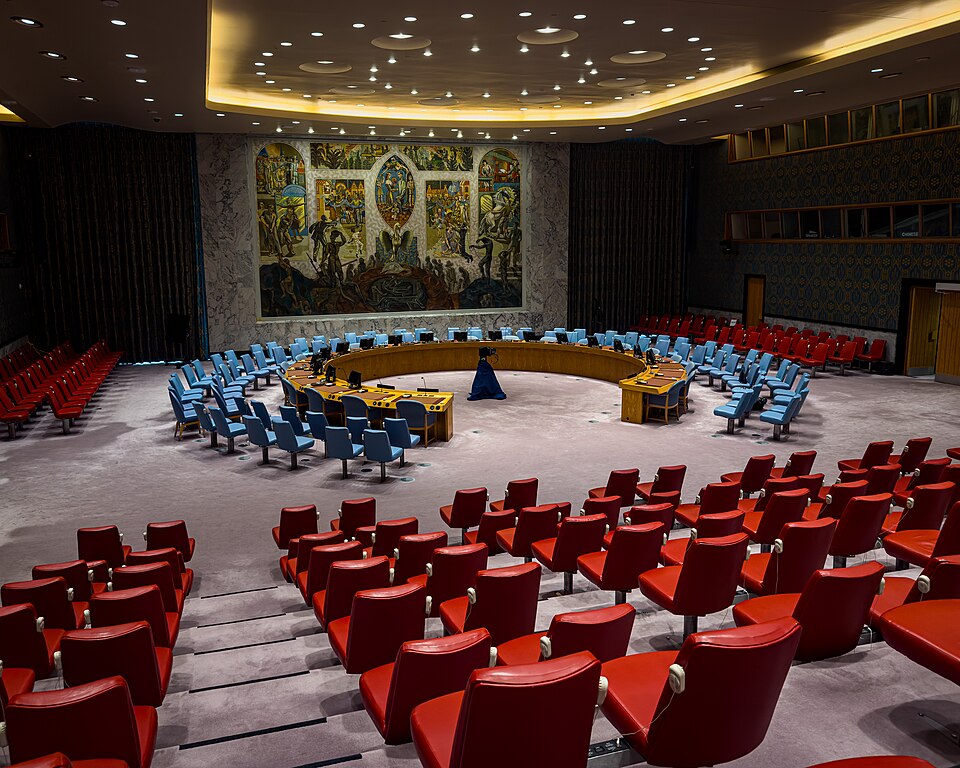
Following notification that the United States Department of Justice intends to pursue criminal charges against former Cuban leader Raúl Castro in connection with events dating to 1996, an emergency session of the UN Security Council has been convened. The session is scheduled to begin immediately. Simultaneous emergency briefings are being held in capitals across Europe, Asia, and the Pacific, with preliminary estimates suggesting round-the-clock media coverage will continue through at least the end of the fiscal quarter.
The indictment, expected within the coming week, concerns Cuba’s downing of two civilian aircraft three decades ago. While no immediate military threat has been identified, and the defendant has not been in power for sixteen years, officials have characterised the timing of the prosecution as potentially destabilising to regional equilibrium.
A spokesperson for the European Commission released a statement this morning indicating that the bloc is “monitoring developments closely” and has requested an emergency meeting of its foreign affairs council. The meeting was scheduled for 4 a.m. local time to accommodate simultaneous sessions in Washington, Beijing, and Moscow. Initial briefing materials, totalling 847 pages, have been distributed to all member states. A working group on “Implications for Transatlantic Relations” has already been established, with a preliminary report due by Friday.
The Russian Foreign Ministry issued a statement noting that “unilateral legal actions of this nature” represented a concerning precedent. China’s permanent representative to the UN described the indictment as “a matter of considerable importance requiring careful multilateral deliberation.” Brazil has called for a special session of the Inter-American Commission on Human Rights, though the commission does not typically convene on Sundays. An exception has been made.
In Washington, the State Department released a 12-point framework outlining how the indictment aligns with existing foreign policy objectives. The framework clarifies that the prosecution is “entirely separate from” ongoing diplomatic engagement with Cuba, while simultaneously noting that “future relations may be affected by developments in this matter.” A spokesperson confirmed that sanctions reviews are not currently planned but added that “all policy tools remain under consideration.”
The Pentagon has announced that military readiness postures in the Caribbean will be “maintained at current levels,” a statement interpreted by some analysts as indicating no immediate change, and by others as suggesting heightened alertness. A defence official explained that the distinction was “procedurally important” and declined further comment.
Stock markets in three continents experienced minor fluctuations following the announcement. Analysts attributed the movements to “uncertainty around potential policy cascades” rather than to any identified economic mechanism. Futures trading in agricultural commodities has increased by 3.2 percent, though traders characterised this as unrelated speculation.
The International Criminal Court issued a statement noting that the case falls outside its jurisdiction, but that it would “monitor developments and remain available for consultation.” The court’s prosecutor has convened an internal working group to assess whether any precedential issues might arise from the prosecution, though no formal action is anticipated.
Meanwhile, the office of the UN Secretary-General announced that the Secretary-General would deliver remarks on the situation “in due course.” A spokesperson indicated that remarks would occur “after appropriate consultations” and that the timing would be “determined by operational necessity.” No date has been set.
Media outlets have begun implementing 24-hour coverage protocols. CNN has established a dedicated desk for “Castro Indictment Developments.” The BBC has assembled a panel of three former diplomats to discuss the implications for international law. MSNBC has invited four separate guests to explain why the indictment represents either a triumph of justice or a dangerous escalation, depending on their institutional affiliation.
The White House confirmed that the President has been briefed on the matter and remains “fully informed and engaged.” No statement from the President is currently planned, though advisors have not ruled out a statement at some future point. A spokesperson noted that the administration’s position on the indictment “remains under development” and would be clarified “as circumstances warrant.”
Academic institutions have begun organising symposia. Three universities announced that they would host panels on “Retroactive Prosecution and Geopolitical Stability” within the next six months. One institution has already published a call for papers.
The International Law Commission has requested that its secretariat prepare a memo on whether the case raises questions regarding the temporal application of criminal statutes. The memo is due in three weeks.
At present, no formal response has been received from the Cuban government, though a spokesperson indicated that a statement would be issued “at an appropriate moment.” Observers have noted that this moment has not yet arrived.
All emergency meetings remain scheduled. Media coverage will continue. The framework for understanding the implications of the indictment is being developed in real time across multiple institutional channels. Officials stress that this represents a normal application of existing procedures and should not be interpreted as indicating any departure from established diplomatic practice.
Updates will be provided as they become available.