MEMORANDUM FOR DISTRIBUTION TO: Editorial Staff FROM: Communications & Stakeholder Management DATE: May 12, 2026 RE: Marine Life Impact Assessment — Shipping Route Optimisation
Following a comprehensive review of global maritime patterns since 2023, we wish to provide context regarding certain collateral environmental outcomes that have emerged from the rerouting of commercial vessel traffic away from the Strait of Hormuz.
Since the escalation of regional hostilities, approximately 90 percent of international shipping has been redirected around the Cape of Good Hope. This represents a logistical adjustment of some 4,000 additional nautical miles per transit. While this routing modification has successfully reduced exposure to active conflict zones, marine biologists have flagged what they characterise as “significant population stress” among cetacean species in the newly trafficked corridors.
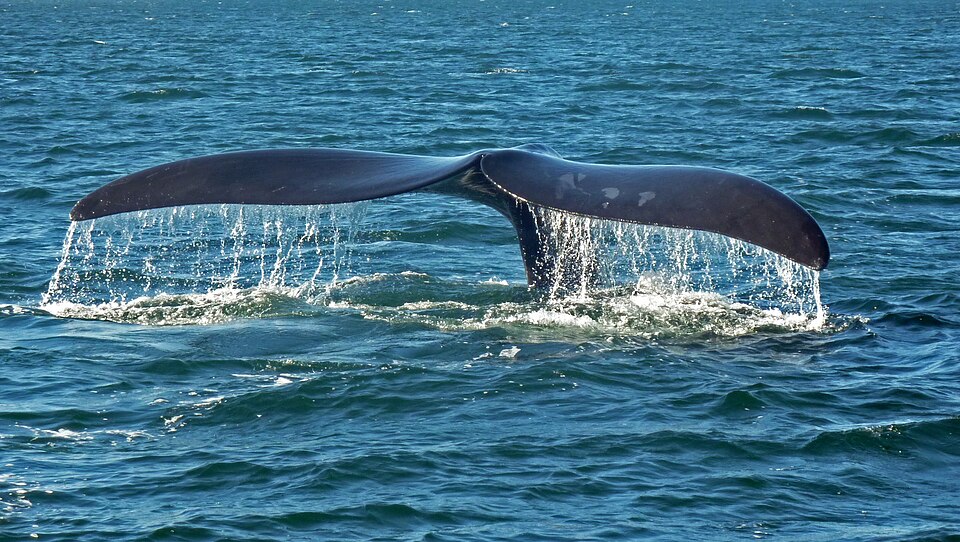
The mechanism is straightforward. Whales inhabiting the waters off southern Africa, previously exposed to moderate commercial shipping volumes, now encounter traffic densities that have increased substantially. The cumulative acoustic disturbance from enlarged vessel convoys is disrupting migration patterns, breeding behaviours, and feeding cycles among endangered populations including fin whales and blue whales. Scientists estimate that the expanded shipping corridor has created a new zone of chronic noise pollution spanning several hundred thousand square kilometres.
It should be noted that this outcome was not explicitly foreseen in routing optimisation models. The standard cost-benefit analysis conducted by maritime authorities weighed fuel expenditure, transit time, and insurance premiums against geopolitical risk. Marine biodiversity was not a line item in this calculation. This omission was procedurally correct according to established protocols.
The diplomatic context warrants mention. The Strait of Hormuz remains effectively closed to regular commercial traffic, with the International Maritime Organization maintaining a cautionary posture pending resolution of ongoing hostilities. Peace negotiations have stalled. The United States has characterised recent Iranian proposals as “totally unacceptable” and “unbelievably weak.” No substantive details regarding either party’s negotiating position have been released to the public. Oil prices have responded to this uncertainty by increasing. Energy markets appear to have assigned a higher probability to extended closure than to rapid resolution.
Meanwhile, the UK Ministry of Defence has positioned HMS Dragon to potentially join an international mission safeguarding the Strait, contingent on cessation of fighting. The vessel’s deployment timeline remains indefinite.
What we are observing is a layered system of institutional logic. Shipping companies, responding to risk assessments, have rerouted their vessels. Governments, responding to shipping companies and energy markets, have maintained a cautious diplomatic posture. Energy markets, responding to geopolitical uncertainty, have priced in extended supply disruption. And marine ecosystems, responding to increased traffic density, are experiencing measurable population decline.
Each actor in this chain is behaving rationally within their own institutional framework. No single entity has made an explicit decision to harm whale populations. The harm is instead a secondary effect, a remainder, what might be termed a “negative externality” in the language of economics. It is precisely the kind of outcome that tends to emerge when large systems optimise for narrow metrics without accounting for impacts that fall outside their purview.
The irony, should one choose to frame it as such, is instructive. The rerouting was undertaken to avoid loss of human life and property in zones of active conflict. It has succeeded in that narrow objective. Yet it has simultaneously created a new zone of chronic harm to non-human life in waters previously considered safe. The conflict in the Middle East has been successfully exported to the waters off southern Africa, albeit in attenuated form.
Marine conservation groups have submitted technical comments requesting that shipping optimisation models be revised to include biodiversity impact assessments. These submissions are under review by the relevant regulatory bodies. The review process is expected to take 18 to 24 months.
In the interim, shipping traffic continues. Whales continue to experience acoustic disturbance. Negotiations continue to stall. Oil prices continue to fluctuate. Each system operates according to its own logic, indifferent to the others.
This is how the world works now. Conflicts are managed by routing them elsewhere. The elsewhere, in this case, happens to contain several thousand endangered marine mammals. But the routing was procedurally sound. The decision-making framework was appropriate to its context. All established protocols were followed.
The whales were simply not part of the equation.