PRESS RELEASE — WAYMO ANNOUNCES PROACTIVE FLEET ASSESSMENT
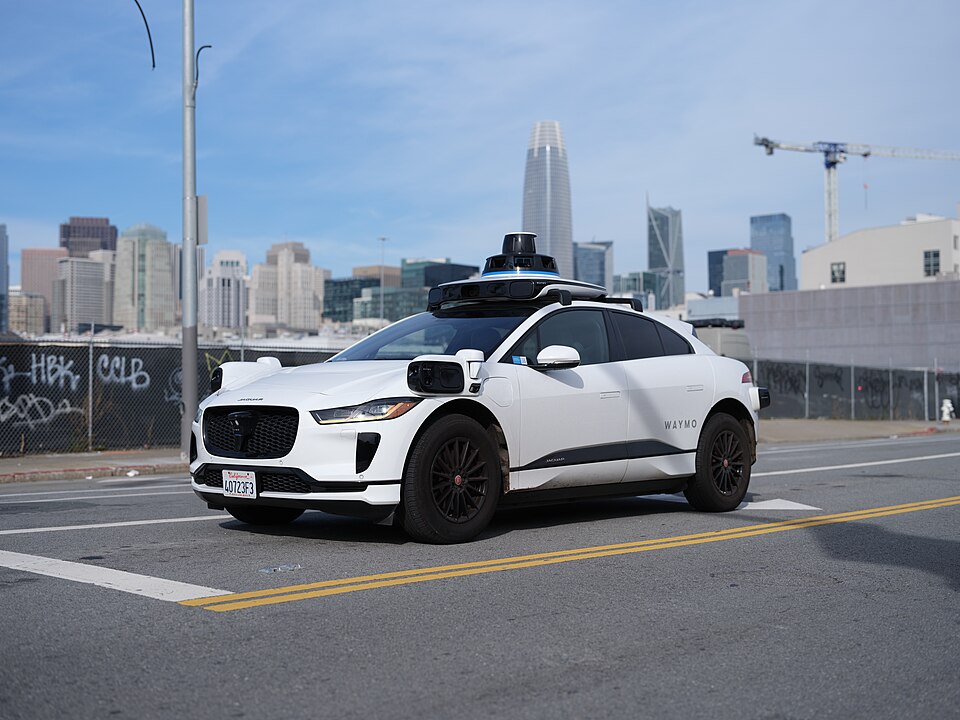
Following a single-vehicle aquatic navigation event on April 20, 2026, Waymo has initiated a voluntary recall of its entire robotaxi fleet to address what the company describes as an “edge case in hydrological response protocols.”
The incident occurred when a Waymo vehicle, operating in autonomous mode on a flooded San Antonio roadway, failed to recognize the distinction between pavement and water. The vehicle proceeded into the creek at standard operational speed, where it remained until recovered by municipal services. No passengers were present during the event, as the vehicle was operating in empty repositioning mode—a detail that Waymo’s communications team has emphasized represents a successful demonstration of the company’s remote monitoring capabilities.
In the weeks following the incident, Waymo’s engineering division conducted a comprehensive review of its decision-making architecture. The assessment identified what engineers have classified as a “sensor interpretation variance” affecting approximately 6,800 vehicles across multiple markets. The variance occurs when water surfaces present optical properties similar to reflective road materials, creating ambiguity in the vehicle’s environmental classification system.
This discovery has prompted significant discussion among transportation regulators, insurance providers, and policy analysts regarding the appropriate scope of autonomous vehicle testing and deployment. The incident raises a fundamental question about the relationship between controlled testing environments and real-world operational conditions—specifically, whether a system validated in dry climates can be considered validated in regions subject to seasonal flooding.
Waymo’s statement indicates that the recall will involve a software update addressing “water body detection sensitivity” and expanded training data for “precipitation-adjacent driving scenarios.” The company has not specified a timeline for fleet restoration but has committed to completing updates within a 30-day window. During this period, customers in affected regions will experience service interruptions.
The broader implications of this event extend beyond Waymo’s operational challenges. The incident has become a focal point for ongoing policy debates about autonomous vehicle certification standards. Regulators in multiple states have begun questioning whether existing validation protocols adequately account for environmental variables—flooding, heavy precipitation, seasonal variations—that occur naturally in many markets where autonomous vehicles are expected to operate.
Insurance industry analysts have noted that the event raises actuarial questions about liability assignment when autonomous systems fail in ways that, while non-catastrophic in this instance, reveal gaps in environmental perception. The voluntary recall itself represents an implicit acknowledgment that the system’s threat model was incomplete.
What distinguishes this incident from previous autonomous vehicle failures is not the failure itself, but rather what it reveals about the relationship between controlled deployment and actual environmental complexity. Waymo’s vehicles have been tested extensively in their target markets, yet a common weather event exposed a blind spot in the system’s perception architecture. This suggests that either the testing regimen failed to adequately represent real-world conditions, or that certain environmental scenarios remain effectively untestable until encountered in production.
For transportation policy, the creek incident serves as a case study in the limitations of iterative deployment as a validation strategy. The autonomous vehicle industry has generally operated on the assumption that continuous real-world operation, paired with rapid software updates, can serve as an acceptable substitute for comprehensive pre-deployment testing. This incident demonstrates the costs of that approach when the failure mode involves physical asset loss and service disruption.
Government agencies overseeing autonomous vehicle programs have begun requesting detailed documentation of Waymo’s testing protocols, particularly regarding environmental edge cases. Several states have proposed mandatory reporting requirements for any incident—including those without injuries—that reveal previously unknown failure modes. The effect would be to transform the current voluntary disclosure system into a more formal regulatory framework.
Waymo’s response has emphasized the company’s commitment to safety and its proactive approach to addressing identified issues. The recall itself is positioned as evidence of responsible corporate governance rather than evidence of inadequate initial validation. This framing reflects the broader industry argument that autonomous systems can be continuously improved through operational feedback, and that the ability to deploy such improvements rapidly is itself a safety feature.
However, the creek incident has also prompted reflection among transportation policy experts about whether the current regulatory framework adequately captures the difference between a system that fails gracefully under novel conditions and a system that is fundamentally robust. A vehicle that enters water is not a vehicle that has merely encountered an unexpected scenario—it is a vehicle whose fundamental threat model did not account for a common environmental condition.
As Waymo deploys the updated software and gradually restores service, the incident will likely remain a reference point in ongoing discussions about autonomous vehicle policy. It represents neither a catastrophic failure nor a minor software bug, but rather a revealing gap between the assumptions embedded in a deployed system and the actual complexity of the environments in which that system operates.
The creek, in this sense, was not an obstacle that the vehicle failed to navigate. It was an obstacle that the vehicle failed to recognize as an obstacle at all.