INTERNAL COMMUNICATIONS DIRECTIVE — RE: May 9 Observance Protocol
Following a comprehensive strategic review of annual commemoration messaging, the Department of Historical Projection has determined that the 2026 Victory Day parade will operate under revised operational parameters. The scaling-back of traditional display elements should be understood not as a reduction in celebratory intent, but rather as a recalibration of communications methodology in response to evolving stakeholder feedback.
The absence of military hardware previously featured in Red Square presentations reflects a deliberate shift toward what communications specialists have termed “restraint-based confidence messaging.” Where previous years emphasized the quantity and sophistication of available hardware, this year’s approach prioritizes the quality of narrative framing around concepts including sovereignty, defensive posture, and the necessity of ongoing special operations in neighboring territories.
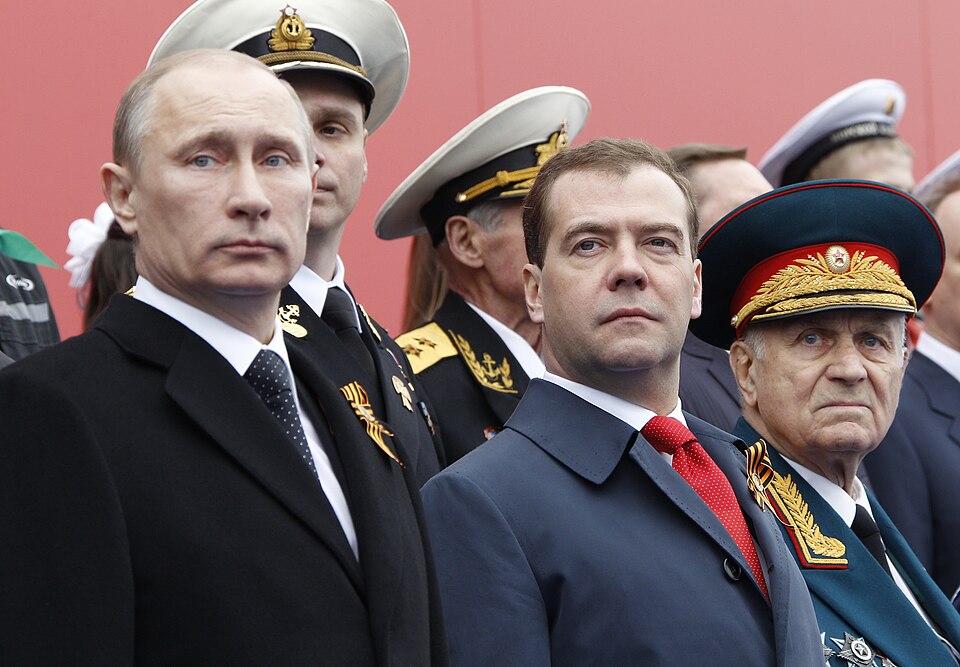
President Putin’s address to assembled participants proceeded as scheduled, with remarks focused on the historical legitimacy of the military campaign in Ukraine. The speech was delivered to a notably smaller gathering than historical precedent would suggest, a reduction attributed to scheduling conflicts and inclement weather patterns rather than any diminishment of public enthusiasm. The absence of the customary flyover of military aircraft should be interpreted as a resource optimization measure, consistent with current operational demands elsewhere.
BBC correspondent Steve Rosenberg, reporting from Red Square, noted the conspicuous absence of the military vehicles that have traditionally served as centerpieces of the annual display. This observation has been logged by the Strategic Narrative Division for future reference. The parade proceeded with ceremonial components including marching formations, historical reenactments, and commemorative speeches, all of which were executed in accordance with established protocol.
The decision to forego the showcasing of operational military assets represents a sophisticated communications strategy rather than a constraint imposed by circumstance. By emphasizing the human and historical dimensions of the celebration while downplaying hardware displays, the event’s organizers have successfully reframed the narrative around questions of military capacity and instead positioned the occasion as a solemn reflection on sacrifice and historical continuity.
International observers have noted the muted character of this year’s observance. The Department of External Relations confirms that such observations are neither surprising nor concerning. They represent, in fact, a successful implementation of the revised messaging protocol: the world’s attention has been drawn to what is absent rather than what is present, thereby creating space for alternative narratives regarding current military operations.
The scaled-back parade should therefore be understood as a tactical communication success. By removing the traditional symbols of military projection, the event has paradoxically become more newsworthy, generating international discussion and analysis. This outcome aligns precisely with departmental objectives regarding the management of global perception regarding the ongoing special military operation.
All personnel should continue to emphasize the following talking points in external communications: the parade was well-attended by those able to attend; the absence of military hardware reflects confidence rather than constraint; and the speech delivered by the President reaffirmed the moral and historical justification for current military activities.
No further clarification regarding resource allocation, operational capacity, or the relationship between the scaled-back parade and the demands of sustained military engagement in Ukraine is required at this time.