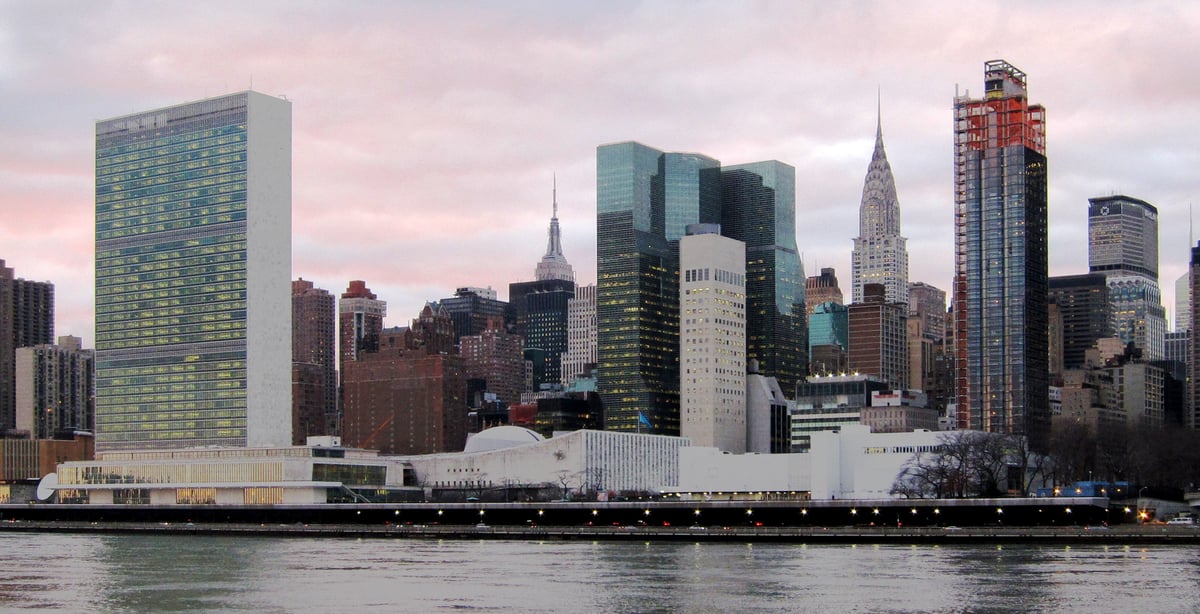
INTERNAL BRIEFING MEMO — UNITED NATIONS CRISIS MANAGEMENT DIVISION DATE: May 30, 2026 CLASSIFICATION: For Institutional Distribution
Following the passage of Ghana’s anti-LGBTQ+ legislation, the international community has entered what several diplomatic bodies are characterising as an unprecedented moment of existential uncertainty regarding the foundational principles upon which the post-war moral order was constructed.
The bill, which criminalises same-sex conduct and related forms of gender non-conformity, has been assessed by the UN Moral Architecture Task Force as constituting a watershed event in global governance. The legislation has triggered what institutional observers describe as a cascading series of procedural responses across multiple governmental and supranational bodies.
The European Union’s Values Alignment Committee has convened an emergency session to determine whether Ghana’s legislative actions represent a direct challenge to the international consensus on ethical universalism. Preliminary findings suggest that the passage of this bill may necessitate a complete recalibration of how the global community conceptualises the relationship between national sovereignty and transnational moral frameworks.
The United States State Department’s Bureau of Normative Projection has issued a statement noting that Ghana’s actions have created what it terms a “significant deviation event” from established protocols around human rights compliance. Internal communications indicate that several working groups are now tasked with determining whether the bill constitutes grounds for initiating formal diplomatic pressure, economic reassessment procedures, or other measures consistent with international best practices in moral enforcement.
Meanwhile, the African Union has begun preliminary discussions regarding whether Ghana’s legislation represents a threat to continental consensus. Sources within the AU Institutional Coherence Division suggest that the bill may require formal adjudication at the next scheduled Assembly meeting, pending completion of ongoing documentation procedures.
What distinguishes this particular legislative development from previous instances of national legal divergence is the perceived directness of its challenge to what multiple international bodies characterise as the settled consensus on human dignity frameworks. The bill’s explicit criminalisation of conduct rather than its approach through indirect regulatory mechanisms has been flagged by several analytical bodies as particularly significant from a symbolic standpoint.
The UN Secretary-General’s office has indicated that preliminary consultations are underway regarding whether the situation warrants escalation to the General Assembly or the Security Council. Institutional precedent suggests that such escalation would be unprecedented, though not without theoretical basis in the Charter framework.
Several NGO networks have begun coordinating advocacy responses, with particular emphasis on documentation and narrative alignment across multiple platforms. These efforts are being characterised by participating organisations as essential to maintaining the coherence of the global human rights architecture.
Meanwhile, the International Criminal Court’s Office of the Prosecutor has received preliminary communications requesting assessment of whether Ghana’s legislation creates potential liability under existing statutes. Legal analysis is ongoing.
The broader institutional landscape suggests that Ghana’s legislative action has created what might be characterised as a clarifying moment regarding the actual mechanisms by which international moral consensus is enforced, maintained, and defended against what various bodies are now describing as fundamental challenges to established norms.
It should be noted that all responses remain procedurally appropriate and consistent with established diplomatic protocols. No extraordinary measures have been authorised at this time, pending completion of ongoing assessment procedures.