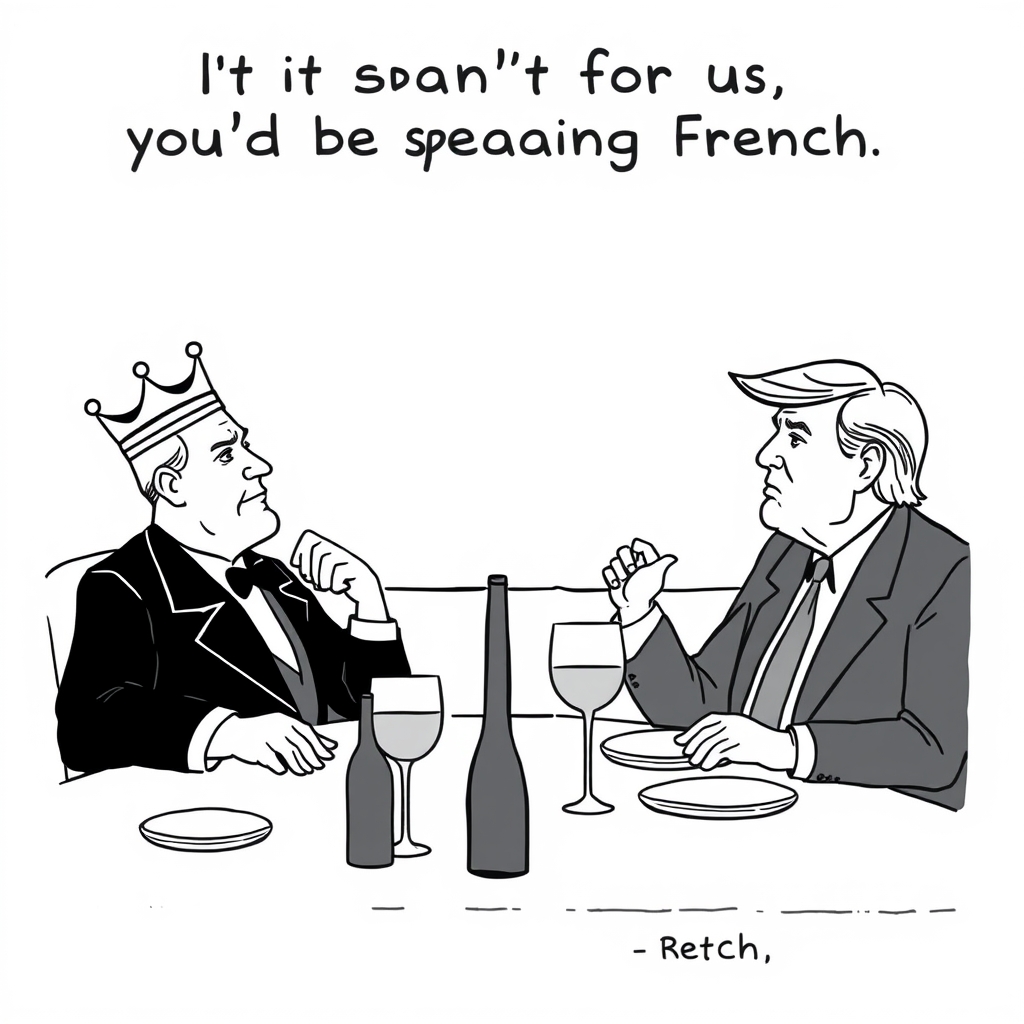
In an unprecedented diplomatic engagement disguised as a state dinner, King Charles III and former President Donald Trump engaged in what can only be described as a high-stakes linguistic negotiation, wielding culinary utensils and historical references with the precision of geopolitical strategists.
The evening’s primary diplomatic objective appeared to center on a nuanced discourse regarding linguistic sovereignty, encapsulated by Trump’s provocative assertion that American intervention in historical conflicts had effectively determined the global linguistic landscape. ‘If it wasn’t for us, you’d be speaking French,’ became less of a casual dinner quip and more of a carefully calibrated geopolitical statement, suggesting that linguistic dominance is not merely a matter of communication, but of strategic national achievement.
Diplomatic protocol analysts will undoubtedly parse the subtext of this exchange, recognizing it as a performative demonstration of soft power projection. The dinner table transformed into a metaphorical battlefield where historical narratives were contested through rhetorical maneuvers, each jest a carefully placed diplomatic chess piece.
The state banquet, ostensibly a celebration of transatlantic relations, revealed itself as a nuanced arena of cultural diplomacy. Jokes about language became proxy conversations about historical influence, colonial legacies, and the ongoing negotiation of global power dynamics.
While casual observers might dismiss the exchange as mere dinner banter, seasoned geopolitical strategists will recognize the profound implications of such seemingly lighthearted interactions. Language, after all, has always been a weapon more subtle and enduring than any military instrument.
As dessert was served and diplomatic pleasantries exchanged, one could almost hear the faint echoes of centuries of international relations being recalibrated—one linguistic joke at a time.