INTERAGENCY COORDINATION MEMORANDUM Subject: Maritime Incident Resolution and Strategic Messaging Framework Date: June 2, 2026 Classification: For Official Use Only
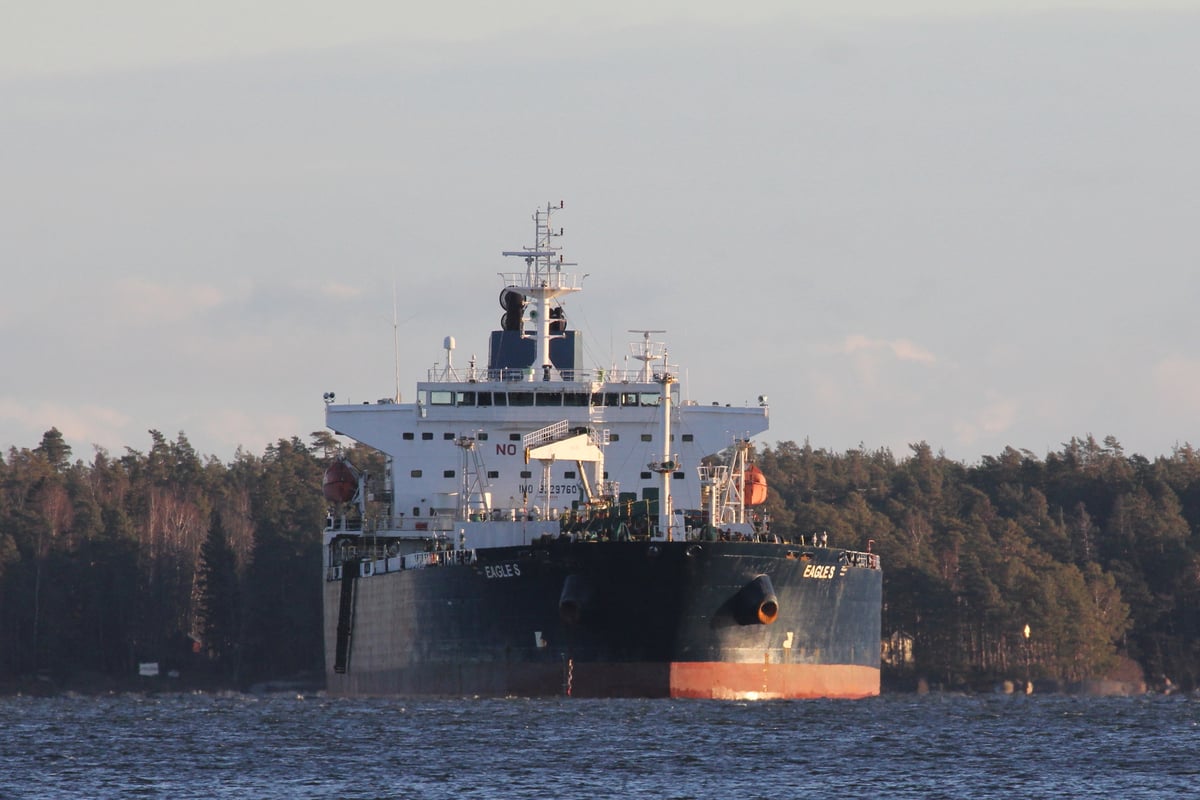
Following the successful engagement of the Iranian-flagged oil tanker identified as Vessel Asset Designation 447-GULF on May 31, 2026, the Department of Defense has issued the following clarification regarding operational parameters and communication protocols.
The vessel in question was targeted after the crew failed to respond to a series of escalating warnings transmitted via established maritime channels. According to post-incident analysis conducted by Naval Operations Command, the engine room sustained damage consistent with precision strike methodology. The tanker’s subsequent immobilization has been classified as a positive operational outcome and represents a measured response to non-compliance with international maritime guidance.
The State Department wishes to emphasize that this action should not be characterized as escalatory. Rather, it reflects a sophisticated application of kinetic communication—a framework whereby military hardware is deployed to convey diplomatic intent when traditional channels prove insufficient. This represents an evolution in conflict resolution theory, wherein the size of the weapon system is proportional to the clarity of the message.
For clarity on operational decision-making: the vessel had been warned repeatedly. The crew did not comply. The engine room was targeted with precision. These facts are not in dispute and have been independently verified by multiple government agencies.
Regarding the broader strategic context, it should be noted that oil tankers represent a unique category of diplomatic asset. Unlike conventional military targets, they carry economic weight, symbolic significance, and international attention simultaneously. Disabling a single engine room thus accomplishes multiple objectives: it demonstrates capability, signals resolve, and disrupts supply chains—all without requiring a formal declaration of hostilities or the deployment of ground forces.
The incident has generated considerable international commentary, much of which has focused on the apparent disproportionality between the vessel’s cargo and the military response. This framing misunderstands the nature of modern statecraft. The tanker was not targeted because it was a tanker. It was targeted because it was a tanker that did not respond to warnings, operated under a flag of concern, and represented a vector for resource transfer to a designated strategic competitor.
Internal communications indicate that the operation has achieved its intended effect. The vessel is currently immobilized in international waters. The crew is safe, having been evacuated before the strike. The cargo remains in the vessel, creating a floating asset of considerable leverage value. Future negotiations regarding the tanker’s status and disposition will occur within a framework where the United States has already demonstrated both capability and willingness to employ it.
The Defense Department has prepared a series of talking points for use by spokespersons across government agencies. Key messages include: (1) the warnings were clear and repeated; (2) the response was proportionate to the non-compliance; (3) no civilians were targeted; (4) this represents standard maritime enforcement protocol; (5) the tanker’s engine room was the target of choice because damage to other vessel systems could have created environmental hazard. This last point is particularly important for messaging purposes, as it allows the operation to be framed as environmentally conscious military action.
Regarding the broader question of whether this represents an effective diplomatic strategy: the metrics are mixed. On one hand, the tanker is no longer moving. On the other hand, the tanker is still there, still carrying cargo, and still the subject of international scrutiny. The operation has created a situation wherein the United States must now explain why it has disabled but not seized the vessel, why it has not captured the crew, and what the endpoint of this particular leverage play might be.
The Intelligence Community has noted that similar vessels are currently en route to the region. This suggests that the operation’s deterrent effect may be limited, or that the calculus of risk has been rebalanced by other parties. Additional kinetic communication may be required to reinforce the message established by Vessel Asset Designation 447-GULF.
For media inquiries, please direct all questions to the Strategic Communications Office. Spokespersons should maintain the position that this was a routine maritime enforcement action that happened to involve a precision strike on an engine room. The distinction between enforcement and military action is largely semantic and should not be emphasized in public statements.
The State Department will continue diplomatic engagement through established channels. The Defense Department will continue monitoring maritime traffic in the region. The National Security Council will convene follow-up meetings to assess whether additional tankers require similar communication efforts.
This memorandum concludes the official summary of the incident. All references to the operation should employ the term ‘maritime enforcement action’ rather than ‘military strike’ in official communications.