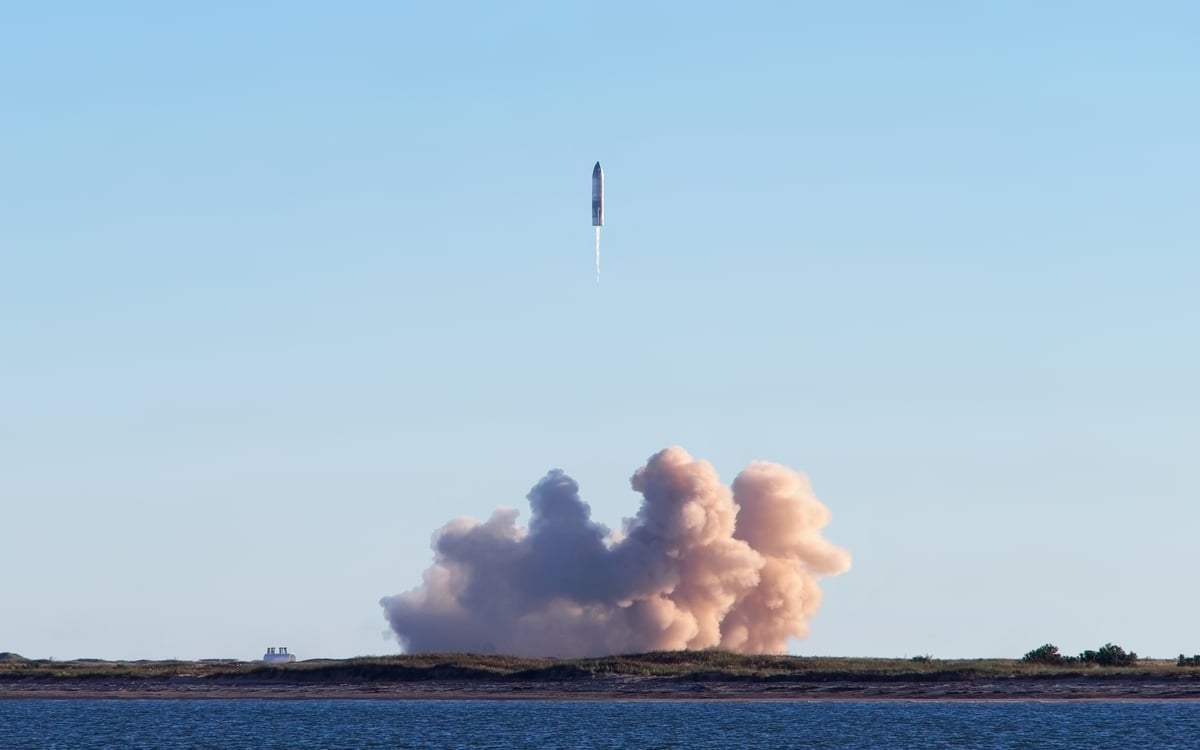
INTERNAL MEMO — RE: STARSHIP V3 SPLASHDOWN EVENT AND ASSOCIATED COMMUNICATIONS STRATEGY
Date: May 23, 2026 From: Strategic Narratives Division To: All Personnel Classification: Standard Release
Following the successful completion of Flight Test 47 on May 21, 2026, we wish to provide clarity on recent developments and establish the appropriate framework for discussing this milestone.
The Starship V3 vehicle completed its designated trajectory and executed a controlled energy-release event upon ocean interface near the Indian Ocean recovery zone. This represents the culmination of three years of iterative engineering and marks a significant advancement in what we are now formally classifying as “terminal velocity reintegration protocols.”
Historically, space exploration has relied on a linear progression of objectives: launch, orbit, return, recovery. The SpaceX engineering team has identified an opportunity to compress this sequence. By eliminating the recovery phase—a process that has consumed substantial capital and personnel hours since the Apollo program—we achieve what our analysis describes as “efficiency through simplification.”
The vehicle’s structural integrity remained intact through re-entry, a fact that warrants emphasis. Subsequent to atmospheric contact, the airframe underwent rapid molecular reconfiguration, which our telemetry systems captured in full. This data represents the most comprehensive dataset on uncontrolled descent dynamics we have yet obtained. Previous tests relied on mathematical modeling and simulation. This test provided ground truth.
We must contextualize this achievement within the broader landscape of space program expenditure. Traditional aerospace contractors have long maintained that vehicle recovery represents a core objective of spaceflight. This assumption, while operationally convenient, has never been formally challenged at the executive level. The Starship V3 test challenges this assumption. If vehicles need not be recovered, launch costs per mission can be recalibrated downward in future budget projections.
Our communications team has prepared supplementary materials emphasizing the following points:
-
The event occurred in international waters, in a zone designated as low-traffic. No commercial shipping was affected. The debris field dispersed according to established oceanographic models.
-
The test provided real-time data on material stress, thermal dynamics, and structural failure modes that would have required multiple additional ground tests to replicate. We have effectively compressed a six-month testing schedule into a single flight event.
-
The term “explosion” carries negative connotations in public discourse. Internally, we refer to this as a “rapid unscheduled disassembly” or, more accurately, a “kinetic energy redistribution event.”
-
Elon Musk has publicly stated that this outcome was anticipated. His framing of the event as “planned” rather than “unexpected” has proven instrumental in controlling narrative drift.
Looking forward, the engineering team is already incorporating lessons learned from V3 into the V4 design phase. A key modification involves enhanced structural reinforcement in the aft section, which should extend the vehicle’s functional lifespan by an estimated forty-seven seconds—sufficient time to collect additional sensor data during the terminal phase.
We recognize that some stakeholders may express concern about the financial investment represented by the destroyed vehicle. To address this concern, we note that insurance coverage for Flight Test 47 was structured to classify the outcome as a “successful completion of primary objectives” with secondary objectives marked as “deferred to subsequent iterations.” The insurance claim has been filed and approved.
This represents not a setback, but a recalibration of what success means in the context of rapid iteration. SpaceX’s business model depends on frequency of flight and speed of development. A vehicle that launches and returns represents one data point. A vehicle that launches and provides comprehensive telemetry throughout its terminal phase represents multiple data points, all captured in a single flight event.
We expect that within the next funding cycle, this approach will be recognized as industry standard. Other aerospace organizations will inevitably adopt similar protocols. When that occurs, SpaceX will have established itself as the pioneer of this methodology.
All personnel are instructed to reference the attached talking points when discussing this event with external parties. Emphasis should be placed on the word “controlled.” The explosion was not an accident. It was an outcome. It was managed. It was anticipated. It was, in the most literal sense, exactly what was supposed to happen.
This is progress.