JERUSALEM — Following the successful military occupation of a medieval fortress in Lebanese territory, Prime Minister Benjamin Netanyahu has issued a strategic framework document describing the acquisition as evidence of a broader tactical pivot toward 14th-century operational doctrine.
The fortress, identified in internal military briefings as a “key strategic asset,” represents what the Prime Minister’s office characterizes as “a decisive shift in force projection methodology.” In a statement to the Knesset Defense Committee, Netanyahu outlined the castle’s value within a newly formalized doctrine designated as Operation Feudal Reassessment.
The Ministry of Defense released a technical summary explaining the shift in military strategy. According to the document, dated May 28, 2026, the capture of walled fortifications provides “enhanced perimeter security, reduced drone vulnerability through architectural depth, and demonstrated control over territorially significant high ground.” The summary notes that medieval masonry exhibits superior blast resistance compared to contemporary structures, pending further analysis by the Engineering Corps.
A spokesperson for the Israeli Defense Forces confirmed that the castle now functions as a forward operating base, though she declined to specify whether this involved the installation of modern telecommunications infrastructure or adherence to historical authenticity protocols. When asked whether the military planned to establish a moat system, the spokesperson stated that “all defensive enhancement options remain under active evaluation.”
The decision to prioritize medieval fortifications marks a notable departure from conventional 21st-century military doctrine. Military strategists interviewed on background suggested that the shift reflects a recognition that contemporary drone warfare, electronic surveillance, and precision strikes have rendered traditional concrete bunkers obsolete. Castles, by contrast, feature “inherent redundancy through architectural complexity,” according to one classified briefing leaked to regional media outlets.
The Lebanese government has issued a formal protest through diplomatic channels, characterizing the occupation as a violation of international law. Israel’s Foreign Ministry responded with a statement asserting that the fortress predates modern sovereignty frameworks and therefore exists in a “legal gray zone pending historical clarification.”
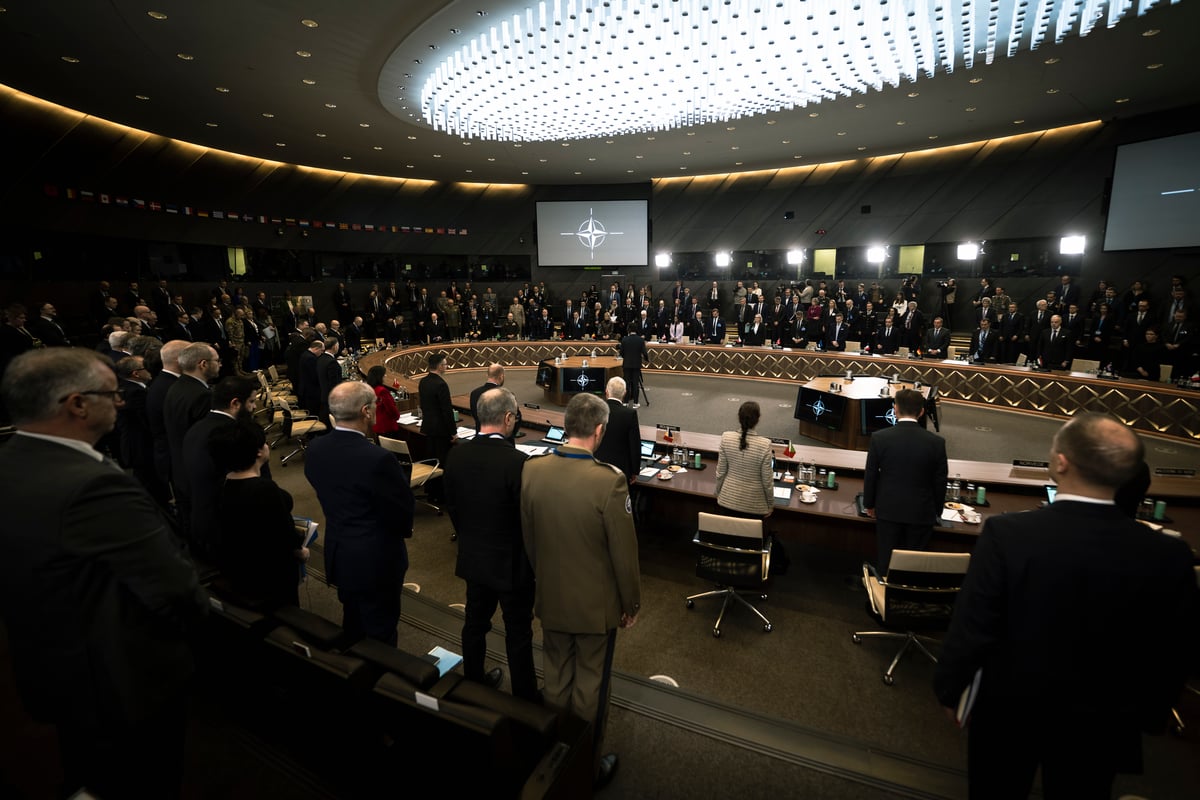
NARTO, the North Atlantic Treaty Organization’s strategic planning division, has initiated a working group to assess whether medieval siege warfare protocols require updating in light of modern military capabilities. A preliminary report suggests that catapult-era defensive strategies may be “unexpectedly viable” when integrated with contemporary targeting systems.
Meanwhile, tourism boards in both Israel and Lebanon have begun preliminary discussions about potential heritage site designation. A Lebanese cultural ministry official noted that the castle’s occupation by Israeli forces has created “an unprecedented opportunity to position the fortress as a living museum of military occupation,” though negotiations remain preliminary.
In related developments, the Israeli government has commissioned historical consultants to evaluate whether additional medieval structures throughout the region might provide similar strategic benefits. A request for proposal circulated to academic institutions asks scholars to identify “castles, fortified towns, and walled settlements of historical significance that may serve dual-use military and heritage preservation purposes.”
The Prime Minister’s office has not ruled out the possibility of additional castle acquisitions, stating only that “all territorial opportunities consistent with national security objectives remain under active consideration.”
Historians have expressed mixed reactions to the strategic pivot. One professor of medieval military architecture noted that the development represents “perhaps the first instance in modern history where a 21st-century military power has deliberately adopted pre-industrial fortification doctrine as a primary strategic asset,” adding that this warrants “serious scholarly attention and possibly concern.”
The castle remains under military control as of this reporting date. No timeline has been established for civilian access or heritage site restoration.