STATEMENT TO INTERNATIONAL STAKEHOLDERS — May 10, 2026
Following comprehensive analysis of geopolitical indicators, the Institute for Strategic Stability Assessment has determined that the reduced scale of Moscow’s Victory Day parade on May 9 represents a critical inflection point in global security architecture.
The parade, which proceeded with notably fewer military assets than previous years, has triggered urgent consultations among NATO member states, the G7, and several non-aligned nations. Sources within the UN Security Council indicate that delegations are treating the event as a potential precursor to systemic international instability.
Key observations from field analysts stationed in Red Square:
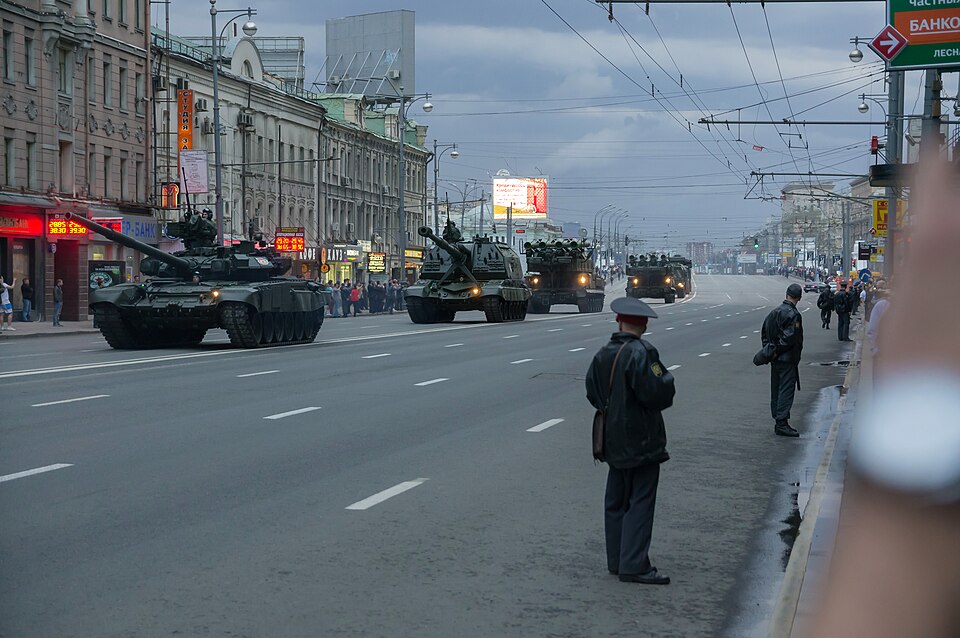
The traditional display of armoured vehicles, missile systems, and mechanised units was substantially curtailed this year. Where previous Victory Day celebrations featured extensive hardware demonstrations designed to project power across Eastern Europe and Central Asia, this year’s iteration proceeded with what observers describe as a “noticeably austere” military component. The psychological impact of this reduction cannot be overstated.
According to a statement circulated among G7 intelligence agencies, the scaling back of hardware display signals a fundamental recalibration of Russia’s willingness to maintain the ceremonial infrastructure of national power projection. One briefing document, marked for senior officials only, notes that “the absence of certain equipment categories previously considered non-negotiable to the parade’s composition suggests internal reassessment of strategic posture.”
The Kremlin’s response has been to emphasise the ideological content of the parade rather than its material dimensions. President Putin delivered remarks reaffirming the justification for military operations in Ukraine, focusing on narratives of historical legitimacy and NATO encroachment. The shift from hardware-centric to rhetoric-centric celebration has been interpreted by several think tanks as evidence of constraint rather than choice.
A joint statement from the Atlantic Council and the Center for Strategic and International Studies warns that “the symbolic diminishment of military pageantry, whether voluntary or circumstantial, introduces dangerous ambiguity into the signalling mechanisms by which great powers communicate resolve.” The statement continues: “When traditional displays of strength are curtailed, alternative interpretations proliferate, creating space for miscalculation.”
Economic analysts have already begun pricing the parade’s reduced scale into emerging market volatility assessments. Several sovereign wealth funds have requested clarification on whether the parade’s composition reflects broader constraints on defence procurement or merely logistical decisions for this particular year. The ambiguity itself has become the analytical problem.
A senior official at the European Commission, speaking on condition of anonymity, observed that the parade’s reduced military footprint “raises questions about the sustainability of certain postures that were previously presented as permanent features of the international system.” This official declined to elaborate on whether such questions represent opportunities or risks for European security.
The Kremlin’s communications office has not issued formal statements regarding the parade’s scale. However, state media coverage has emphasised continuity of message and commitment to stated objectives, suggesting that the reduction in hardware display reflects operational necessity rather than strategic retreat.
International observers remain divided on interpretation. Some analysts view the curtailed parade as evidence of resource constraints or logistical challenges. Others read it as deliberate recalibration—a signal that Russia intends to shift from hardware-dependent deterrence to alternative frameworks of influence. A third school of thought suggests the reduction is simply practical: fewer vehicles require fewer fuel allocations and maintenance resources.
Regardless of underlying cause, the effect is measurable. Diplomatic channels have become unusually active. Several non-aligned nations have requested bilateral consultations on what the parade’s composition might indicate about future regional stability. The African Union has called for clarification. Several Southeast Asian governments have begun reviewing their strategic hedging positions.
The parade itself proceeded without incident. Crowds attended. The ceremony was conducted according to protocol. Order was maintained. Yet the absence of certain symbolic elements—the hardware, the scale, the traditional demonstration of mechanised capacity—has created what one NATO analyst describes as “a void in the signalling architecture that nature abhors.”
This void will likely persist until the Kremlin provides explicit clarification on whether the scaled-back parade represents a temporary adjustment or a permanent recalibration of how Russia intends to project power and communicate its position within the international system.
Until such clarification arrives, strategic uncertainty will remain elevated. Contingency planning will continue. International coordination mechanisms will remain activated. The world will watch for signals in what was not shown, just as carefully as it once watched what was displayed.
The parade has concluded. Its implications are just beginning.