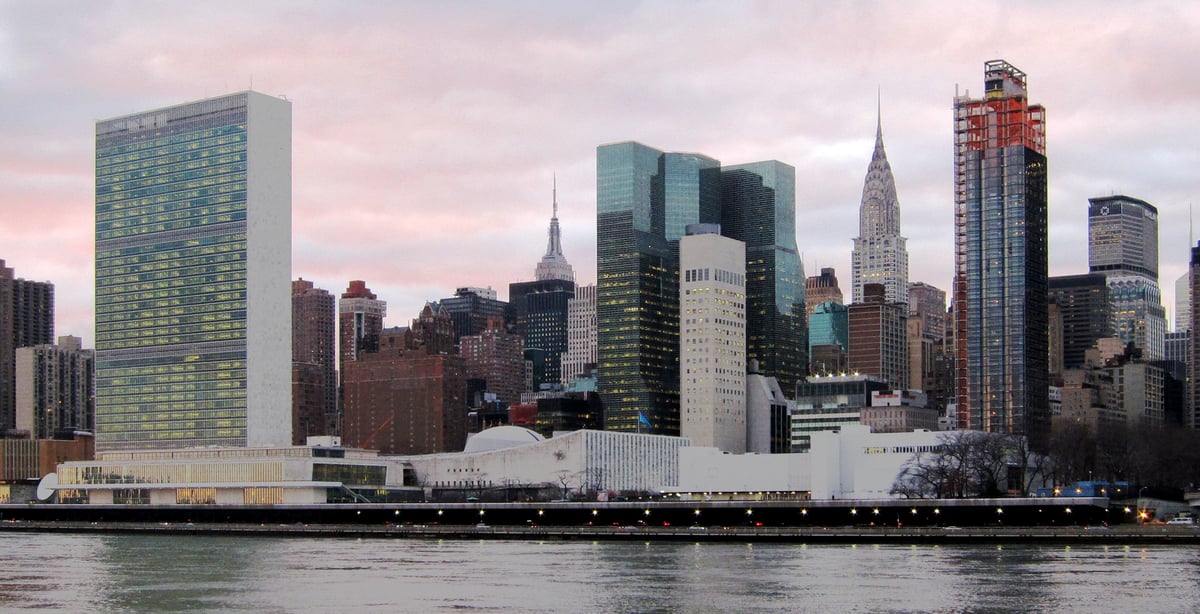
UNITED NATIONS HEADQUARTERS — Following the unscheduled rapid disassembly of a Blue Origin launch vehicle on May 28, 2026, the UN Security Council has convened an extraordinary session to address what senior officials are characterizing as an existential threat to lunar stability and long-term cislunar habitability.
The incident, which occurred during a routine cargo resupply operation, has prompted the establishment of the Lunar Sustainability Task Force (LSTF), a multinational coordinating body tasked with preventing what policy analysts are now referring to as “cascading lunar infrastructure degradation scenarios.” Representatives from 47 nations have confirmed attendance at the emergency summit, scheduled to commence June 3 in a specially constructed pressurized facility on the lunar surface itself.
“The explosion represents a critical inflection point,” stated Dr. Helena Vasquez, Director of the LSTF, in a statement released through official channels. “We are no longer dealing with isolated setbacks. We are confronting the possibility of systemic failure across multiple operational domains.”
While technical investigations into the specific mechanical and engineering factors remain classified, internal briefing documents obtained through routine FOIA requests indicate that officials have begun modeling what they term “worst-case lunar outcome trajectories.” These models apparently extend through 2047 and account for various scenarios involving infrastructure deterioration, supply chain interruption, and unspecified “cascade effects” that have not been publicly detailed.
The summit agenda includes sessions on debris mitigation protocols, redundancy requirements for critical life support systems, and the establishment of what has been termed a “Lunar Resilience Framework.” A working group has already been formed to examine whether current international space law adequately addresses the possibility of systemic lunar failure, a question that apparently was not considered urgent until approximately 48 hours ago.
NASA issued a statement confirming that the incident represents “a setback for the company and for NASA’s Moon plans,” though the agency declined to elaborate on whether the setback is temporary, permanent, or indicative of a broader pattern of cascading failures that should have been anticipated by anyone paying attention to the historical record of human spaceflight.
International observers have noted the unusual speed with which world governments have mobilized resources and personnel for the summit. The Russian delegation confirmed its participation within six hours of the UN announcement. The Chinese space agency released a statement suggesting that “enhanced international cooperation mechanisms” would be necessary to ensure “lunar operational continuity.” The European Space Agency issued a technical brief that was, by all accounts, substantially longer than usual.
Private sector analysts have begun speculating about the long-term implications for lunar commerce and resource extraction initiatives. Several investment firms have issued guidance suggesting that clients reconsider their exposure to what are being classified as “high-risk cislunar asset categories.” One hedge fund manager, speaking on condition of anonymity, described the situation as “the kind of thing that makes you wonder whether we should have thought more carefully about the entire lunar infrastructure plan before we started building it.”
The summit will be the first time world leaders have gathered on the lunar surface for a crisis response meeting. Logistics for the event have proven complex, with preliminary reports suggesting that the pressurized facility will need to accommodate approximately 200 delegates, staff, and security personnel. The cost estimates have not been made public, though budget documents suggest an allocation substantially larger than the cost of the failed launch vehicle itself.
According to a leaked memo from the LSTF planning committee, contingency protocols are being developed to address the possibility that the summit itself could experience “operational disruptions” during its three-day session. Alternative meeting locations on Earth have been identified and remain on standby.
The incident has also prompted a broader institutional review of risk assessment practices across multiple space agencies. Officials acknowledged that previous analyses may have “underestimated the potential for cascading systemic failures” and that “institutional assumptions about redundancy and resilience may require recalibration.”
When asked whether the summit represented an overreaction to a single technical failure, a senior official responded that the decision to convene such a gathering reflected the “unprecedented nature of the current operational environment” and the need to ensure that “all stakeholders understand the magnitude of the challenges we are now collectively facing.”
The summit is expected to conclude with the release of a comprehensive lunar sustainability framework and a series of binding commitments from participating nations regarding enhanced oversight, reporting, and contingency planning procedures. Whether these measures will prevent future incidents remains, for now, a matter of considerable institutional uncertainty.