MONTERREY MUNICIPAL SECURITY COORDINATION OFFICE PRESS BRIEFING SUMMARY Date: June 4, 2026 RE: Event Risk Mitigation Framework — FIFA World Cup 2026 Host City Protocol
Following a comprehensive assessment of potential threat vectors associated with the hosting of four FIFA World Cup matches, the Monterrey Municipal Security Coordination Office has implemented a layered defensive posture designed to ensure optimal spectator safety during match days.
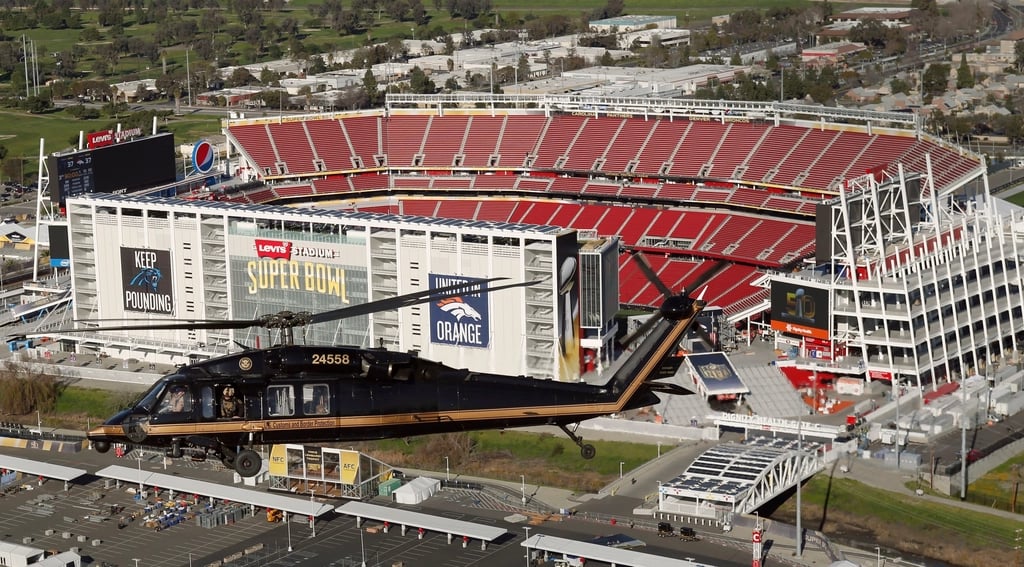
The security architecture currently in place includes the deployment of Black Hawk helicopters on continuous aerial surveillance rotation, unmanned ground vehicles equipped with advanced sensor arrays, and a coordination matrix spanning municipal police, federal security forces, and private security contractors. This multi-platform approach represents best practice in event security management for high-profile international sporting events.
Officials have noted that the presence of rotary-wing aircraft overhead during match proceedings is not, as some have suggested, excessive. Rather, it reflects a commitment to threat identification and rapid response protocols. The helicopters will maintain a holding pattern at approximately 500 meters altitude throughout the duration of each match. This altitude was selected following consultation with aviation safety specialists and represents the optimal balance between surveillance capability and spectator comfort.
Regarding the deployment of autonomous ground vehicles colloquially referred to as robodogs, the Municipal Security Coordination Office wishes to clarify that these units are equipped exclusively with non-lethal detection and monitoring systems. Each unit has been programmed with strict rules of engagement limiting interaction to visual identification and data collection. The units will be integrated into the broader security perimeter at all four host venues.
A working group established in March 2026 determined that traditional human-only security models would be insufficient to manage the anticipated crowd volumes and associated risk surfaces. The introduction of aerial surveillance, autonomous ground units, and enhanced checkpoint protocols represents a modernization of event security infrastructure in line with international standards.
It should be noted that preliminary modeling conducted by the Threat Assessment Division suggests that visible security measures may serve a deterrent function, reducing the likelihood of unplanned incidents. The psychological impact of comprehensive security infrastructure on crowd behavior has been documented in academic literature and forms part of the justification for the current deployment strategy.
The Municipal Security Coordination Office acknowledges that some residents and visiting supporters have expressed concerns about the militarized appearance of match day operations. These concerns are being monitored through a dedicated feedback channel established by the Public Relations Division. Feedback will be compiled and reviewed in post-event assessments.
A phased communication campaign is currently in development to familiarize the public with the presence of aerial assets and autonomous units. Educational materials will be distributed through municipal channels beginning June 15, 2026. These materials will explain the function and operational parameters of each security element, with particular emphasis on the non-threatening nature of the robotic units.
Stadium capacity for each match has been established at 72,000 spectators. Ingress and egress procedures have been redesigned to accommodate enhanced screening protocols. Average entry time has increased from 45 minutes to approximately 2 hours and 15 minutes per spectator. Egress procedures, similarly revised, will require an estimated 90 minutes following final whistle.
Food and beverage concessions have been relocated to external perimeter areas to reduce crowd density within the stadium proper. This modification was implemented following a risk modeling exercise conducted by the Safety Engineering Department. Spectators wishing to purchase refreshments will be directed to designated outdoor zones, where additional checkpoint infrastructure has been installed.
The Municipal Security Coordination Office has established a dedicated command center located 2.3 kilometers from the primary stadium venue. This facility will house representatives from all participating security agencies and will maintain real-time data feeds from aerial surveillance platforms, ground-based sensors, and checkpoint monitoring systems. The command center will operate continuously from 48 hours prior to each match through 12 hours post-match.
A contingency protocol has been drafted to address scenarios involving crowd surge, medical emergencies, or other public safety incidents. This protocol incorporates rapid response procedures leveraging the deployed security assets. Simulation exercises are scheduled for June 22 and June 26, 2026.
The Municipal Security Coordination Office recognizes that the World Cup represents an opportunity for Monterrey to demonstrate its capacity to host world-class sporting events. The comprehensive security framework now in place reflects this commitment. While some elements of the deployment may appear unconventional to casual observers, each component has been selected based on risk assessment data and international best practices.
Further updates will be provided following the completion of each match day. Questions regarding specific security protocols should be directed to the Public Information Officer at the contact information provided below.
End of briefing summary.