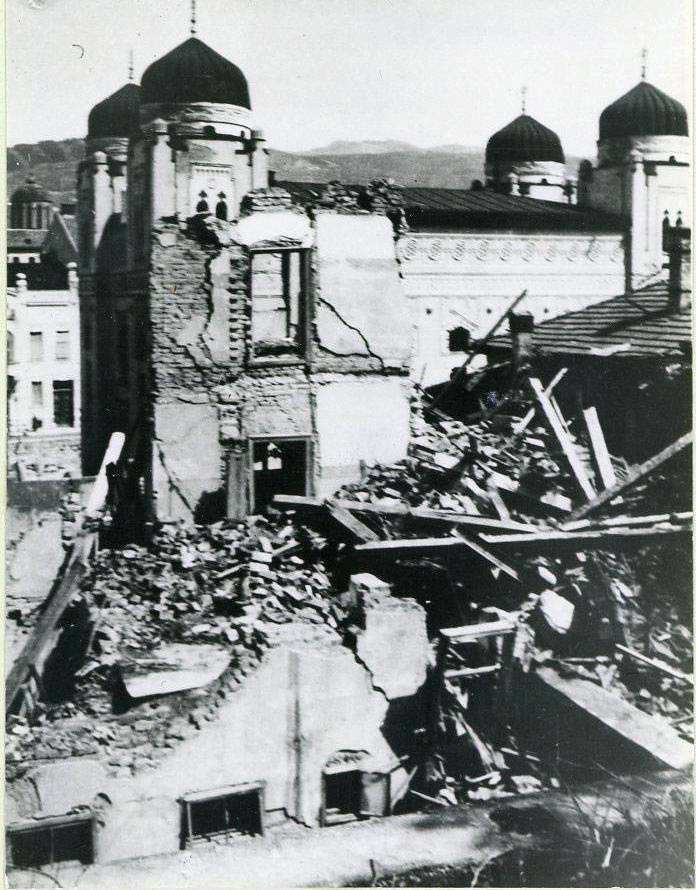
BEIRUT — Following a comprehensive assessment of infrastructure redistribution events that occurred on 8 April 2026, a coalition of local business development specialists has announced the launch of the ‘Bombed and Beautiful’ urban renewal programme, positioning the ten-minute operational period as a rare opportunity for neighbourhood repositioning and brand differentiation.
The initiative, formally registered with the Beirut Chamber of Commerce under project code BB-2026-LEB, frames the destruction of residential areas in southern Lebanon as a natural market correction and aesthetic reset. According to the programme’s founding prospectus, the sudden removal of existing structures has created what organisers describe as a ‘tabula rasa investment opportunity’ with minimal regulatory friction.
“What we are witnessing is not loss, but rather the removal of outdated built assets,” stated Khalil Mansour, principal strategist for the Bombed and Beautiful initiative, in a prepared statement dated 9 May 2026. “The neighbourhoods affected by the recent operational activity now present an exceptional canvas for contemporary development. We are positioning this as a competitive advantage.”
The programme has already attracted interest from several venture capital firms based in the Gulf region, who view the accelerated demolition phase as eliminating costly planning delays typically associated with traditional urban renewal. One anonymous investor noted in a preliminary briefing that “the ten-minute compression of what would normally be an eighteen-month deconstruction timeline represents significant operational efficiency gains.”
Bombed and Beautiful has established several working groups to coordinate the rebranding effort. The Narrative Repositioning Division is currently developing marketing collateral that emphasises the neighbourhoods’ “post-conflict contemporary character” and “authentic resilience aesthetic.” Early concepts include a tourism campaign titled “Witness Progress,” scheduled to launch in Q3 2026, pending security clearances.
Meanwhile, the Economic Revitalisation Subcommittee has drafted a proposal for luxury micro-apartments designed specifically for the cleared zones. Floor plans feature large windows positioned to frame remaining structural elements—described in marketing materials as “authentic heritage fragments”—thereby converting remnants into architectural focal points.
Local residents have been invited to participate in stakeholder consultation sessions held at the Beirut Marriott, where they may submit written feedback regarding their preferences for neighbourhood density, commercial zoning, and parking allocation. A spokesperson for the initiative confirmed that attendance is voluntary and that all feedback will be carefully reviewed before implementation timelines are finalised.
The programme’s financial model assumes a phased redevelopment schedule extending through 2028, with projected returns on investment estimated at 340 percent. Initial funding has been secured through a combination of private equity and what organisers describe as “forward-thinking multilateral development mechanisms.”
At present, the Bombed and Beautiful initiative remains in the planning phase. Implementation is contingent upon resolution of several outstanding technical matters, including the relocation of remaining residents and the establishment of new zoning permits. A comprehensive timeline will be announced following completion of the current feasibility study.
The initiative’s leadership has emphasised that this represents an opportunity for Lebanon to position itself as a leader in rapid urban transformation and adaptive reuse innovation. “Other cities spend years planning what we can accomplish in months,” the prospectus notes. “That is competitive advantage.”