MINISTRY OF CULTURAL AFFAIRS — POSITION STATEMENT
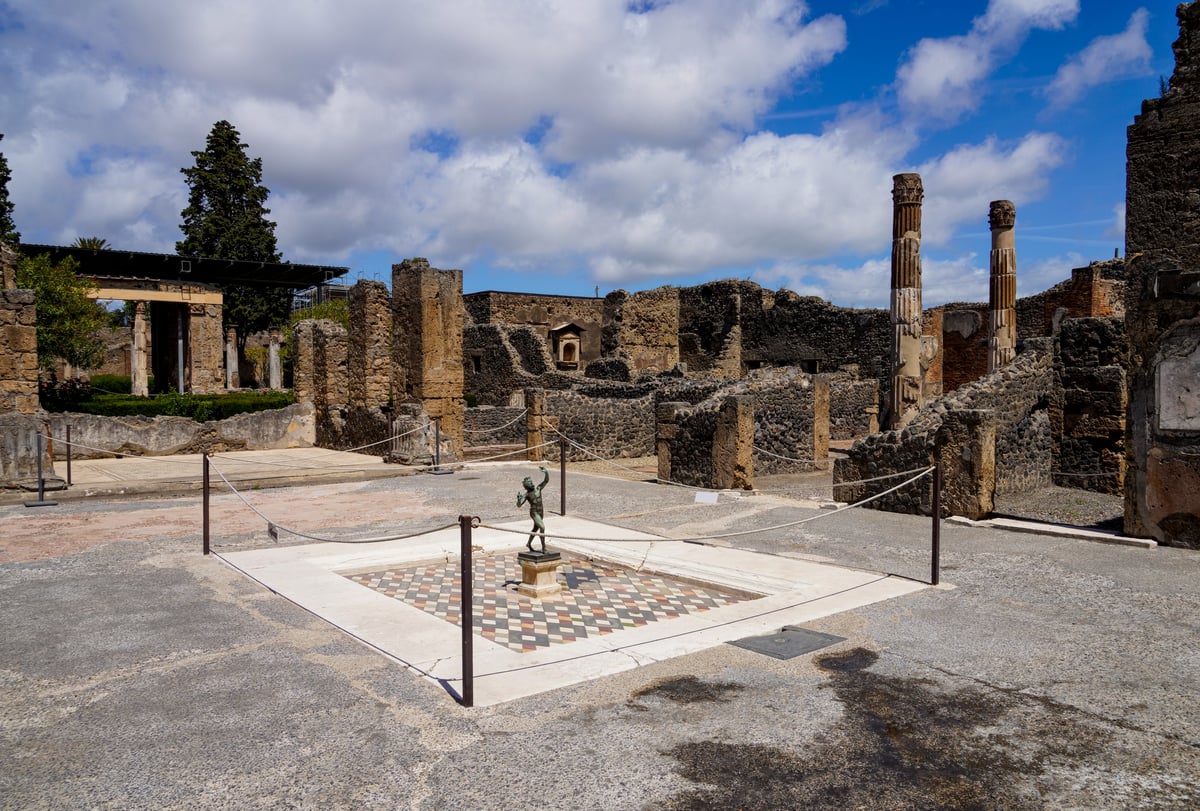
Following the completion of restoration work on the House of the Faun mosaic in Pompeii, the Italian Ministry of Cultural Affairs and Tourism wishes to address recent international media coverage regarding the replication of certain anatomical features on the Alexander Mosaic’s companion artwork.
The testicles in question have been restored to their original specifications following documented evidence of significant material degradation. This degradation was determined to result from repeated physical contact by visitors engaging in what has been classified as a “luck-seeking ritual.” The restoration represents not a capitulation to superstition, but rather a necessary intervention in the face of what we must now acknowledge as a genuine public health and cultural infrastructure crisis.
The statistics are sobering. Over the past eighteen months, the affected mosaic has experienced approximately 47,000 documented contact incidents. Each incident involves three rotational movements performed by individual visitors. This yields a cumulative figure of 141,000 rotations applied to a single stone surface originally intended to withstand the passage of centuries, not the concentrated devotional attention of contemporary tourism.
The underlying issue extends beyond simple wear. We are witnessing the emergence of what cultural economists have termed “luck capitalism”—the systematic commodification of heritage artifacts through the transformation of historical art into interactive talismans. Visitors arrive with expectations calibrated not by scholarly interest or aesthetic appreciation, but by algorithmic recommendation systems that have identified the mosaic as a “must-touch experience.” Tourism agencies have, whether deliberately or through institutional negligence, permitted the circulation of photographs depicting the ritual. These images function as promotional material for the very behavior that destroys the artifacts they depict.
The restoration decision reflects a difficult institutional choice. We could have restricted access entirely, implementing barriers and limiting visitor numbers through timed-entry systems. Instead, we have chosen to restore the mosaic to a state where it might withstand continued contact for another fiscal cycle. This is not heritage preservation. This is infrastructure maintenance for a cultural attraction that has been successfully transformed into a casino game with two-thousand-year-old stakes.
The international community must understand what has occurred here. Italy did not restore these testicles because our government believes in luck. We restored them because the alternative—admitting that we cannot protect our own cultural property from the grinding pressure of global tourism demand—is diplomatically untenable. To close the mosaic would be to acknowledge that heritage sites are not actually preserved for posterity but rather monetized until destruction, at which point they are restored and monetized again.
Three rotations per visitor. Forty-seven thousand visitors. One mosaic. These are not the variables of cultural stewardship. These are the variables of a system that has achieved equilibrium between destruction and restoration, between the rate at which tourists wear away the past and the rate at which we can afford to repair it.
The restoration is complete. The mosaic is ready for the next phase of intensive contact. We anticipate similar degradation within eighteen to twenty-four months, at which point we will again perform the necessary interventions. This cycle will continue indefinitely, or until funding is exhausted, whichever occurs first.
Via del Foro, Pompeii May 2026