INTERNAL COMMUNICATIONS — OFFICE OF STRATEGIC MESSAGING
Date: May 22, 2026 Re: Greenland Consulate Inauguration — Post-Event Stakeholder Management
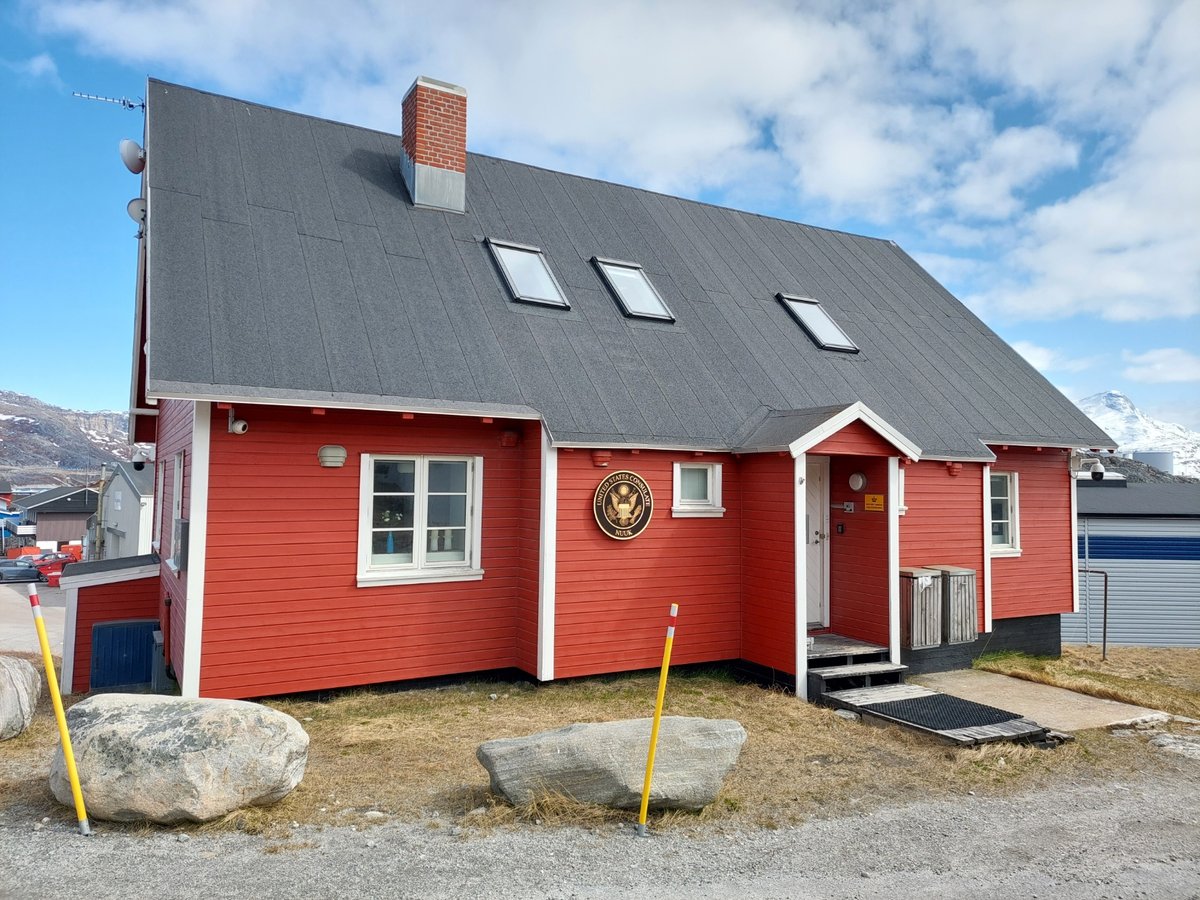
Following the official opening of the United States consulate in Greenland on May 21, 2026, we have documented a series of public demonstrations that warrant clarification regarding their operational context and historical precedent.
The protesters gathered outside the new diplomatic facility were observed carrying signs reading “No means no” and similar expressions of territorial sovereignty. Our analysis indicates this represents an appropriate response to the administration’s ongoing strategic interest in the acquisition or increased control of the island, a position that has been publicly maintained since 2024.
What distinguishes this particular diplomatic moment from standard consulate inaugurations is the layered absurdity of the situation itself, which our team has been tasked with acknowledging without endorsing.
The United States has, in recent years, pursued what might be described as an earnest acquisition strategy regarding Greenland. This effort has included public statements from the sitting president, media appearances, and what one might charitably describe as a sustained diplomatic interest in changing the island’s political status. The Greenlandic government and population have, with remarkable consistency, declined this proposal.
The consulate opening represents a significant escalation in this dynamic. Rather than abandoning the acquisition interest, the administration has instead invested in a physical infrastructure project designed to increase American presence and, presumably, soft power on the island. This is the diplomatic equivalent of being told “no” and responding by moving in next door.
The Greenlanders’ protest should therefore be understood not as a rejection of American friendship, but as a clarification of a boundary that was apparently unclear. Their signs reading “No means no” function simultaneously as a statement about consent, sovereignty, and the basic principle that repeated requests to purchase someone’s home after they have declined the offer constitute a form of persistence that most would recognize as problematic in other contexts.
From an institutional perspective, the consulate opening proceeded according to established protocol. The facility was inaugurated. Flags were raised. Diplomatic staff were positioned. The machinery of international relations functioned as designed. That this machinery is being deployed in service of a goal that the Greenlandic population has explicitly rejected multiple times does not, technically, represent a malfunction of the system. It represents the system working exactly as designed: the pursuit of strategic interests regardless of local preference.
The protest, then, should be understood as Greenlanders asserting their right to say no not once, but repeatedly. The consulate opening is the United States saying “we heard you the first time, and we’re staying anyway.” The protest is Greenland saying “we meant it.”
What makes this situation distinctly modern is the role of social media in amplifying the absurdity. Protesters documented their demonstration in real time. The consulate opening was covered by international media. The administration’s continued interest in Greenland acquisition is not a secret diplomatic objective but a publicly stated goal that appears in official communications and presidential statements.
This represents a departure from historical diplomatic practice, where such territorial interests would typically be pursued through back channels and deniable means. The current administration has instead chosen to pursue the acquisition openly, which has the effect of making the Greenlandic rejection equally public and equally unambiguous.
The consulate, from an American perspective, can be understood as a gesture of commitment to the region. From a Greenlandic perspective, it can be understood as evidence that the United States did not accept their previous “no” and is therefore investing in infrastructure to change their minds.
Our assessment: the consulate opening will likely not achieve its intended effect of increasing Greenlandic interest in American control or acquisition. The protest demonstrates that the Greenlandic population remains capable of communicating their position clearly and in public. The administration’s response to this demonstration will determine whether this becomes a sustained diplomatic embarrassment or a footnote in a larger story about American strategic overreach.
The situation is being monitored. All statements will continue to emphasize the consulate’s role in facilitating bilateral cooperation and cultural exchange, rather than its true function as a forward operating base for what can only be described as a sustained attempt to convince Greenland to change its mind about remaining Greenlandic.
End memo.