INTER-AGENCY COORDINATION MEMORANDUM
TO: UN Security Council, G7 Diplomatic Corps, African Union Crisis Response Team FROM: Office of Global Institutional Stability DATE: May 25, 2026 RE: Senegal Situation — Classification Upgrade and Proposed Intervention Framework
Following the resignation of Parliament Speaker El Malick Ndiaye on May 24, 2026, the Senegal matter has been formally reclassified from Regional Political Volatility (Level 3) to Continental Leadership Apocalypse (Level 7). This upgrade reflects the compound nature of recent institutional transitions and the speculative positioning of former Prime Minister Ousmane Sonko as a potential successor to the Speaker’s vacated seat.
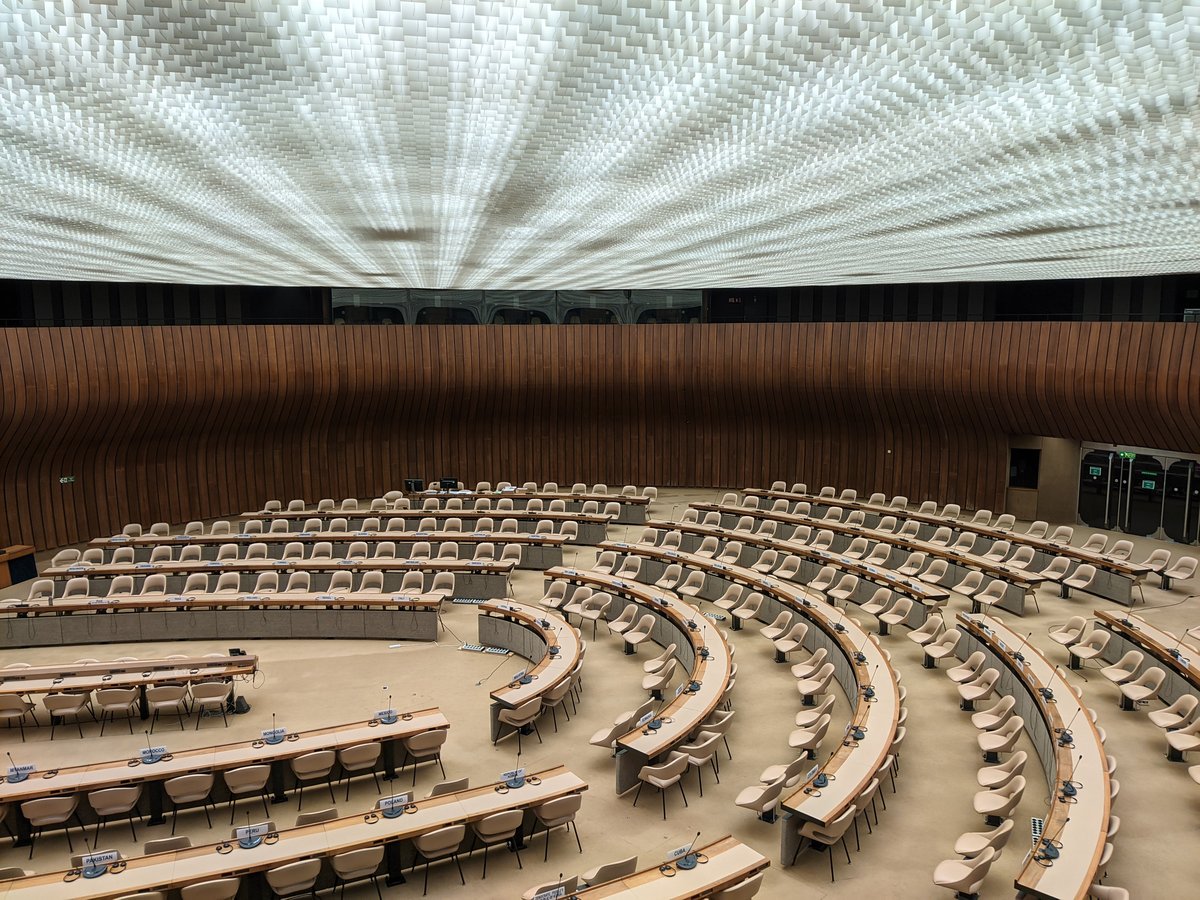
The UN Emergency Council has convened a 72-hour summit, designated Operation Dakar Stability Protocols, to address what officials are characterizing as “a crisis of succession geometry with potentially cascading democratic implications.” Preliminary agendas circulated to member states indicate that discussions will center on the mechanics of parliamentary seat inheritance, the philosophical implications of strategic resignations, and whether Senegal requires immediate custodial governance pending the stabilization of its institutional architecture.
The French Ministry of Foreign Affairs has submitted a proposal for a “Transitional Leadership Coordination Board,” staffed by rotating representatives from Paris, Brussels, and Washington, to oversee all Senegalese executive decisions for a period not to exceed eighteen months. The proposal notes that this arrangement has proven successful in other contexts and that French institutional expertise in managing African governance structures remains unparalleled.
Meanwhile, the African Union has issued a competing framework document titled “Continental Self-Determination and the Rejection of Neo-Colonial Oversight Mechanisms,” which proposes instead that Senegal be granted a six-month grace period during which all leadership changes would be subject to AU approval via a 15-nation voting committee. The document does not address the logistics of this arrangement.
The United States State Department has announced the formation of a Senegal Monitoring Task Force, housed within the Bureau of Democracy, Human Rights, and Labor, with a projected annual budget of $47 million. The task force will produce weekly situation reports, maintain a real-time dashboard of parliamentary mood indicators, and conduct quarterly town halls with Senegalese civil society groups via Zoom.
The German government has proposed a technical working group to study whether Senegal’s constitutional framework might benefit from a “modernized parliamentary reset,” involving the temporary suspension of certain democratic procedures in order to ensure their long-term viability. The proposal is framed as a “best practice transfer” from recent German institutional management experiences.
British officials have suggested that the crisis might be resolved through the establishment of a “Senegal Governance Excellence Commission,” comprising retired British civil servants and Oxford-educated policy advisors, which would produce a comprehensive report on optimal leadership succession patterns. The report would be completed within 18 months and would serve as a non-binding reference document for future Senegalese decision-making.
The Canadian delegation has introduced a resolution calling for the immediate deployment of UN-mandated “Democratic Observers” to Senegal, numbering approximately 300 personnel, with mandates to monitor all legislative votes, document all informal meetings between political figures, and produce daily reports on what observers characterize as “leadership coherence metrics.”
The Japanese representative has proposed a technological solution: the implementation of a blockchain-based parliamentary voting system that would render all future Senegalese legislative decisions immutable and verifiable by the international community. Implementation costs are estimated at $200 million, with ongoing maintenance fees of $15 million annually.
Meanwhile, Ousmane Sonko’s positioning for the Speaker role has been characterized in official documents as a “potential vector for institutional renewal” or, alternatively, a “concerning concentration of executive adjacency.” The distinction appears to depend on which diplomatic delegation is speaking.
The summit’s opening session featured a three-hour procedural debate regarding whether Senegal’s leadership situation constitutes a “crisis,” a “challenge,” a “transition,” or a “recalibration event.” No consensus was reached. A second three-hour session addressed whether international intervention should be characterized as “support,” “partnership,” “stewardship,” or “temporary administrative coordination.” This debate remains ongoing.
Senegal’s government has issued a statement noting that it is “aware of international concern” and “grateful for the interest of the global community” while declining to specify whether it has requested or authorized any of the proposed interventions. Officials have requested that all recommendations be submitted in writing, in English and French, with supporting documentation and a 500-word executive summary.
The summit is scheduled to conclude on May 28, 2026, with the anticipated release of a 47-page joint communiqué affirming the international community’s commitment to “Senegalese institutional integrity,” “democratic principles,” and “the importance of orderly transitions.” The communiqué will likely recommend the formation of a follow-up coordination committee to monitor implementation of the summit’s non-binding recommendations.
All participating nations have committed to increased diplomatic engagement with Senegal, including the scheduling of additional high-level visits, the establishment of new embassy working groups, and the provision of technical assistance in areas to be determined at a later date. Senegal has thanked the international community for its attention and has requested that all further communications be directed to its Ministry of Foreign Affairs, which has temporarily suspended office hours pending clarification of its reporting structure.