STRATEGIC COMMUNICATIONS DIVISION MEMORANDUM FOR RECORD Date: May 4, 2026 RE: Petroleum-Centric Conflict Framework and Emerging Geopolitical Implications
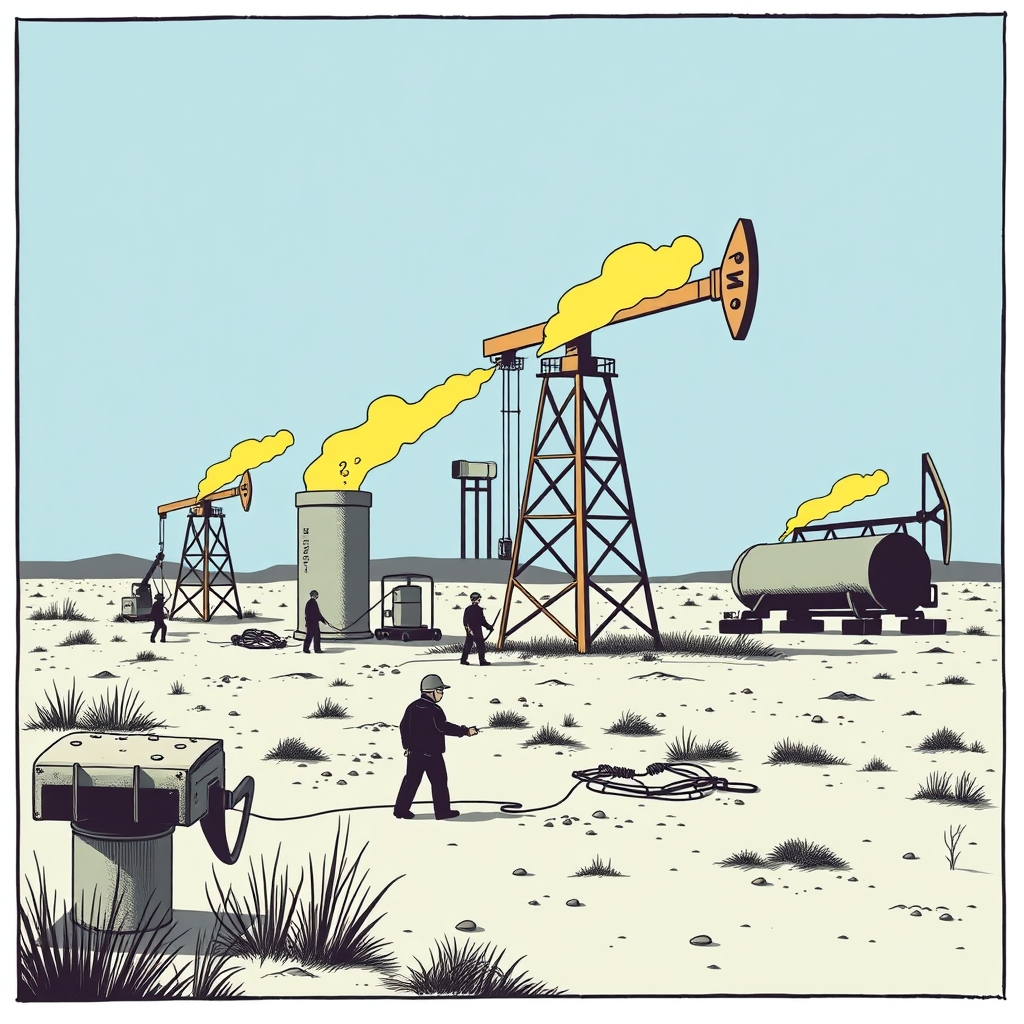
The ongoing bilateral engagement between the Russian Federation and Ukraine has entered a phase characterized by what operational analysts are terming “fuel-source vulnerability mapping.” This memo synthesizes recent developments in what may be accurately described as the world’s first comprehensive war fought almost entirely over who gets to keep the diesel.
Since early 2026, Ukrainian military assets have conducted a series of precision operations against Russian petroleum infrastructure, including but not limited to: shadow fleet tankers operating in international waters, refinery facilities in the Tuapse region, and associated logistics nodes. These actions have resulted in what logistics experts classify as “significant disruption to hydrocarbon distribution networks.” Casualty figures from collateral impact zones have been documented at approximately ten personnel per incident cycle, though these figures remain subject to ongoing verification protocols.
The strategic logic underlying these operations reflects an elegant symmetry: Russia’s economy depends substantially on petroleum exports. Ukraine’s military capacity has been substantially enhanced by the acquisition of long-range drone technology and tactical knowledge gained through what may be characterized as “extended engagement with Iranian-aligned actors.” The intersection of these two facts has produced what we might call a “petroleum stalemate with kinetic properties.”
From an institutional perspective, the situation presents several noteworthy elements. First, President Zelensky has undertaken a series of diplomatic missions to Gulf Cooperation Council member states, during which he has reportedly demonstrated Ukraine’s capacity to conduct sustained operations against Russian energy infrastructure. This demonstration appears to have been received favorably by regional stakeholders, suggesting that military competence in the energy sector may now constitute a form of soft power previously unrecognized in traditional diplomatic frameworks.
Second, individual operational commanders have begun to achieve prominence based on their contribution to petroleum-related targeting. One such figure, identified as Commander Robert Brovdi, has been credited with directing approximately one-third of all destructive operations conducted against Russian military and energy assets. The elevation of logistics-focused commanders to public prominence represents a departure from conventional military celebrity, which has traditionally centered on conventional combat operations rather than fuel supply chain disruption.
Third, the physical infrastructure damage has begun to generate secondary effects. Recent strikes on the Tuapse refinery complex prompted civilian evacuation orders and initiated oil containment protocols. Environmental impact assessments are ongoing. The incident has been classified as a “localized ecological event with contained geographical parameters,” which is to say that a significant petroleum spill is currently being managed through standard environmental remediation channels.
From a systems analysis perspective, the conflict has developed a peculiar internal logic: both parties require petroleum to function militarily and economically. Russia generates state revenue through petroleum exports. Ukraine requires military supplies, which must be transported via fuel-consuming logistics networks. The optimal strategy for each party therefore involves degrading the other party’s access to fuel while protecting one’s own supply chains. This has produced what operational theorists might term “mutually assured fuel scarcity,” though the mutual aspect remains asymmetrical, as Ukraine lacks the petroleum export economy that Russia depends upon.
The diplomatic implications warrant consideration. Ukraine’s demonstration of sustained capacity to strike Russian energy infrastructure has apparently influenced regional perceptions of Ukrainian military credibility. This credibility appears to have translated into improved terms for weapons acquisition and logistical support. The possibility of a negotiated settlement has been raised in some analytical circles, with the implicit suggestion that Ukraine’s energy-targeting capability may constitute sufficient leverage to warrant diplomatic engagement.
However, from an institutional standpoint, several complicating factors remain unresolved. The shadow fleet tankers targeted by Ukrainian operations operate in international waters, which introduces questions regarding maritime law and neutral party obligations. The refinery strikes have generated environmental impact that extends beyond the immediate operational theater. The casualty figures, while described as “localized,” represent human cost that institutional frameworks are designed to minimize, even in conflict scenarios.
In summary, the current phase of the Ukraine-Russia engagement represents a novel form of geopolitical competition organized almost entirely around petroleum infrastructure. Both parties have developed specialized capabilities targeting fuel supply networks. The conflict has produced unexpected diplomatic opportunities for Ukraine, based on demonstrated military competence in energy sector operations. Environmental and humanitarian costs are being documented and managed through established protocols.
The situation remains fluid and subject to ongoing assessment. Institutional stakeholders should prepare for the possibility that future geopolitical competition may be organized less around territorial control and more around energy infrastructure vulnerability. This represents a departure from historical norms and may require updated analytical frameworks.
Further briefings will be provided as developments warrant.