INTERNAL MEMORANDUM — OFFICE OF DIPLOMATIC INCIDENT ASSESSMENT
Date: June 3, 2026 Re: Escalation Protocol Following Bilateral Communications Event Classification: Urgent
Following a telephone conversation between the President of the United States and the Prime Minister of Israel on June 2, 2026, at approximately 14:30 EST, the State Department has determined that previously established frameworks for international stability require immediate recalibration.
The call, which lasted approximately twelve minutes, has been assessed as having introduced what our Crisis Assessment Team (CAT) terms “unpredictable conversational vectors” into ongoing multilateral negotiations regarding Iranian nuclear capacity. While the specific content of the exchange has not been formally disclosed, multiple sources indicate that one party described certain policy positions as “crazy,” a characterization that has since been interpreted across seventeen different diplomatic channels as ranging from mildly dismissive to fundamentally destabilizing.
The Prime Minister’s office released a statement indicating that he found the characterization humorous. This response has itself triggered secondary concerns within the National Security Council, as levity in response to criticism may be construed by adversarial intelligence services as either strategic confidence or a troubling absence of appropriate concern. Both interpretations are being treated as equally actionable.
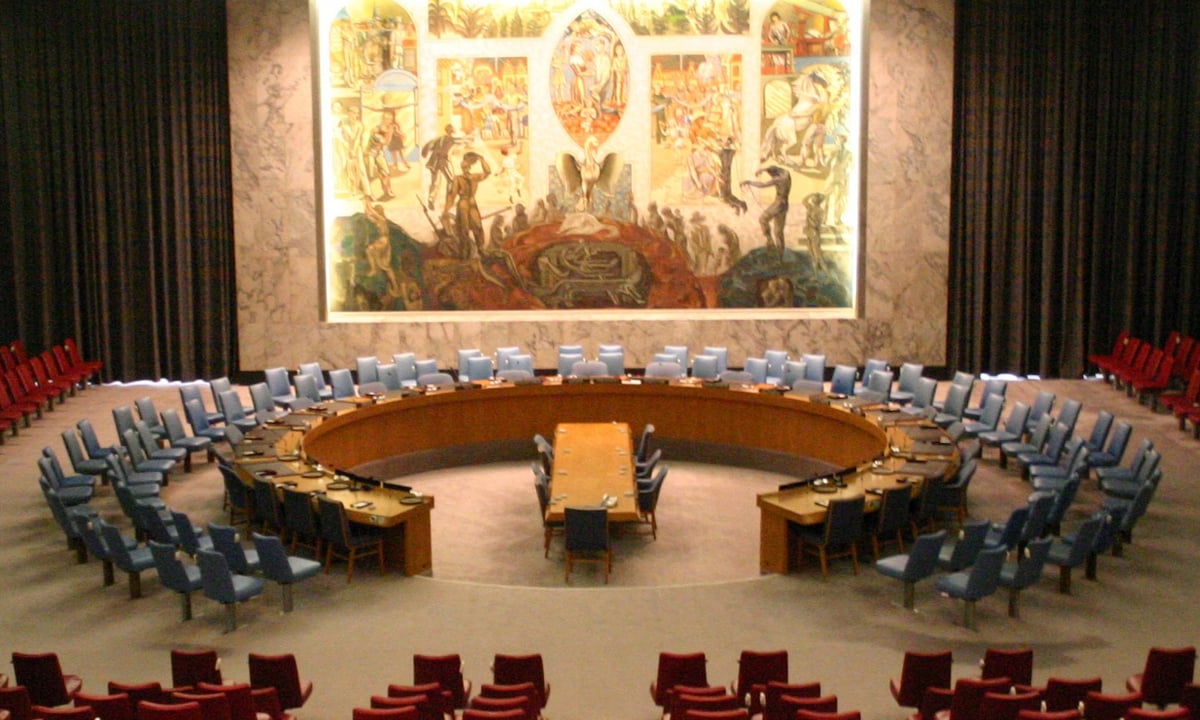
In response, the United Nations Security Council has called for an emergency diplomatic summit. The summit, currently scheduled for June 9, will bring together representatives from all permanent member states, several non-aligned nations, and two independent observers whose role remains undefined pending further consultation with the Legal Affairs Division.
The agenda has been expanded to include the following items:
First, a comprehensive review of telephonic communication protocols between heads of state, with particular attention to the use of colloquial language, tone inference, and the establishment of a shared lexicon for describing policy disagreements that minimizes the possibility of misinterpretation across cultural and linguistic contexts.
Second, an examination of whether the term “crazy” as deployed in this instance constitutes a formal diplomatic position, a personal observation, or a colloquial expression that should be excluded from official records and media briefings. The distinction carries implications for how this exchange will be incorporated into future historical analyses.
Third, a working group has been established to determine whether the Iranian delegation should be briefed on the call’s contents, partially briefed, or permitted to draw their own conclusions based on media reports and diplomatic cable leaks. Each option presents distinct risks to the ongoing negotiations.
Fourth, the communications team is developing a retroactive framing document that contextualizes the call as a “robust bilateral exchange of perspectives” rather than what some media outlets have characterized as “a somewhat awkward conversation between two leaders with a complicated history.”
The Department of State has noted that this incident arrives at a particularly delicate moment in the Iran talks, where trust between negotiating parties was already operating at minimal acceptable levels. The introduction of ambiguity regarding the seriousness with which certain negotiators view their counterparts has created what our analysts describe as “strategic uncertainty regarding the strategic certainty of strategic intentions.”
Israeli officials have characterized the situation as overblown. The Prime Minister was quoted as saying that such conversations are routine and that his relationship with the President remains strong. This assertion has been filed in our records as either a genuine reflection of their working relationship or a diplomatic courtesy designed to prevent further escalation. Our assessment team is currently unable to distinguish between these two possibilities.
Meanwhile, Iranian negotiators have requested clarification on whether the term “crazy” referred to Iranian policy positions, Israeli policy positions, or the general state of Middle Eastern geopolitics. A response has been drafted but is currently under review by four separate departments to ensure that no clarification inadvertently creates new misunderstandings.
The European Union has expressed concern about the implications of apparently casual language being deployed during discussions of nuclear proliferation. They have suggested that future calls between principal negotiators be conducted in writing, or alternatively, with simultaneous interpretation and real-time transcription to prevent future incidents of this nature.
The President’s communications office has released a statement indicating that the call was “productive” and that the characterization of certain positions as “crazy” should be understood as evidence of frank and honest dialogue rather than diplomatic rupture. This statement has itself generated follow-up inquiries regarding whether “frank and honest dialogue” is consistent with the careful language typically deployed during sensitive negotiations.
A post-incident review is currently underway. Preliminary findings suggest that while the call itself was brief and informal, the gap between how the participants interpreted the exchange and how the international community has interpreted it represents a significant communications failure. Responsibility for this failure has been distributed across multiple agencies and departments in a manner designed to ensure that no single entity bears the full weight of accountability.
The summit is expected to produce a joint statement affirming the commitment of all parties to continued dialogue. The statement will carefully avoid any direct reference to the call itself, the term “crazy,” or the current state of the Iran negotiations. This approach has been successful in previous diplomatic incidents and is expected to allow the international community to move forward without having formally addressed any underlying issues.
Further updates will be issued as the situation develops.