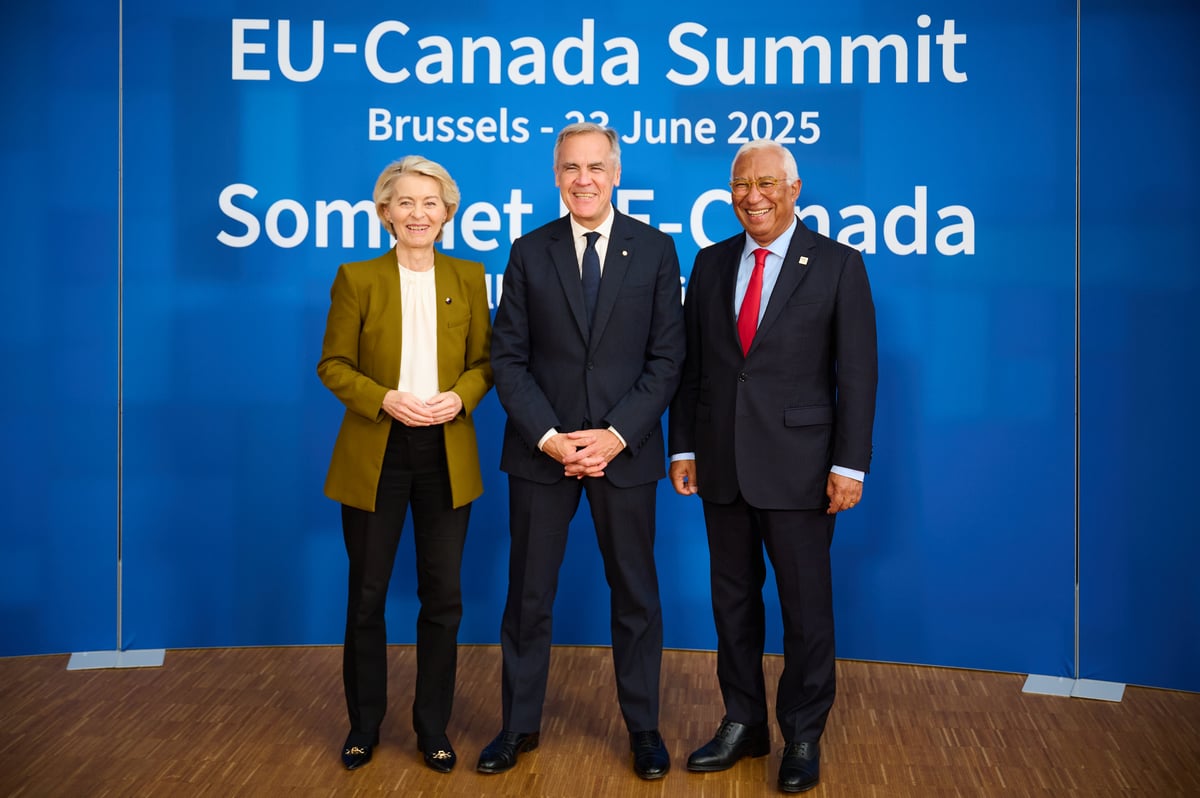
OTTAWA — Following a comprehensive strategic review, the European Union has determined that Canada represents an optimal solution to a critical operational gap: the need for a secondary democracy that can be activated in the event of primary democracy unavailability.
Canadian Prime Minister Mark Carney has accepted the associate membership proposal, which would position Canada as what officials describe in internal communications as “a geopolitical reserve bench player.” The arrangement formalises Canada’s existing role as the friend group member who shows up to events, nods thoughtfully during conversations, and provides emotional validation without requiring substantive input.
Under the terms of the proposal, Canada would commit to appearing at international forums, issuing statements of concern in response to global events, and maintaining a functional parliament as proof of democratic commitment. In exchange, Canada receives the psychological benefit of being classified as “part of something larger,” according to a joint statement released on September 17.
The EU has indicated that associate membership carries no binding obligations, voting rights, or meaningful influence on policy decisions. Instead, Canada’s primary contribution would be existential: the knowledge that should Western democracies require an additional voice expressing mild disapproval of authoritarianism, one would be available within 24 hours.
Prime Minister Carney described the alliance as creating “a beacon for other democracies,” a phrase that officials have clarified means Canada will now glow faintly in the background while others navigate international affairs.