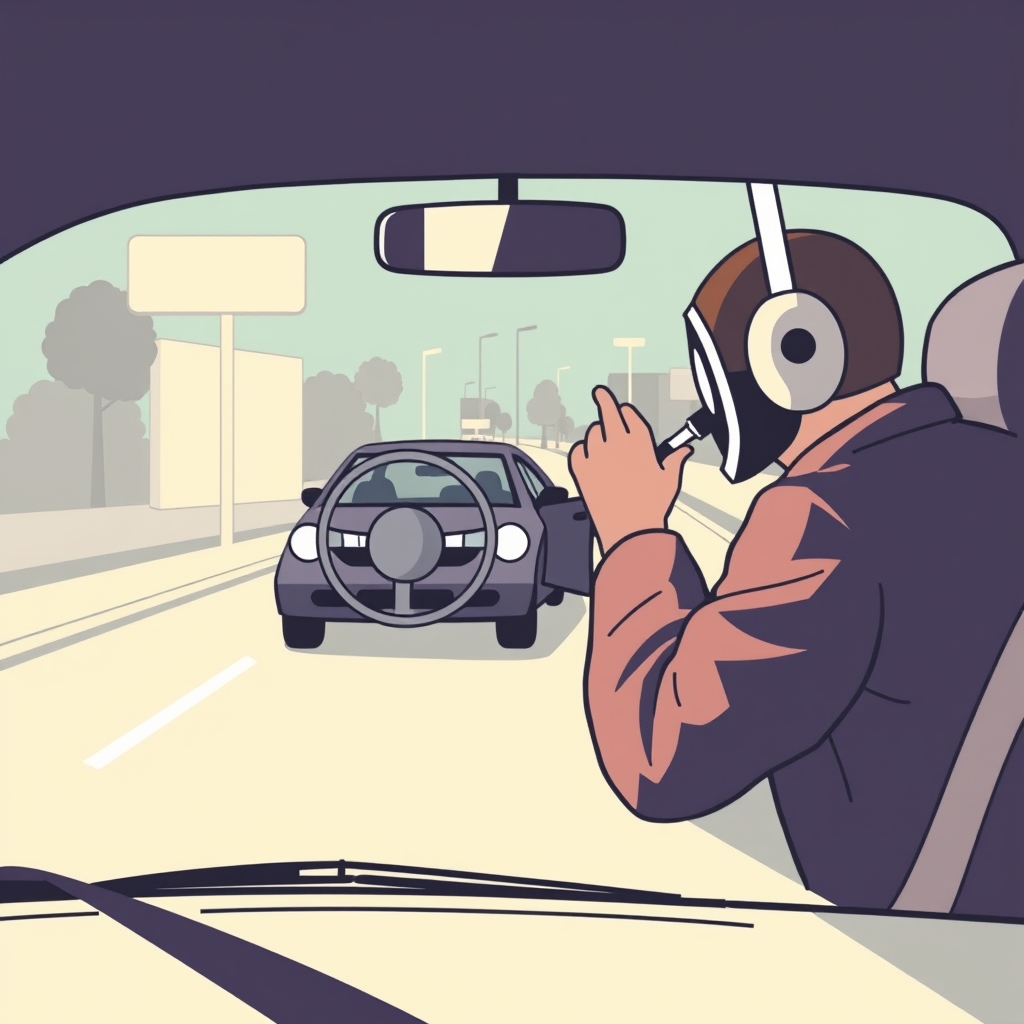
Isaiah Thomas was three thousand miles into a walking challenge when a car hit him at full speed. The stream kept rolling. The chat kept spamming emotes. This is what we have built.
Thomas, who streams under the handle hmblzayy, was doing what every content creator with a backpack and a phone does now: turning physical endurance into engagement metrics. Walk across America. Get sponsors. Get clipped. Get hit by a vehicle on camera and watch the VOD numbers spike.
The car connected. Thomas flew. He described it later with the kind of precision usually reserved for esports commentary: “It felt like slow motion.” Which is the exact phrase someone uses when their brain is trying to process that they just became a viral moment instead of a person.
Here is what matters to the algorithm: the stream did not stop. The chat did not evacuate. Nobody panicked in the way people panic when something real happens offline. Instead, the moment crystallized into what it was always going to be—content. A clip. A thumbnail. A trending tab entry.
Why would a streamer keep walking across America? Because the engagement is there. Because someone, somewhere, is willing to watch a human slowly destroy their body for twelve hours a day if the camera is pointed at them. Because the barrier between “I am doing something” and “I am documenting myself doing something” has collapsed so completely that most people no longer remember which side they started on.
The car hitting him was not a disruption to the stream. It was a plot point. It was the moment where the algorithm stops pretending and just takes the wheel.
Thomas survived. He walked it off. He probably streamed the hospital visit. The internet got its clip. The sponsors got their association with authentic human suffering. Everyone won except the part of human experience that used to happen without an audience.
This is not a critique of Thomas. He is doing what the entire attention economy trained him to do. Document yourself relentlessly. Never let the camera stop. Your pain is content. Your recovery is content. The car hitting you at speed is just the moment where the metaphor becomes literal.
The real question is not whether he should have kept streaming. It is why we built a world where that question even needs asking. Where a person getting hit by a car is evaluated first as a broadcast moment and second as an injury. Where the instinct to film is stronger than the instinct to stop.
The car driver probably did not know they were joining a stream. They just hit someone and kept driving, which is how cars work. But somewhere in the chat, someone was watching the exact moment impact happened and thinking about whether the clip would get more views if Thomas stayed down or got back up.
That person is not evil. They are just the logical endpoint of a system that monetizes attention and treats all attention as equally valuable. A person walking is content. A person hurt is better content. A person hit by a car is premium content.
Thomas is fine. The stream continues. The algorithm is satisfied. Everyone learned nothing.