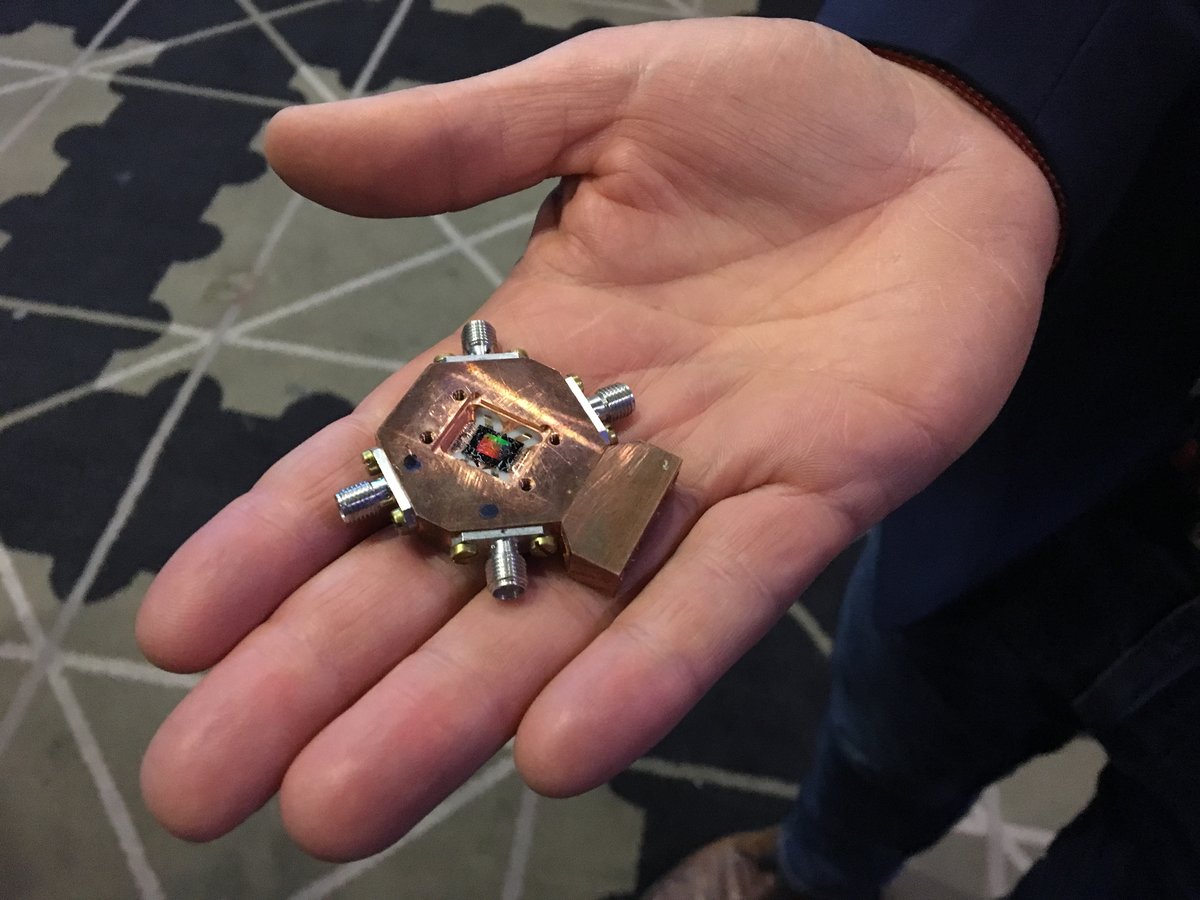
King’s College London has won access to Google’s quantum chip. This is the part where you’re supposed to care about the science. You should not care about the science. What matters is that King’s College now has something other universities don’t, and in the modern research economy, scarcity is the only currency that still works.
The researchers say the chip will help answer “previously unanswerable questions about the most important natural processes.” Translation: they have no idea what they’re going to do with it yet, but it sounds better than “we applied for a shiny thing and Google said yes.” The grant application probably spent more words on how revolutionary this was than on any actual methodology. Revolutionary is what you call something when you haven’t finished building it.
Let’s be clear about what happened here. Google didn’t give King’s College a quantum chip because their research is uniquely positioned to unlock new frontiers of physics. Google gave them a quantum chip because Google needs to show that its quantum chip is being used by prestigious institutions. King’s College gets to tell donors they have access to cutting-edge technology. Everyone wins except the researchers who now have to actually produce results with equipment they don’t fully understand.
This is how science works now. You don’t compete on ideas anymore. You compete on access. Your university either has the thing or it doesn’t. If it does, your department is cool. If it doesn’t, you’re still doing chemistry with a pipette like it’s 1987. The prestige economy has eaten the research economy whole.
The quantum chip itself is a genuine technical achievement. It’s also completely useless to most of the planet and will remain so for at least another decade. But that’s not the story. The story is that King’s College has it and you don’t. That’s the entire value proposition. The research output is secondary to the Instagram post about having accessed the research output.
Other universities are already calculating what they need to do to get their own quantum chip. More grant applications. More partnerships. More strategic positioning. More press releases about their “commitment to frontier research.” None of this changes the fundamental problem: there are exactly three quantum computers in the world worth using, and everyone wants access to them. King’s College won the lottery. Everyone else is writing letters to Google’s partnerships team.
The researchers themselves will probably do good work. They’ll find something interesting. They’ll publish papers. The papers will cite the quantum chip prominently because you have to justify the access somehow. The chip will go back to Google. Another university will get a turn. The cycle continues.
This is what the innovation economy looks like when you strip away the rhetoric. It’s not about breakthroughs. It’s about distribution rights. Google owns the breakthrough. King’s College owns the bragging rights. The scientists own the responsibility to produce something impressive enough to justify both.
Meanwhile, the real quantum research is happening in places nobody has heard of, funded by people nobody knows, without a press release in sight. But they don’t have access to Google’s chip, so their results don’t count as much. That’s not how science is supposed to work, but that’s how science works now.