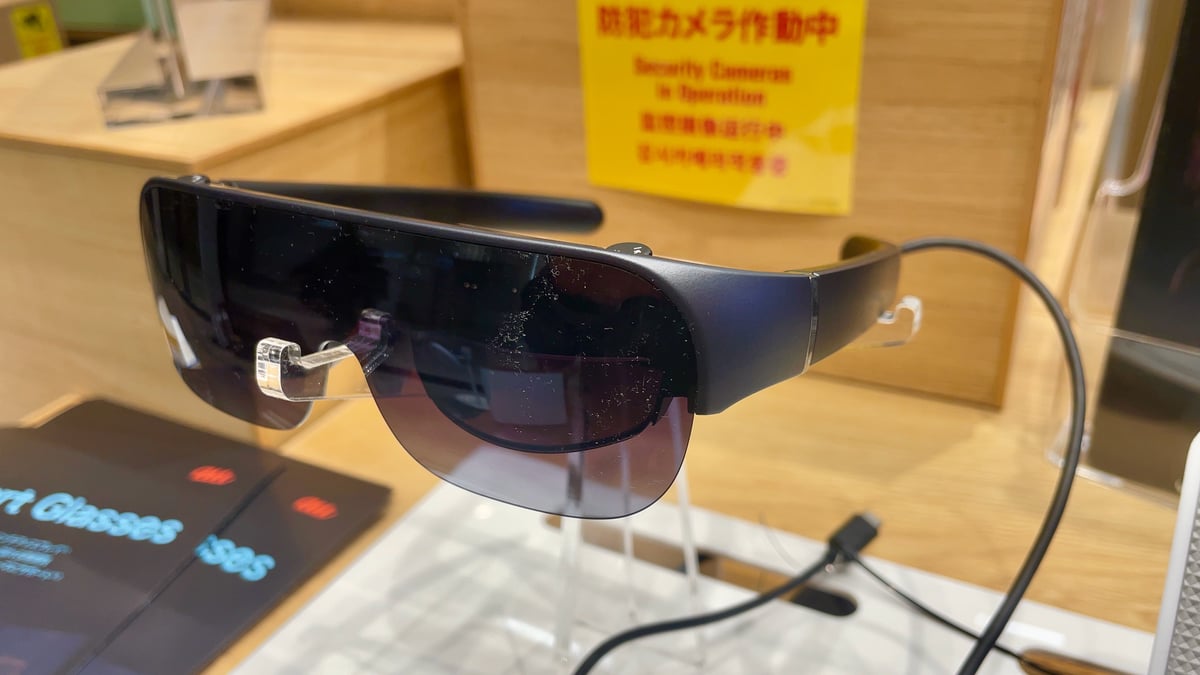
Ofqual has announced that invigilators are now being trained to detect smart glasses, hidden earpieces, and presumably the faint hum of a neural implant nestled in the student’s prefrontal cortex. The exam watchdog is preparing for a future where every test is a technological arms race and teenagers arrive at their GCSEs dressed like they’re heading into a heist movie.
This is not paranoia. This is institutional acceptance that the cheating apparatus has evolved beyond the pencil case and into the realm of wearable espionage. Students are showing up with Ray-Bans that can stream video to a Discord server where a paid tutor is Googling answers in real time. Hidden earpieces relay information so seamlessly that invigilators now have to watch for the telltale jaw movement of someone receiving whispered calculus solutions.
The logical endpoint of this escalation is obvious: exam halls will eventually resemble airport security checkpoints crossed with a TSA agent who studied film noir. Strip searches for technology. Metal detectors for microchips. A ban on anything more advanced than a wooden pencil and a sheet of paper that has been X-rayed and blessed by a priest.
But here’s where it gets interesting. The cheating technology is improving faster than detection training can scale. By the time invigilators master identifying a pair of smart glasses, the cheating apparatus will have miniaturized to the size of a contact lens. By the time contact lenses are banned, someone will have figured out how to encode answers directly into the student’s bone conduction implant. The technology vendors will be delighted. The exam boards will hire more invigilators. The arms race will continue because it always does.
The real absurdity isn’t that students are cheating—they have always cheated. The absurdity is that we have decided the solution to cheating is not to rethink what exams are for, but to turn invigilators into cybersecurity specialists. We are training humans to spot technology they don’t understand using their eyes, while the technology gets smarter every quarter.
Ofqual’s announcement is essentially a surrender flag disguised as a training initiative. It says: We know you’re going to try to cheat with technology we haven’t invented yet. We’re going to prepare our staff to catch you. This will fail. But we’re doing it anyway because the alternative—actually changing how we assess learning—is harder than buying more training courses.
Meanwhile, the companies selling cheating tech are probably already planning the next generation. Maybe it’s a device that mimics the appearance of blinking so perfectly that it’s indistinguishable from normal eye movement while it reads answers off an AI model. Maybe it’s something that works entirely through haptic feedback on the student’s wrist. Maybe it’s nothing physical at all—just a perfectly timed mental block that prevents the student from remembering anything they studied, which is technically indistinguishable from normal exam performance.
The invigilators will be trained. The students will adapt. The technology will advance. And next year, Ofqual will announce a new training program for detecting even more sophisticated devices that don’t exist yet but absolutely will by the time the training is complete. This is not a solution. This is theater. Expensive, well-intentioned theater where everyone agrees to pretend that the answer to technological cheating is technological vigilance.
The real question is not whether invigilators can spot a pair of smart glasses. The real question is whether we’ll ever accept that when cheating technology becomes indistinguishable from normal technology, the problem was never the cheating. The problem was always the exam.