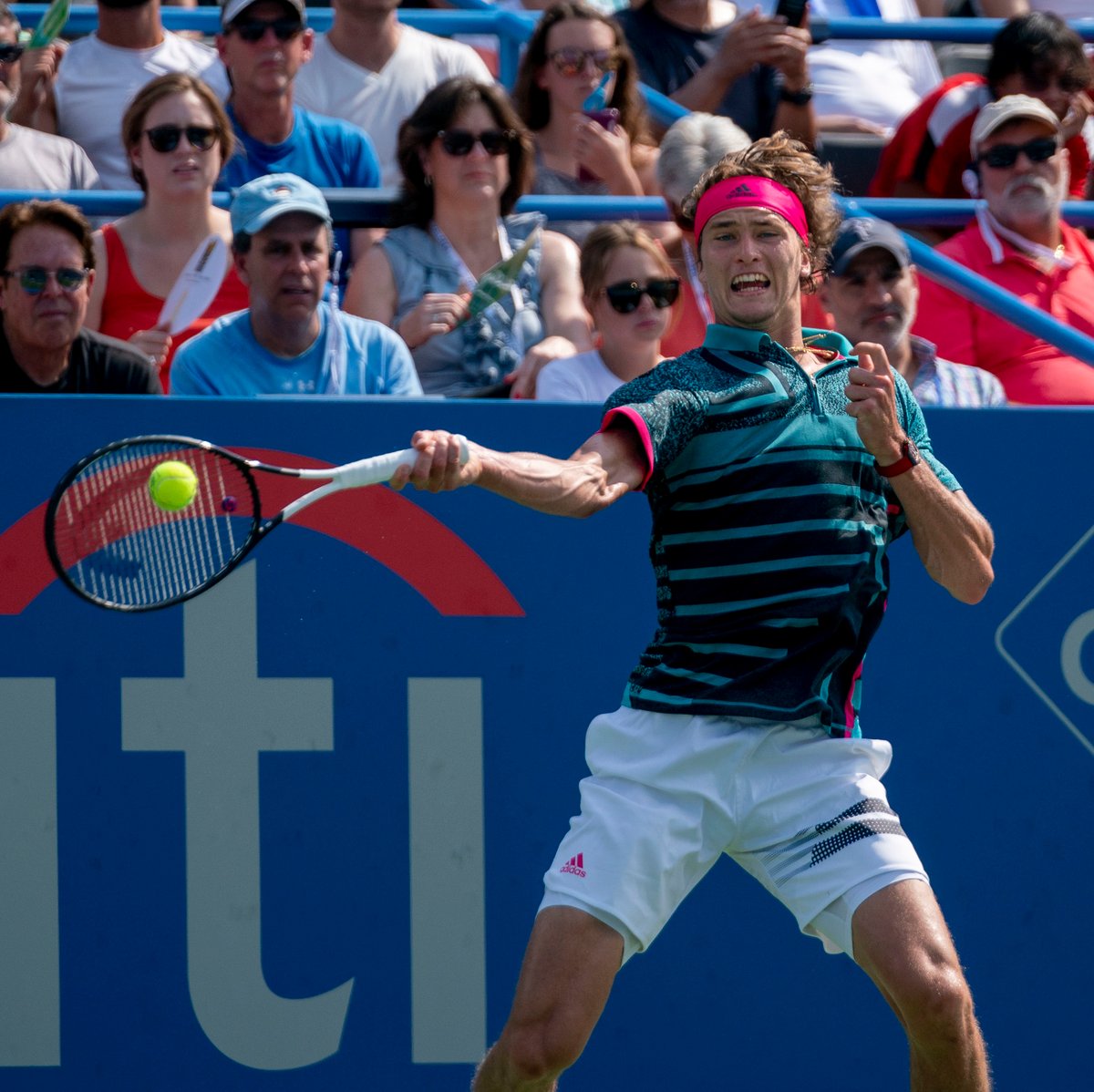
Alexander Zverev has done it. He has achieved something so monumentally significant that historians are already arguing about whether this moment belongs in the same conversation as the fall of the Berlin Wall, the moon landing, or that time your uncle finally admitted he was wrong about something at Thanksgiving.
The German tennis player defeated Jesper de Jong in straight sets at Roland Garros on Friday, and in doing so, he has apparently redrawn the entire map of human achievement. Seismologists in three countries reported unusual tremors. A flock of birds over Paris flew in perfect geometric formation. The stock market hiccupped. A child somewhere learned to ride a bike without training wheels. Coincidence? The laws of physics suggest otherwise.
Zverev’s victory was, by all accounts, clinical. De Jong played tennis. Zverev played tennis better. The sun rose in the east, the sun will set in the west, and Zverev advanced to the quarter-finals in the manner one might expect from a player widely considered the favourite for the entire tournament. This is apparently now equivalent to the invention of the printing press.
The implications are staggering. Tournament organisers are reportedly considering renaming the entire event “The Zverev Cup, Formerly Known as the French Open.” The International Tennis Federation has commissioned a bronze statue. Three separate nations have petitioned the United Nations to make the date a global holiday. None of this is exaggerated for comedic effect — well, actually, all of it is, but only because the actual event was so devastatingly normal that reality itself needed embellishment to keep pace with the hype.
What we witnessed was a player seeded as the favourite doing exactly what favourites are supposed to do: win matches against players ranked lower than them, in straight sets, without drama or incident. It was tennis. It was competent. It was the opposite of memorable, which somehow makes it the most memorable thing that has ever occurred in the history of consciousness.
De Jong, for his part, played the role of “player who lost to the favourite” with admirable dedication to the script. He showed up, he played, he lost. He will not be remembered. History will not mention him. In five years, people will struggle to recall his name. This is the way of sport: sometimes you are the protagonist, and sometimes you are the footnote that makes the protagonist look good.
But Zverev — Zverev is eternal now. His name will echo through the ages. Future generations will gather around crackling fires and tell the story of the day he won a tennis match in the manner that tennis matches are typically won. They will weep. They will argue about the significance. They will write dissertations. None of them will be able to explain why this particular victory matters more than any other victory by a favourite against a lower-ranked opponent, but that will not stop them from trying.
The quarter-finals await. Presumably, Zverev will continue to play tennis. If he wins again — and the universe suggests he might, given that he is the favourite — we may need to establish new categories of human achievement. We may need to expand the definition of “triumph.” We may need to accept that sometimes, the most extraordinary thing about an event is how ordinary it actually is, and how desperately we want it to be more.
For now, though, let us bask in the glow of Zverev’s straight-set victory. Let us pretend it changes everything. Let us agree to forget that this exact scenario plays out dozens of times every year at every major tournament. Let us, for just a moment, believe that tennis has been forever altered by a player doing precisely what we expected him to do all along.
It is what sport demands of us: the willing suspension of perspective.