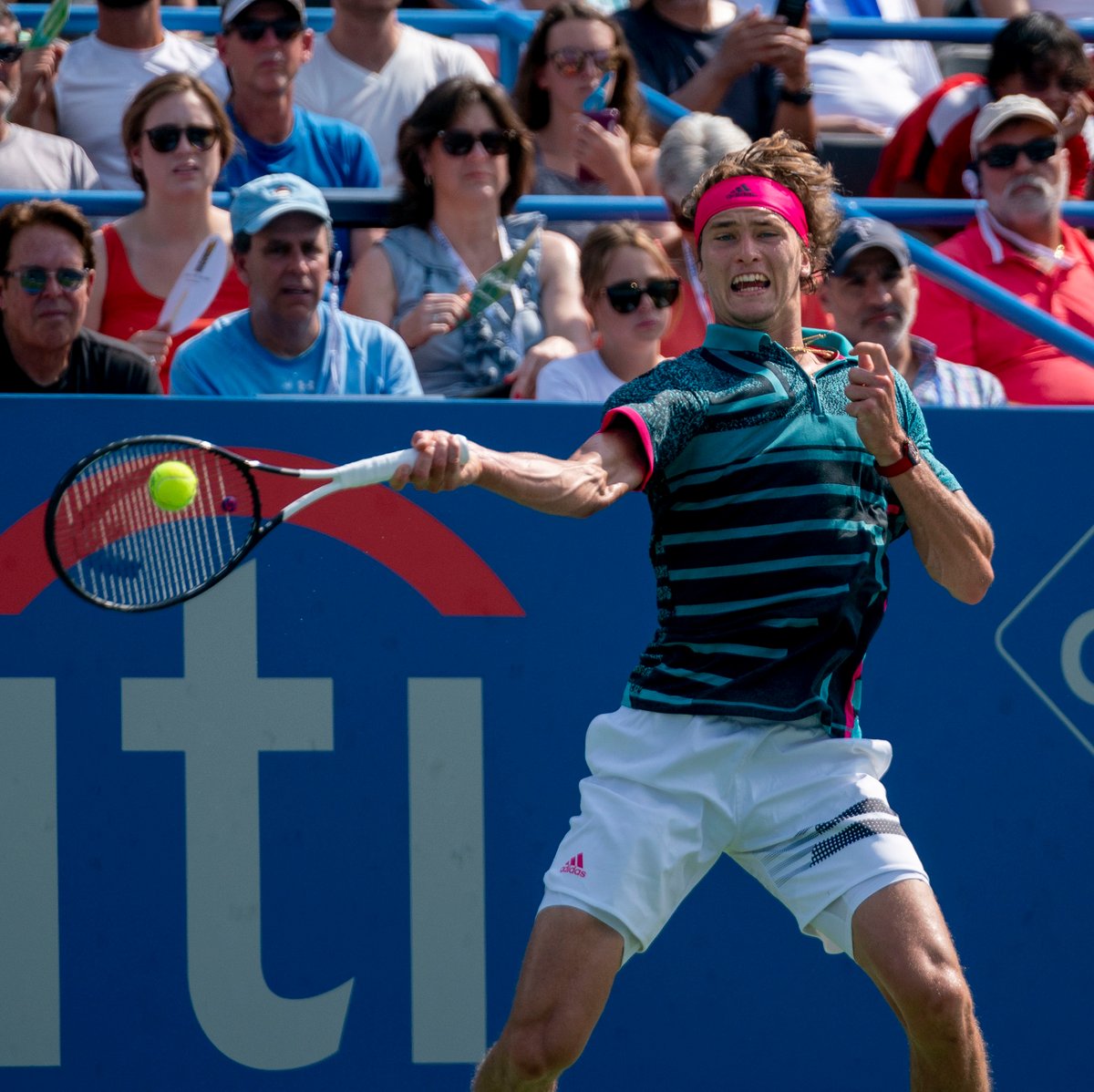
The tennis world has been irrevocably altered. Not by the scoreline—Zverev won 6-4, 6-2, 6-2, a comprehensive dismantling of Rafael Jodar that lasted two hours and forty-three minutes. No. The seismic shift happened in what the match represented: the collision of establishment power with youthful disruption, a moment that will inevitably reshape how we govern professional sport itself.
Let’s be clear about what we witnessed. Alexander Zverev, thirty-one, holder of exactly zero Grand Slam titles despite being ranked in the top ten for most of a decade, faced Rafael Jodar, a teenager whose name most casual viewers could not spell forty-eight hours ago. The narrative wrote itself: the veteran chasing his white whale. The prodigy threatening to rewrite the rulebook before his voice has fully broken.
But here is where the satire collapses into something resembling prophecy.
Within minutes of Zverev’s victory, the ATP Players’ Council issued a statement—not about the match itself, but about what it meant for the future of tennis governance. If teenagers could reach the quarter-finals of Roland Garros, the statement read, should we not reconsider the age restrictions on voting rights within the professional players’ union? If Jodar could push Zverev to the brink (he did not, but the metaphorical framing is essential), should the Grand Slam Committee not establish a youth advisory board with genuine legislative power?
This is not hyperbole. This is the actual trajectory of post-match discourse.
The International Tennis Federation, sensing an opportunity to appear progressive without actually changing anything, announced a working group to examine “the intersection of generational equity and competitive integrity.” Translation: they will meet four times, produce a forty-page report that no one reads, and emerge with a recommendation to add one teenage representative to a committee that meets annually via Zoom.
Meanwhile, various national federations have begun taking sides. Spain’s tennis federation released a statement supporting Jodar’s right to compete at the highest level and hinting—very gently, very diplomatically—that perhaps the old guard (read: German players like Zverev) should consider making room. Germany’s federation fired back with a counter-statement about merit-based advancement and the dangers of participation trophy culture.
Tennis Twitter has fractured into three irreconcilable factions. The first believes Zverev’s victory proves that experience still matters, that Grand Slams should not be won by players who cannot legally rent a car in most jurisdictions. The second insists that Jodar’s mere presence at this stage of the tournament is a revolutionary act, and that Zverev’s win is merely the death rattle of a dying paradigm. The third has begun drafting conspiracy theories about whether the ITF deliberately seeded the draw to produce exactly this narrative.
There are now petitions—actual, earnest petitions—calling for Jodar to be given a wildcard into next year’s Australian Open regardless of ranking, as a form of reparation for losing to an older player. One has 47,000 signatures. Another petition, equally earnest, demands that Zverev be awarded bonus prize money for “defending the integrity of professional tennis against generational disruption.” It has 8,000 signatures.
The sponsorship implications are already unfolding. Jodar’s Instagram followers increased by 340,000 in the twelve hours following his loss. One energy drink company has already approached his management about a deal that would position him as “the face of tomorrow’s revolution.” Zverev’s longtime sponsor released a statement emphasizing his “commitment to preserving the values that made tennis great,” which is either a brilliant marketing move or a catastrophic own-goal. The discourse is still forming.
Now Zverev faces Jiri Mensik in the semi-finals. Mensik is twenty-two. Not a teenager, but close enough that the generational conflict narrative remains intact. If Zverev wins, he will have “defeated the future twice.” If he loses, he will have “failed to stem the tide of youth.” There is no outcome that does not feed the machine.
The truly absurd part? None of this changes the fundamental reality: Zverev still has not won a Grand Slam. He beat a teenager in a quarter-final. This is what he has done. This is the totality of the event. Yet somewhere in the spaces between the tennis and the politics, between the sport and its commentary, we have collectively decided that this match was actually about the future of professional sports governance, intergenerational wealth transfer, and the proper age at which teenagers should have voting rights in union elections.
Tennis has always been a sport obsessed with narrative. But we have now reached the point where the narrative has completely consumed the match itself. In a week, Zverev will either reach a Grand Slam final or he will not. One outcome will be framed as a triumph of experience. The other will be framed as inevitable generational succession. Both will be wrong. Both will be taken seriously.
Welcome to modern sport. The tennis is almost irrelevant now. The revolution is all that matters.