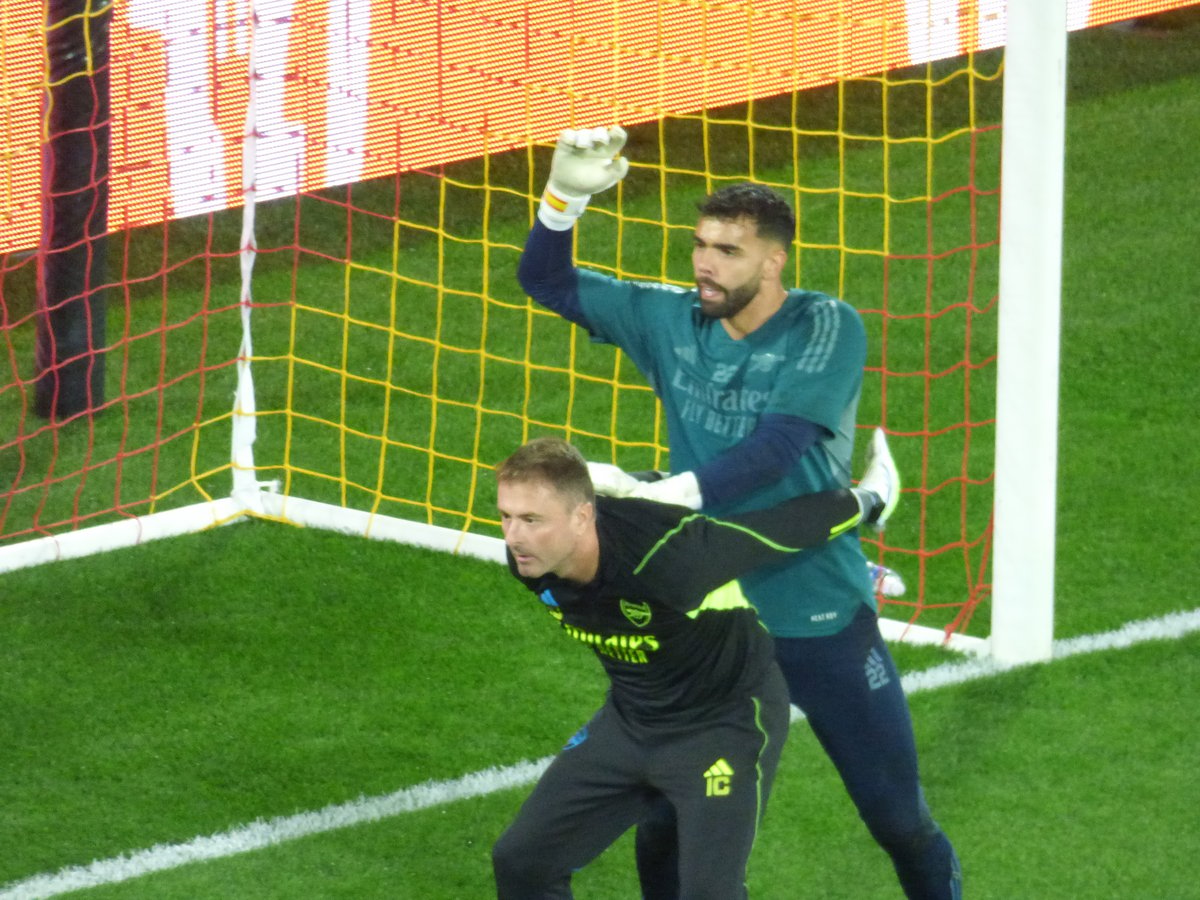
FIFA has decided that goalkeepers talking to their coaches during an injury timeout is now a crime against the sport. At the 2026 World Cup, players will be banned from entering the technical area to receive tactical guidance when a goalkeeper needs medical attention. The governing body has essentially declared that a goalkeeper bleeding from the eyebrow is incompatible with a manager offering strategic advice. It is as if FIFA woke up one morning and thought: what if we made football even more rigid? What if we removed one of the few moments where a team can actually communicate mid-match without the referee blowing a whistle?
The logic here is so backwards it circles back on itself. Goalkeepers get injured. Injuries require stoppages. Stoppages create natural breaks in play. Natural breaks in play are exactly when coaches traditionally speak to their players—not to cheat, not to gain some unfair advantage, but to adjust to what is happening on the pitch. A defender gets a knock and limps off. The goalkeeper takes a ball to the face. A midfielder pulls a hamstring. These are moments when tactical information matters. They are also moments when the game is already stopped.
But FIFA, in its infinite wisdom, has decided that the integrity of the competition depends on enforcing radio silence during goalkeeper injuries. Not during other injuries, mind you. Just goalkeepers. Because apparently the 120-minute chess match that is modern football cannot tolerate a manager whispering “push higher” or “drop deeper” while a medic is taping up a goalkeeper’s finger.
The ban creates a genuinely absurd scenario. Imagine you are a coach. Your goalkeeper has just taken a boot to the ribs and is being treated on the sideline. Your team’s entire shape is now in flux. Your defense is confused about whether to push up or sit deep. Your midfield does not know if the goalkeeper will return or if you are bringing on a backup. And you—the person whose job is literally to make tactical decisions—are forbidden from entering the technical area to clarify anything. You must stand in the dugout, silent, while your team figures it out alone. It is as if FIFA believes that coaching is only permitted when the ball is in play.
This is not about preventing cheating. No goalkeeper has ever been injured as a cover for a manager to sneak onto the pitch and rearrange the entire team’s formation. The rule does not solve a problem that exists. Instead, it creates a new one: it removes a manager’s ability to respond to a genuine disruption in the game. It treats communication like it is contraband and injury stoppages like they are opportunities for misconduct rather than what they actually are—moments when the game pauses and everyone takes a breath.
The real punchline is that FIFA is treating this as if it requires “technical timeout training.” Goalkeepers now need to be trained on how to handle the fact that their coach cannot talk to them during an injury break. This is not a skill. This is not a tactical innovation. This is a goalkeeper being told: “You are on your own. The manager cannot help you. Good luck.” It is as if FIFA has confused injury management with contract negotiation, as if a goalkeeper needing guidance from their coach is somehow equivalent to international diplomacy requiring formal protocols.
The real issue is that FIFA continues to legislate solutions to problems that do not exist while ignoring problems that are genuinely destroying the sport—like the fact that referees make catastrophic decisions every week, or that VAR has made football slower and more frustrating, or that the schedule is so congested that players are breaking down like worn machinery. But no. The pressing concern is that a manager might say something helpful to their goalkeeper while a medical team is treating an injury.
At this rate, FIFA will eventually require goalkeepers to take a certification course in “Injury Timeout Communication Protocols.” They will need to learn how to cope with the psychological burden of being injured without their manager’s voice in their ear. Coaches will need to attend workshops on “Advanced Silence During Goalkeeper Injuries.” There will be compliance officers checking that no manager so much as makes eye contact with the technical area when a goalkeeper is being treated.
The 2026 World Cup will be the first tournament where a goalkeeper’s injury is treated like a state secret. Managers will be forced to mime their instructions from the dugout like they are performing in a silent film. And FIFA will congratulate itself on having solved a problem that never existed in the first place.
This is what happens when an organization with absolute power and no accountability decides to regulate every possible scenario. It does not solve real issues. It just creates new ones and calls it progress.