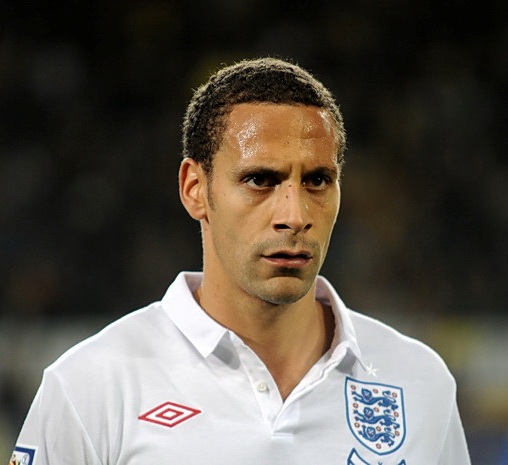
Two men who spent years standing shoulder to shoulder in the England defence, reading the game as a unit, communicating through glances and positioning—are now communicating through Instagram captions and quote-tweets. This is where we are. This is what we have become.
Rio Ferdinand and Jamie Carragher, once partners in the noble art of not letting balls past them, have discovered that social media has given them something far more valuable than trophies: an audience that will watch them bicker in real time, with receipts. And they are not wasting the opportunity.
The spat itself is almost beside the point. The mechanics of who said what, who posted which caption, what the underlying grievance might be—these are details for people who still believe Twitter discourse is about information exchange. The real story is that two grown men who played football at the highest level have decided that the best use of their platform, their credibility, and their remaining years on this earth is to engage in a theatrical feud that would make professional wrestlers blush.
This is not a new phenomenon, but it has reached a kind of perfection in 2026. The formula is flawless: one party posts something mildly provocative. The other responds with exaggerated offense. A third party—usually a current player with 2 million followers—weighs in with a skull emoji. The algorithm trembles. Journalists write about it. We all pretend this matters. Everyone wins except meaning itself.
What makes the Ferdinand-Carragher saga so deliciously absurd is that they actually know each other. They played together. They understand the game at a depth that 99.9% of the population cannot access. They have forgotten more about defensive positioning than most analysts will ever know. And yet here they are, locked in combat over… what, exactly? A caption? A tone? The implication that one of them is less insightful than the other?
It is the sporting equivalent of two Michelin-starred chefs arguing about who makes better toast.
The beauty of modern sports discourse is that it has democratized outrage while simultaneously making it completely meaningless. In the old days, you had to wait for Match of the Day or the newspaper the next morning to hear expert analysis. Now you have Ferdinand and Carragher competing in real time, with the stakes being engagement metrics rather than actual insight. The winner is whoever gets retweeted more. The loser is anyone hoping to learn something about football.
And the genius part? Neither of them can stop. Because stopping would mean admitting that this is absurd. Stopping would mean acknowledging that they are both trapped in a system that rewards conflict over clarity, personality over analysis, and the appearance of having a take over actually having a worthwhile one. So they keep going. They caption. They quote-tweet. They retweet. They like each other’s posts just enough to suggest the feud might end, then unlike them to suggest it absolutely will not.
It is performance art masquerading as journalism masquerading as genuine disagreement. It is the ouroboros of sports media—the snake eating its own tail while commentating on how well it is doing it.
The tragedy is that Ferdinand and Carragher are good at their jobs. When they are actually analyzing football, they provide genuine insight. But that insight is boring to the algorithm. It does not generate the same engagement as a well-timed dig. A thoughtful breakdown of tactical evolution will get you 50,000 views. A sarcastic caption at your former teammate will get you 500,000 and a trending hashtag.
So we have created a system where the incentive structure actively punishes depth and rewards drama. We have built a machine that turns intelligent people into content creators and content creators into caricatures of themselves. And then we act shocked—shocked!—when the discourse becomes unhinged.
The Ferdinand versus Carragher saga is not really about Ferdinand versus Carragher. It is about what happens when you give competitive athletes an infinite stage and tell them that the only currency that matters is attention. It is about the death of nuance and the birth of the eternal dunk. It is about two men who should be friends but cannot afford to be, because friendship does not trend.
So they will keep going. They will keep posting. They will keep responding. And somewhere, a young pundit is watching and learning that this is what success looks like—not being right, but being loud. Not being thoughtful, but being first. Not building something, but burning something down in front of as many people as possible.
Two centre-backs. One timeline. Zero chill. This is football in 2026.