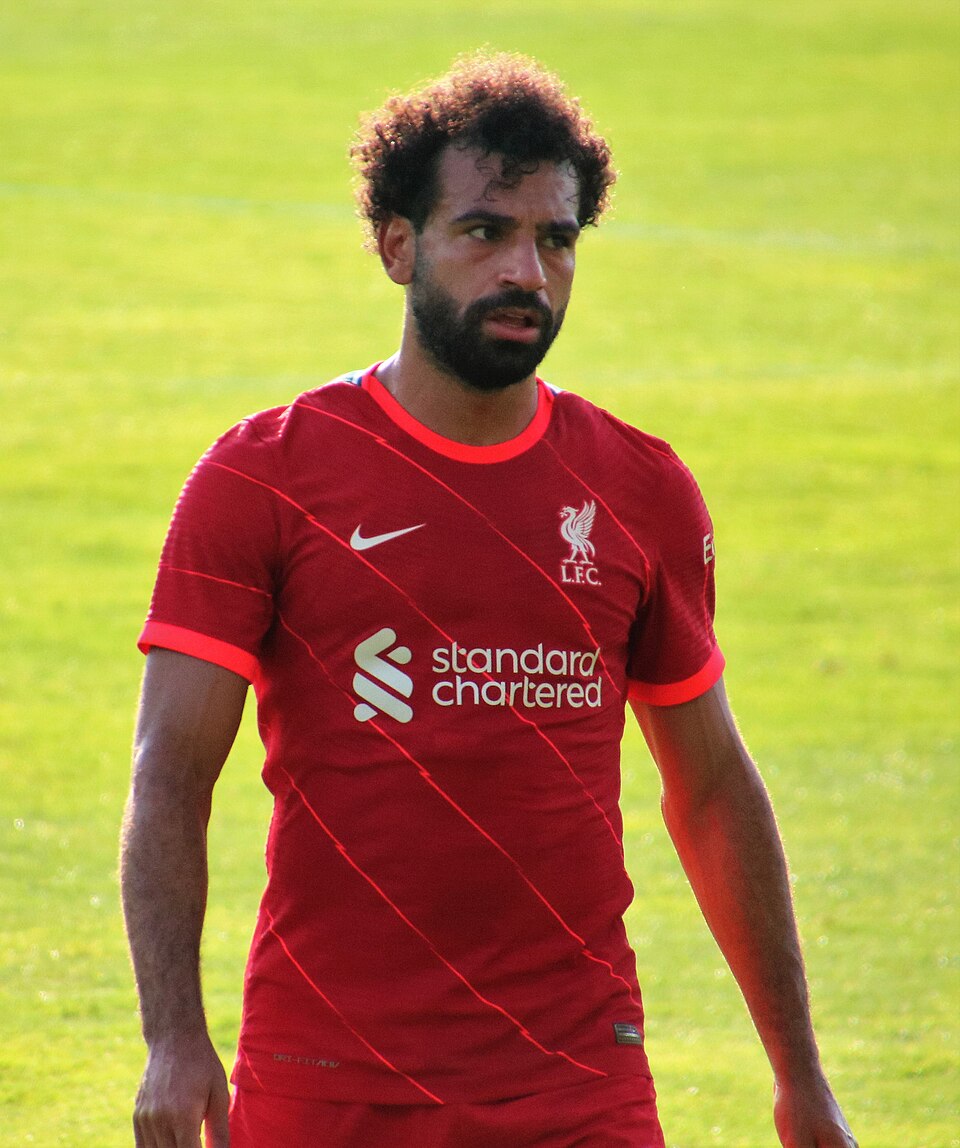
Wayne Rooney has solved it. After decades of football evolving, tactics deepening, and data science revolutionizing how we understand the game, the answer was simple all along: bench your most prolific scorer because he said something the manager didn’t like.
This is not a drill. This is not a thought experiment. This is a genuine proposal from a man who once played football at the highest level, and it deserves the full weight of our attention—not because it’s good, but because it represents a fundamental misunderstanding of what modern football actually is.
Mohamed Salah, the player who has scored more Premier League goals than any other Liverpool player in the club’s history, should be dropped from the season finale because he criticized the club. Not because he’s injured. Not because he’s underperforming. Not because a tactical adjustment requires his absence. Because he was selfish enough to have opinions about how Liverpool should be run.
Let’s sit with that for a moment.
Rooney’s argument hinges on a belief that team chemistry is a fragile thing, like a soufflé that collapses the moment someone mentions that maybe the recipe could be improved. One player speaks publicly about the club’s direction, and suddenly the entire psychological foundation of a football team—built on months of training, tactical work, and competitive matches—evaporates. The solution, naturally, is to remove the player who generates the most attacking threat.
This is what we might call the “scorched earth approach to morale.” It’s the strategic equivalent of a manager walking into a kitchen where the head chef has questioned the menu, and deciding the best way to improve the restaurant is to fire the head chef for the most important service of the year.
The irony is almost too perfect. Rooney spent his career at Manchester United playing for a manager—Sir Alex Ferguson—who tolerated, encouraged even, strong personalities and outspoken players. Roy Keane, Eric Cantona, Rooney himself—these were not quiet, compliant footballers who nodded along with everything the club did. They had edges. They had voices. And Ferguson understood that this was not a weakness to be managed away; it was part of what made the team function.
But times change. Now we live in an era where player power is treated as a contagion. A single critical comment becomes evidence of dressing-room toxicity. A player asking for clarity on his future becomes selfish. The narrative has shifted so far that wanting to know where you stand at your club is now positioned as a character flaw.
What’s particularly fascinating about Rooney’s proposal is that it inverts cause and effect. Salah didn’t create a crisis of team chemistry—if anything, his comments were a symptom of uncertainty about Liverpool’s direction. Dropping him doesn’t solve that uncertainty; it confirms it. It says to every player in the squad: speak up about the club’s future, and you’ll be benched. It’s the fastest way to ensure that future complaints happen only in private conversations and leaked reports, which somehow feels like worse for team cohesion than honest public dialogue.
There’s also the small matter of what happens to Liverpool’s attack when you remove the player most likely to score. In the season finale—the match that could determine title outcomes, European qualification, or nothing at all depending on where we are in May—you voluntarily handicap your own team. You take a point of leverage off the table. You say to your opponent: “We’re going to make this harder for ourselves because we value a lesson more than we value winning.”
Sometimes that’s the right call. Sometimes a player’s behavior is so destructive that the team needs to make a statement, consequences be damned. But Salah’s crime, as far as we know, was not sabotage. It was not violence or illegal conduct. It was not even poor form or visible disengagement. It was words. Criticism. The kind of thing that happens in every workplace in the world, usually resolved through a conversation rather than a public execution.
The genius of Rooney’s proposal is that it sounds decisive. It sounds like leadership. It sounds like someone willing to make the hard calls and put principle above results. But it’s actually the opposite—it’s the absence of leadership. It’s a manager so threatened by a player’s autonomy that he’d rather lose a match than acknowledge that his star player might have a point.
If Liverpool’s season finale is important enough to merit dropping their best player as a disciplinary measure, it’s important enough to actually win. And if you want to win, you don’t bench Mohamed Salah because he hurt the manager’s feelings.
That’s not revolutionary strategy. That’s just ego dressed up as principle.