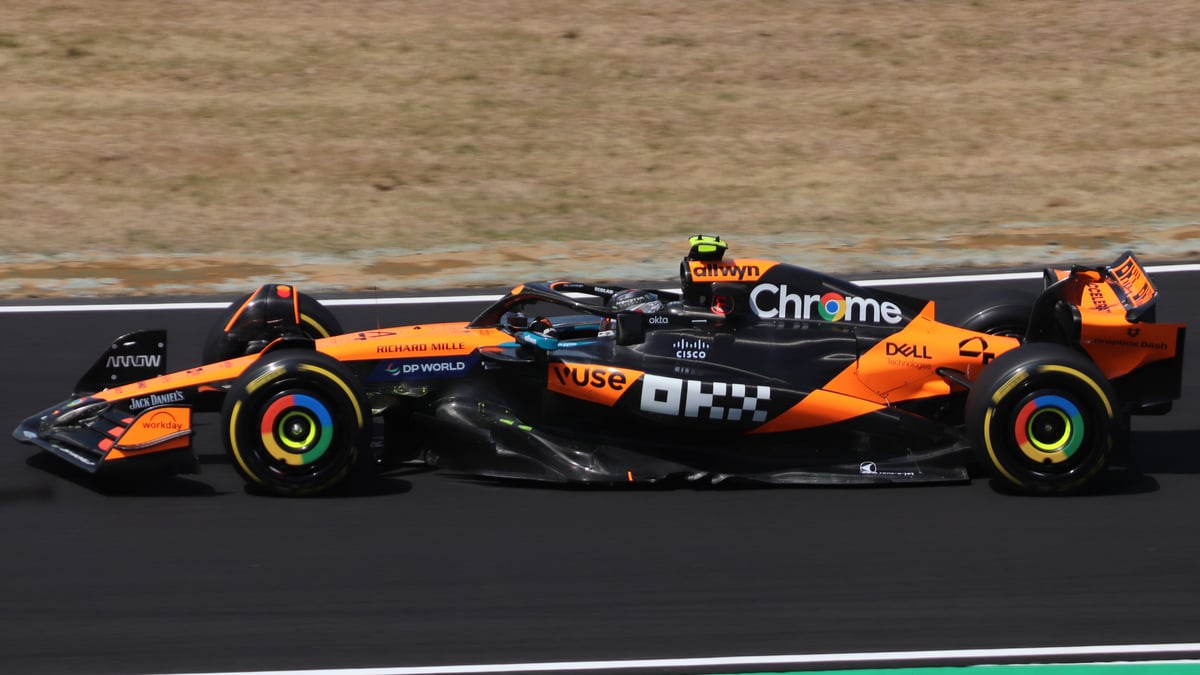
Lando Norris crossed the finish line at Barcelona thinking he’d won. He hadn’t. A computer algorithm—deployed at precisely the worst moment in human history—had decided otherwise. Welcome to Formula 1 in 2026, where your race engineer is a human being but your destiny is controlled by a subroutine.
The Virtual Safety Car, that digital ghost that materializes whenever the sport needs to feel modern and “data-driven,” has become the most efficient race-winner in the paddock. It doesn’t need fuel. It doesn’t make mistakes (or does it?). It just exists in a state of perfect computational inevitability, waiting to redistribute victory like a slot machine that only pays out to the algorithm’s chosen few.
Norris led the entire race. He drove better than everyone else. He deserved to win. But then the VSC triggered at lap 47, and suddenly the field compressed, the undercut became viable, and what should have been a straightforward championship statement became a statistical anomaly—a loss engineered not by racing but by timing.
This is not sport anymore. This is a video game with real people inside it, and the game developer just patched the outcome mid-race. We’ve outsourced the drama to code. We’ve decided that human judgment—the kind that used to decide races—is too unreliable. Better to let the computer decide who wins, then debate the computer’s decision for three weeks.
F1 claims to be the pinnacle of motorsport. It’s actually the pinnacle of technological theater, where a perfectly executed drive can be erased by a perfectly timed algorithm. Norris wasn’t unlucky. He was out-coded.