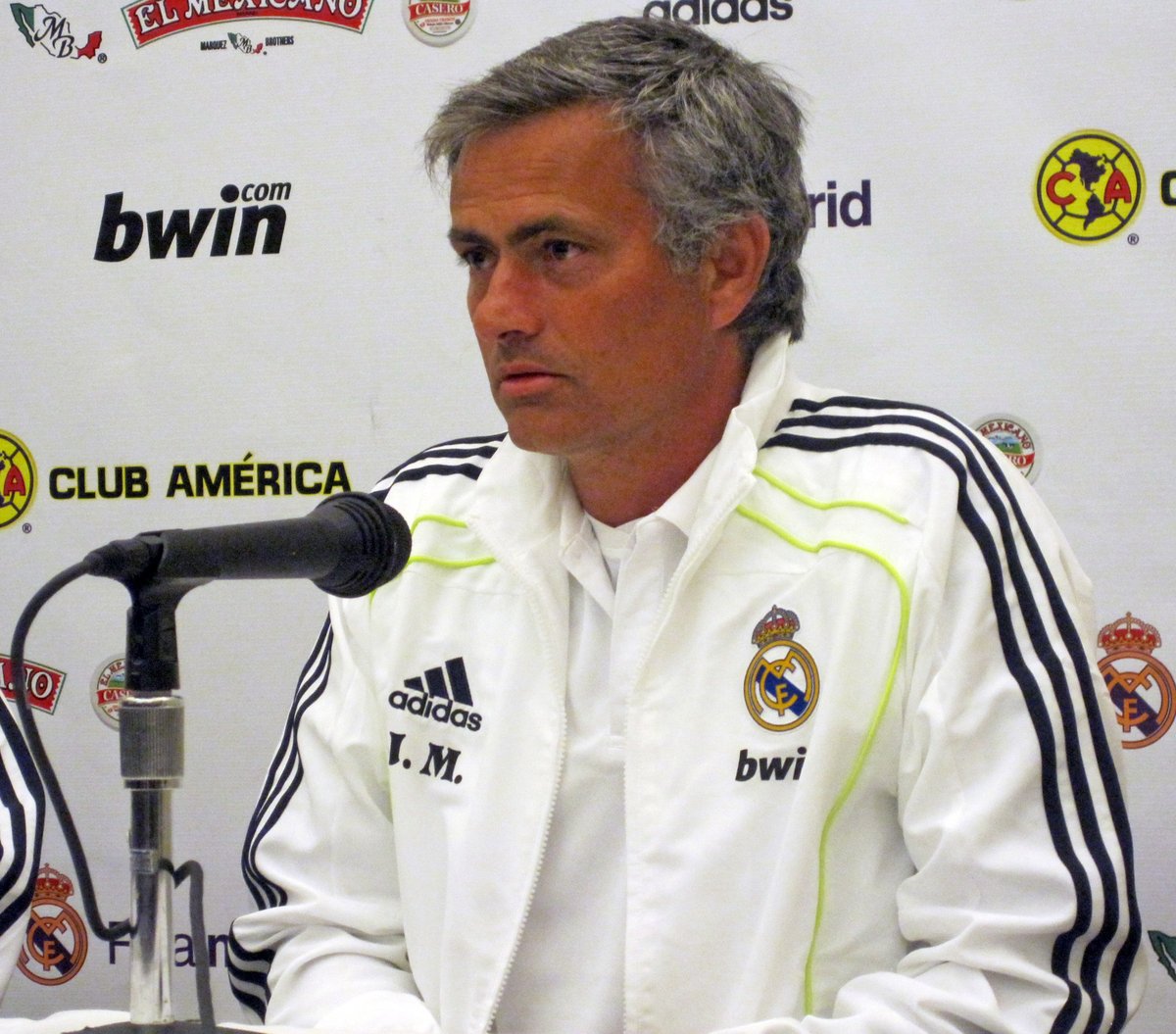
José Mourinho has returned to Real Madrid, and somewhere in the Bernabéu, a production company is already pitching Netflix a limited series. Because what we are about to witness is not football management—it is high theatre with a ball, a Portuguese ego, and a Brazilian winger who has spent the last three years perfecting the art of the theatrical tumble.
Let us be clear about what has actually happened here. Real Madrid, a club that has won more trophies than most nations have functioning governments, has decided that the best way to reclaim dominance is to rehire a man who once famously said his biggest regret was not punching someone in the face. This is the same Mourinho who walked into Stamford Bridge and declared himself a “special one,” who feuded with Arsène Wenger for a decade over who had better hair gel, and who once suggested that a rival manager should “go to the beach and think about his life.” Now he is back, and Vinicius Jr—electric, emotional, prone to diving like he has been shot by a sniper when a defender breathes on him—is his leading actor in what promises to be the greatest unscripted drama since the Real Madrid-Manchester City semi-final.
The tension is already delicious. Mourinho has never been a man to suffer flair without discipline. He builds walls. He constructs systems. He treats attacking football like it is a necessary evil, something to be tolerated only if it results in a clean sheet and three points. Vinicius, by contrast, plays like he believes every match is a World Cup final being broadcast directly to his mother. He runs at defenders with the kind of reckless joy that makes accountants weep and defensive coaches reach for their blood pressure medication.
Consider their previous encounter in the theatre of the absurd. Mourinho, in his first spell at Madrid, was the architect of a machine that won La Décima—the tenth European Cup. It was efficient, ruthless, and about as spontaneous as a tax audit. Had Vinicius been there then, we can only imagine the philosophical battle: a coach who believes football should be won 1-0, versus a player who thinks 5-4 is perfectly acceptable as long as he scored the hat-trick.
But here is where it gets genuinely interesting, beneath all the pantomime. Vinicius is now 26 years old and in the prime of his career. He has survived the Mbappé transition. He has become the club’s primary attacking outlet, a player who can single-handedly dismantle a defence through sheer velocity and technical brilliance. Mourinho, for all his defensive paranoia, is not stupid. He knows that you cannot win the Champions League with eleven defenders and a prayer. He needs Vinicius to be brilliant. He also needs Vinicius to be disciplined, to know when to pass, to understand that diving seventeen times per match might entertain the Bernabéu crowd but will eventually earn him a reputation that no referee will forgive.
What we are about to watch is a masterclass in ego management disguised as football. Mourinho will demand that Vinicius track back. Vinicius will argue—loudly, emotionally, possibly with hand gestures that would make an Italian grandmother blush—that he is a forward, not a full-back. Mourinho will win some of these arguments through sheer force of personality. Vinicius will win others by scoring a hat-trick on a Tuesday night and reminding everyone why Real Madrid paid actual money for his services.
The beautiful part is that both of them need this to work. Mourinho needs to prove that he is not a relic, that his third act at a major club will be triumphant rather than tragic. Vinicius needs to show that he can be the talisman of a Mourinho team—the player who doesn’t just score goals but understands the poetry of defensive organisation. It is a marriage of convenience wrapped in theatrical conflict, and it will be absolutely unmissable.
So buckle up. The greatest soap opera in modern football has just entered its second season, and unlike most sequels, this one might actually be better than the original. Expect drama. Expect brilliance. Expect Mourinho to blame the referee, Vinicius to blame the referee, and both of them to somehow be right. This is not football. This is art. Terrible, beautiful, utterly absurd art.