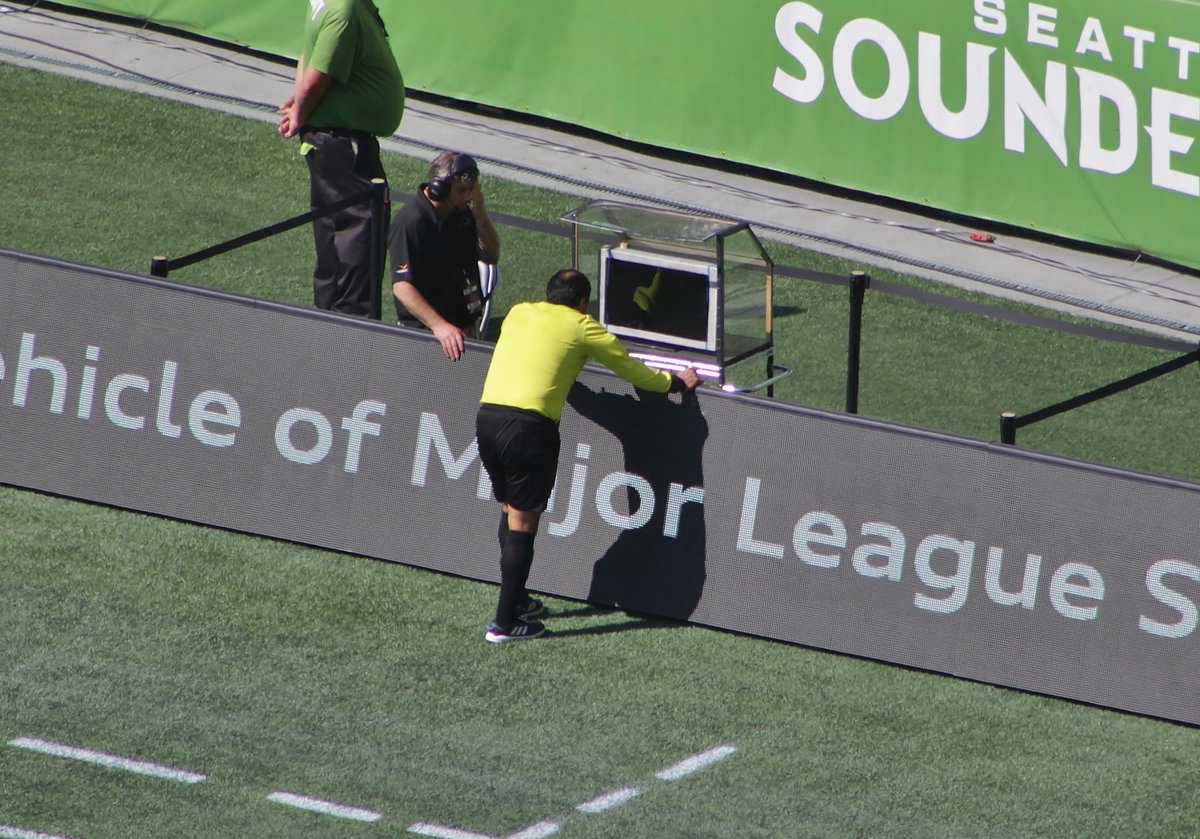
We have finally reached it. The moment where professional sport’s most powerful decision-makers can simply blame their nervous system for altering the course of a match.
Video assistant referee Shaun Evans has explained away a controversial hand gesture by claiming it was an involuntary twitch—something he was apparently unaware he was doing while sitting in a darkened room with nothing but a monitor, a coffee, and the ability to overturn a goal. This is the logical endpoint of VAR’s existential crisis: officials who wield life-or-death power over ninety-minute narratives but cannot be held accountable for their own bodies.
The beauty of this defense is its unfalsifiability. How do you prove a twitch was intentional? How do you distinguish between a meaningful gesture and a muscle spasm when the official themselves claims ignorance? We have created a system where the most consequential decisions in sport can now be attributed to the same category as hiccups and eye twitches.
This is not about the specific incident anymore. It is about the principle: we have given one person in a booth the authority to erase moments of brilliance, to deny celebrations, to rewrite history—and that person can now simply shrug and say their hand did it without permission.
If modern officiating is going to hinge on involuntary gestures, perhaps we should just let the players decide. At least they would own their mistakes.