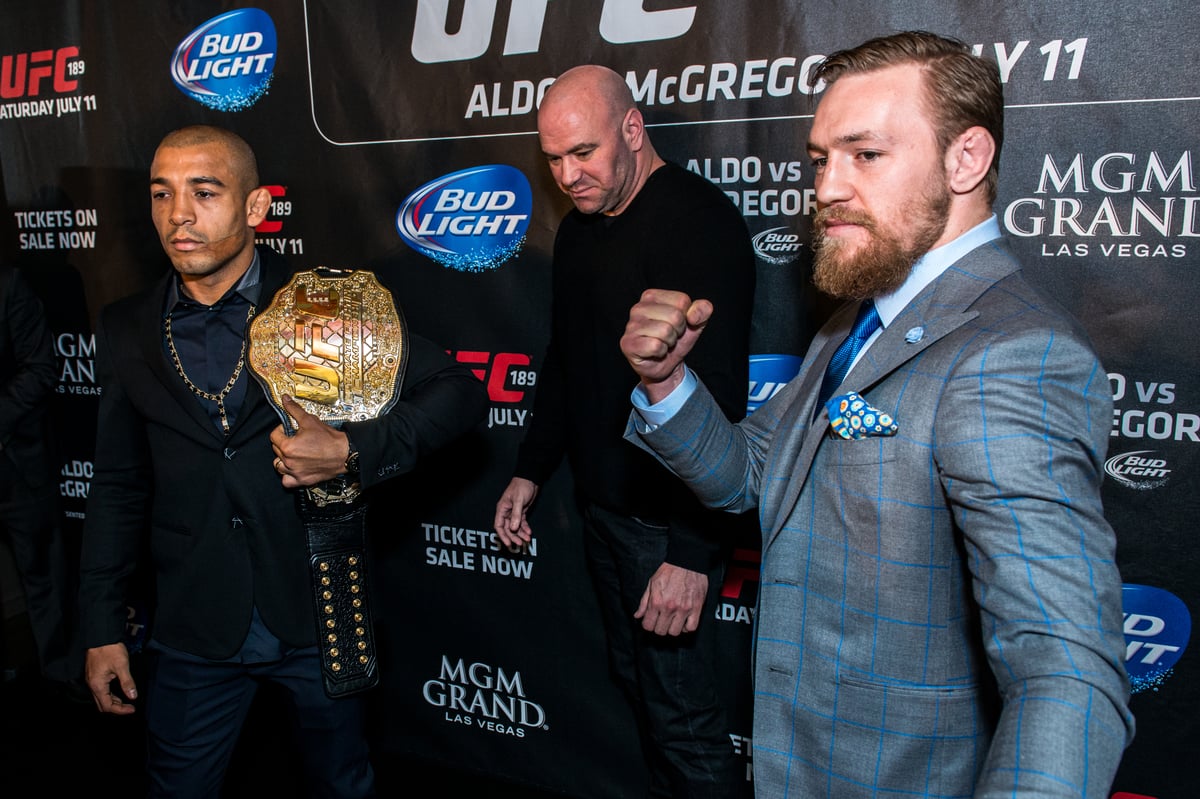
Conor McGregor did what any self-respecting combat athlete would do before a high-stakes rematch: he removed his opponent’s glasses during the face-off. Because in 2026, apparently, the path to psychological victory runs through the optical correction aisle.
Max Holloway showed up to UFC 329 in Las Vegas wearing spectacles—a choice that, in the testosterone-saturated theatre of combat sports, reads as either visionary or suicidal. McGregor read it as a challenge. Not to his fighting ability. Not to his cardio or wrestling or anything remotely related to the actual sport. But to his authority over the narrative. And so the glasses came off.
Let’s be clear about what we witnessed: a moment where a world-class fighter felt compelled to assert dominance by disarming his opponent of something that helps him see. This is not strategy. This is not gamesmanship. This is a man so committed to the performance of strength that he has confused physicality with power. The glasses themselves became a symbol—not of weakness, but of the fragile ecosystem where masculinity in sports requires constant, visible reassertion.
Holloway kept his composure. McGregor got his moment. The internet got its content. And somewhere in a marketing department, someone nodded knowingly: this is exactly what sells tickets to people who will spend three hours watching two humans negotiate who gets to be right about themselves.
The rematch will be decided by skill, stamina, and strategy. But we will all remember the glasses. Because in modern combat sports, the real fight happens before anyone throws a punch—and apparently, it’s against corrective lenses.