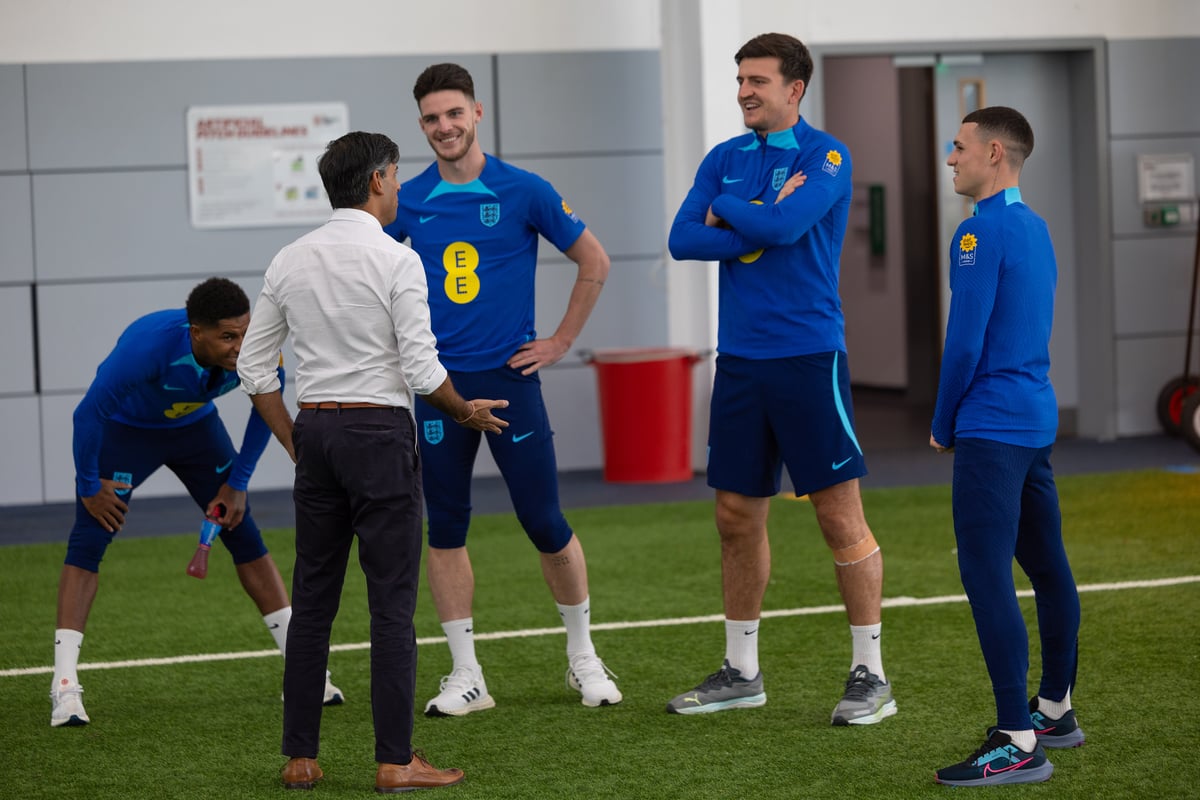
Thomas Tuchel has made a decision that would have gotten him sacked at Chelsea, Bayern, or PSG, but which somehow feels inevitable in June 2026: he is now taking tactical advice from children who still lose their shin guards between training sessions.
The England head coach sat down with a squad of under-11 players this week to field their questions ahead of the World Cup. On the surface, it is a nice PR exercise—get the kids involved, show humility, remind everyone that football is a beautiful game played by people of all ages. In reality, it is a man two months away from the biggest tournament of his career asking nine-year-olds for their thoughts on pressing triggers and defensive shape.
The absurdity here is not that kids ask silly questions. Kids ask interesting questions, often the kind that expose the overthinking of adults. The real comedy is the professional desperation underneath. Tuchel has won everywhere—except, crucially, the thing that matters most. He has never won a World Cup. And now, with England’s hopes resting on his shoulders and the tournament looming, he is apparently willing to listen to anyone, including a child who genuinely asked him why footballers don’t just kick the ball harder.
This is what peak modern football looks like. We have VAR officials in bunkers second-guessing decisions made in real time. We have analytics departments that cost more than entire clubs from five years ago. We have coaches who study sleep cycles and hydration microseconds. And yet here is one of the world’s best tactical minds sitting on a bench at a training ground, nodding seriously while an under-11 explains that “the goalkeeper should just catch it more.”
The contrast is almost poetic. Tuchel has spent the last fifteen years mastering the game at its highest level. He has managed in the Premier League, Bundesliga, Ligue 1, and Serie A. He has won titles, broken records, and earned a reputation as someone who can organize a defense so tight you could hear a pin drop from the stands. His World Cup preparation has involved hours of video analysis, opponent scouting, and strategy sessions with some of the sharpest minds in the sport.
Then a ten-year-old raises his hand and asks, “Why don’t you just score more goals than them?”
And Tuchel, visibly considering the question as if it might unlock some hidden dimension of the game, nods thoughtfully.
What is genuinely interesting about this moment is not the children’s questions themselves, but what their presence implies about Tuchel’s state of mind. A coach confident in his preparation would not need this. A coach secure in his tactical vision would not sit down with a youth team for guidance. But a coach who knows that football—at its highest level, with everything on the line—sometimes comes down to factors no amount of analysis can predict? That coach might actually benefit from a reminder that the game, stripped of all its complexity, is fundamentally simple.
The under-11s do not know about inverted fullbacks or false nines or the pressing triggers that unlock a midfield. They know that you run toward the ball, you try to kick it into the goal, and sometimes you win and sometimes you lose. There is a clarity to that perspective that no amount of tactical sophistication can replicate.
Of course, this is also the moment where Tuchel’s preparation meets reality. England will not win the World Cup because a nine-year-old had a good idea. They will win it because their players are better than the opposition, because their fitness is superior, because their mentality holds up when the pressure becomes unbearable. But perhaps—just perhaps—there is something to be said for a head coach who is willing to step outside the echo chamber of professional football and listen to voices that have not yet been corrupted by its complexity.
The real test comes in Qatar next winter. That is when we will find out whether Tuchel’s willingness to seek wisdom from the young was a sign of humility or a sign of panic. Whether sitting with under-11s was a clever reminder of football’s fundamental truths or a desperate grasp at anything that might work.
For now, though, the image stands: one of the world’s best coaches, surrounded by children who think the solution to every problem is to run faster and kick harder. In a sport that has become obsessed with marginal gains and microsecond advantages, maybe they are onto something. Or maybe Tuchel is just making sure he has covered every possible angle before the tournament begins.
Either way, if England wins the World Cup, you know exactly what the headline will be: “Tuchel’s Secret Weapon Revealed—And They Are Not Even Teenagers Yet.”