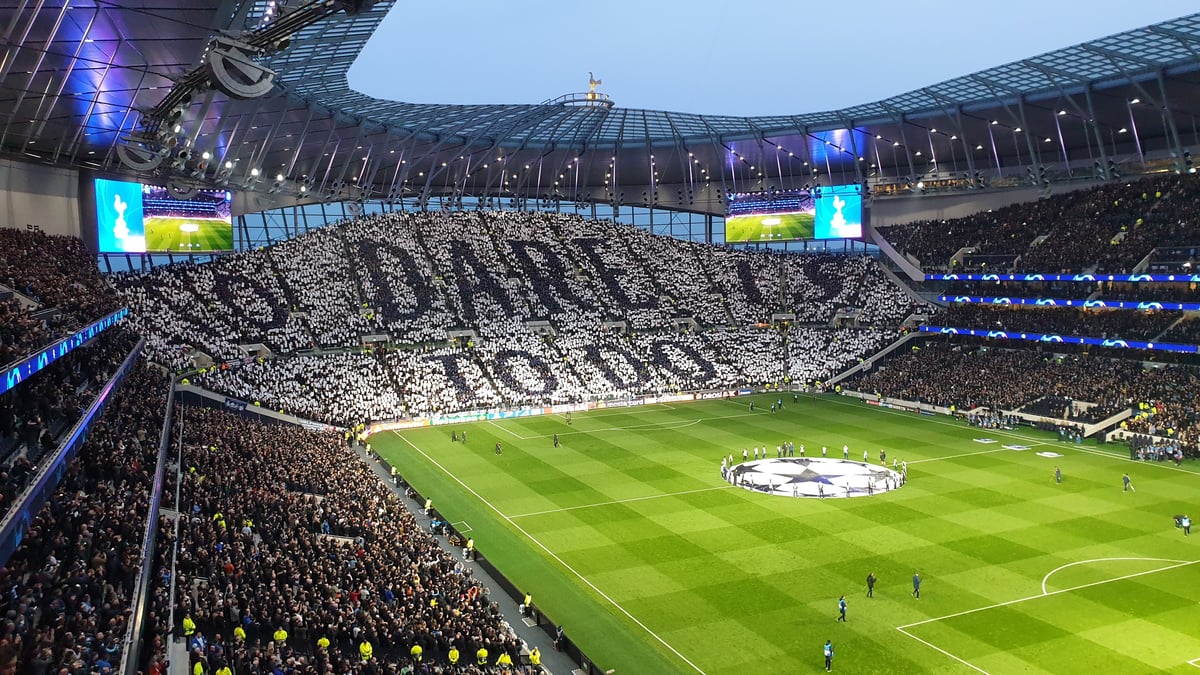
There is a moment in every great tragedy where the protagonist, having stumbled through five acts of increasingly catastrophic decisions, suddenly finds himself alive. Not thriving. Not vindicated. Alive. This is Tottenham Hotspur’s 2025-26 season in its truest form: a Shakespearean farce masquerading as a survival story, complete with all the gravitas of a man celebrating that he did not, in fact, fall off a cliff.
Let us be clear about what happened on the final day. Spurs did not win the Premier League. They did not secure a European place. They did not even finish in the top half with any dignity intact. They survived. They collected enough points to avoid the drop zone by the width of a tactical error, which, given their season, might as well have been by the width of a hair on Ange Postecoglou’s increasingly greying head.
The celebrations that followed were, by all accounts, euphoric. Players embraced. Fans sang. The club’s social media team surely worked overtime finding the most triumphant camera angles. And why not? In the modern Premier League, survival is achievement. Survival is narrative. Survival is a trophy you can hold aloft without anyone asking uncomfortable questions about how you nearly didn’t make it.
But here is where the satire becomes almost too easy to write: this was Tottenham Hotspur. Not Luton Town grinding out a miracle. Not Ipswich discovering some forgotten well of competence. Tottenham. A club with a stadium that looks like a spaceship. A club that spent money like a lottery winner with poor impulse control. A club whose manager arrived with a philosophy so revolutionary it could only be described as “attack, attack, attack”—which, it turns out, is also a philosophy that leaves you vulnerable to “defend, defend, defend.”
The season was not close. It was a slow-motion car crash that somehow, improbably, ended with everyone walking away. Spurs spent months looking down the barrel of the Championship. They lost games that should have been won. They won games that should have been lost. They drew games that should have been abandoned for gross indecency against the sport. The narrative arc was not redemption. It was survival. The lowest possible bar, treated as the highest possible achievement.
What makes this genuinely comic—and here is where the exaggeration stops being exaggeration—is that the club’s response to nearly dying is to celebrate like they have just been resurrected. There is no accountability in the air. No reckoning with the fact that a team with their resources, their stadium, their history, came within touching distance of the abyss. Instead, there is relief. Pure, unadulterated relief. The kind of relief you feel when you realize you have not, after all, lost everything.
Postecoglou’s philosophy of relentless attacking football proved, over thirty-eight games, to be a philosophy that occasionally worked and frequently did not. The players, many of whom arrived with considerable pedigree, discovered that pedigree means nothing if the system does not suit them. The fans, who had endured years of “next season, we’ll challenge,” watched their team stumble toward safety like a drunk finding his way home at 3 a.m.—grateful to arrive, but not exactly proud of the journey.
So here we are. Tottenham survived. The confetti has fallen. The interviews have been given. The narrative has been sealed: a team on the brink, a manager vindicated by survival, a season that will be remembered not for its brilliance but for its proximity to disaster. It is, in every sense, a comedy of errors that ended not with tragedy but with the most anticlimactic possible conclusion: they stayed up.
When you strip away the celebrations, when you ignore the relief, when you look at what actually happened on the pitch over ten months, you see a season that should never have been this close. You see a club that spent significant money and nearly paid the ultimate price. You see a manager whose tactical vision, however bold, nearly cost his team their place in the top flight.
But they survived. And in May 2026, survival is enough. It is not the World Cup. It is not even a trophy. It is the bare minimum, dressed up in the clothes of achievement, paraded around like it means something more than it does. Which, in the end, is exactly what makes this season worth remembering—not because it was great, but because it was so thoroughly, magnificently, absurdly embarrassing that survival itself became the story.
Shakespeare would have loved it. A king brought low, a kingdom nearly lost, salvation arriving at the final curtain. Except this king was never truly a king. This kingdom was never truly threatened by external forces—only by itself. And this salvation was not glorious. It was just… survival.