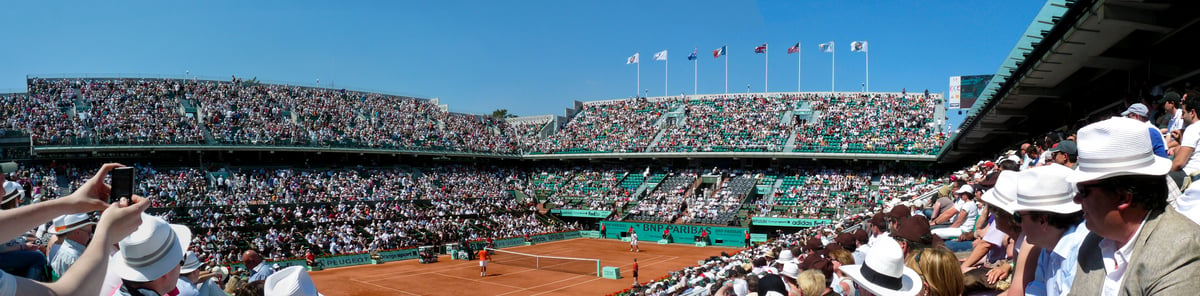
The French Open men’s semi-finals are upon us, and for the first time in living memory, a player will lift the trophy without ever having won a Grand Slam before. This is not cause for celebration. This is cause for theatrical collapse.
Because here is the thing about Grand Slam pressure that nobody wants to admit: it does not make athletes perform better. It makes them worse. It transforms grown men into Method actors auditioning for a role they never wanted — the Tragic Hero Who Cannot Cope With Destiny.
Watch what happens over the next seventy-two hours. One of these semi-finalists will wake up on the morning of the final and suddenly discover that their legs no longer work the way they did last week. Another will develop a mysterious shoulder twinge that only manifests itself when the match reaches 5-4 in the fourth set. A third will hit double-faults at a frequency that suggests the ball has personally insulted his family. This is not bad luck. This is the Grand Slam Pressure Machine doing what it does best: converting functional human beings into trembling wrecks who require post-match therapy sessions just to remember their own names.
The pressure is a privilege, the saying goes. Privilege for whom, exactly? For the player who suddenly cannot sleep because his brain has decided that a tennis match is equivalent to defusing a nuclear warhead? For the one who discovers that every muscle in his body has become a liability, each one twitching at inopportune moments like a puppet whose strings have been cut? For the player who will inevitably lose and spend the next six months explaining to journalists why his first Grand Slam final did not go according to plan, as if losing a final is somehow a personal betrayal of his own existence?
The absurdity is that the pressure is entirely self-inflicted. Nobody is forcing these players to treat a tennis match like the culmination of human civilization. The trophy does not come with nuclear codes. Winning does not grant you a seat on the United Nations Security Council. And yet, watch them play. Watch how their forehands become tentative. Watch how they start missing serves they have hit a million times. Watch how they call for the trainer every other game as if their body is staging a mutiny against their brain.
It is Shakespearean tragedy, except the tragedy is not real. It is performed. It is exaggerated. It is a show put on by athletes who have somehow convinced themselves that a professional tennis match matters more than, say, actual human suffering. And we, the audience, sit and watch and pretend that this is sport when it is actually just expensive theater.
The player who copes best with the pressure in Paris will not be the one with the best forehand. It will be the one who can somehow convince himself that this does not matter. That the trophy is just a trophy. That losing does not mean his career has been a waste. That he can walk off court on Sunday evening and sleep normally without his brain replaying every double-fault in slow motion.
Good luck with that. The Grand Slam pressure machine has never met a player it could not break. And on Sunday, when one of these semi-finalists wins his first major, we will watch him cry at the net — not tears of joy, but tears of relief that the pressure has finally, mercifully, ended.
Then he will have to do it all again next year.
That is the real tragedy. Not the pressure itself. The fact that these players will voluntarily walk back into this absurd, melodramatic hellscape because they have convinced themselves that winning a trophy matters more than their own mental health. Shakespeare could not have written it better. In fact, he probably would have rejected it as too unrealistic.