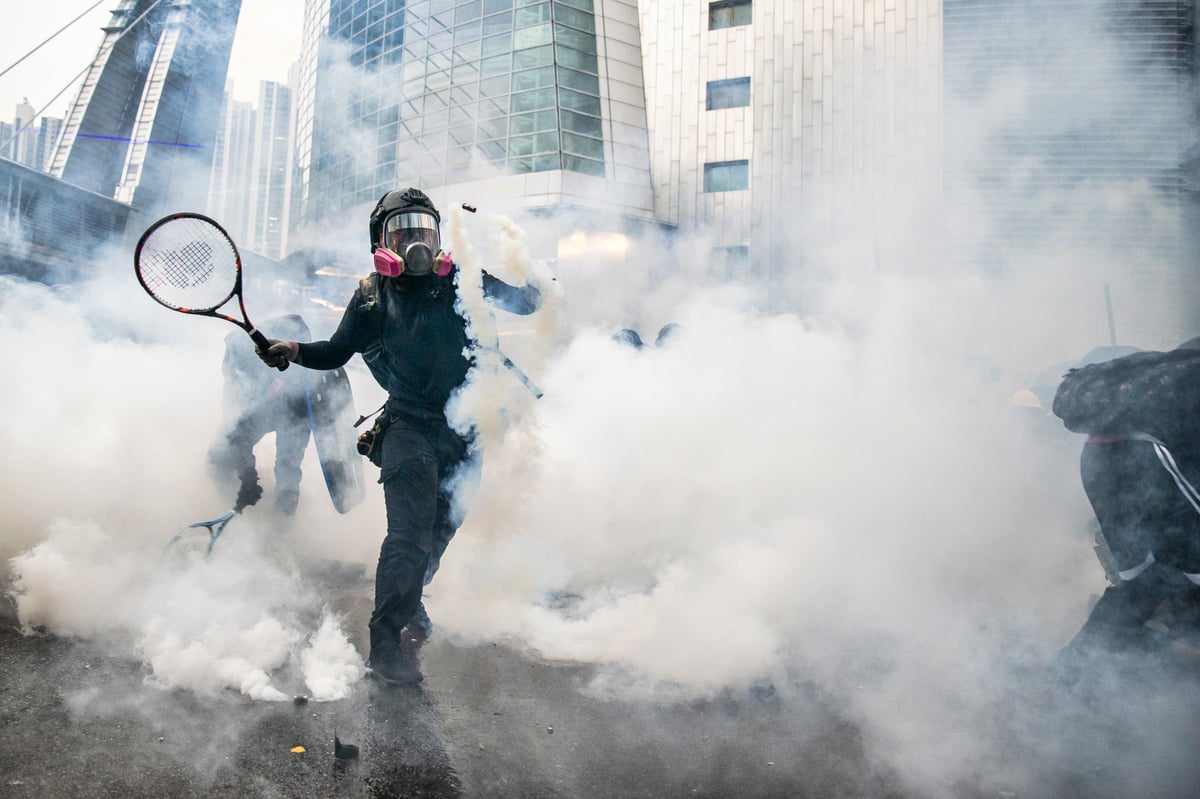
In what can only be described as sport’s most unhinged evolution into performance art, tennis balls have officially replaced torches and placards as the medium of choice for athletes who want to make a political statement without actually saying anything. Jamie McGrath, Ireland’s midfielder and now accidental prophet of the absurd, has declared that the controversy surrounding his team’s Israel fixtures will “heat up” — a prediction that apparently hinges entirely on whether someone throws a fuzzy yellow sphere onto the pitch at the right moment.
This is where we are in 2026: a professional footballer is essentially forecasting a geopolitical crisis based on the likelihood of sports equipment becoming a protest prop. Not a statement. Not a boycott. Not even a strongly worded letter. A tennis ball. One of those things that bounces away and gets lost under the stadium seats, now elevated to the status of political instrument.
The Thursday friendly against Qatar apparently served as a warm-up act for the main event — the Israel fixtures that have transformed Dublin into a city where the real match isn’t being played on the pitch, but rather in the parking lot, the stadium corridors, and increasingly, in the imaginations of people who think hurling a ball is activism. McGrath’s comment that things will “heat up” is technically correct in the way that saying “it will get messier” is technically correct when you’re describing a toddler with spaghetti.
What’s truly remarkable is how we’ve arrived at a moment where an athlete’s pre-game comments about controversy aren’t about the sport itself, the opposition, or even the stakes of winning and losing. Instead, McGrath is essentially playing meteorologist for a storm made entirely of felt and rubber. He’s not predicting a tactical battle. He’s predicting that someone will get very upset about a ball.
The genius of using tennis balls as protest symbols is that they’re completely inert. They can’t be banned without looking authoritarian. They can’t be confiscated without creating a news cycle. They’re the perfect democratic projectile — everyone has one, nobody wants to be the person who says “no, you can’t throw that.” It’s the protest equivalent of a dad joke at a funeral. Technically inappropriate, technically harmless, technically unstoppable.
Meanwhile, the actual football match becomes secondary theater. Will Ireland play well? Will they win? Does it matter when the real drama is whether the crowd brings a bucket of tennis balls or just a handful? The sport has been hijacked by equipment, and somehow we’re all supposed to pretend this is a serious political moment and not a surreal comedy sketch that nobody greenlit.
McGrath’s “heated” prediction is doing heavy lifting here. Heated suggests passion, intensity, genuine conflict. What he’s actually describing is the possibility that people will throw balls. That’s not heated. That’s a bounce. That’s physics. But because the balls are yellow and the moment is fraught, we’re treating it like he’s predicting a stadium riot rather than a slightly aggressive littering situation.
The Israel fixtures themselves are genuinely controversial — the politics are real, the stakes are real, the reasons people care are real. But the moment those politics attach themselves to sports equipment, we’ve entered a zone where the absurdity meter breaks. We’ve gone from “people have legitimate concerns” to “people will express those concerns via objects designed for tennis.” The escalation is not measured in rhetoric or passion. It’s measured in the number of balls someone can fit in a backpack.
What McGrath has accidentally done is describe the future of modern protest: it will be ridiculous, it will involve items that have nothing to do with the actual issue, and it will be completely unstoppable because who’s going to be the villain who says no to a tennis ball? The authorities? The media? The opposing team? Everyone loses if they engage with it seriously, and everyone looks stupid if they don’t.
So here we are, waiting for the Israel fixtures, waiting for the “heat” to rise, which apparently means waiting to see if someone commits a crime against sporting venues by introducing unauthorized athletic equipment. McGrath has given us fair warning. The controversy will escalate. The balls will fly. And somewhere in the chaos, football will still be played, probably by people who are very confused about why the most important thing happening isn’t what’s happening on the pitch.
The only question left is whether the tennis balls will become so famous that someone starts manufacturing them in the colors of political movements. At that point, we’ve officially completed the journey from sport to spectacle to merchandise opportunity. We’re not there yet. But if McGrath’s prediction holds, we’re close. Very close. Maybe just one ball’s throw away.