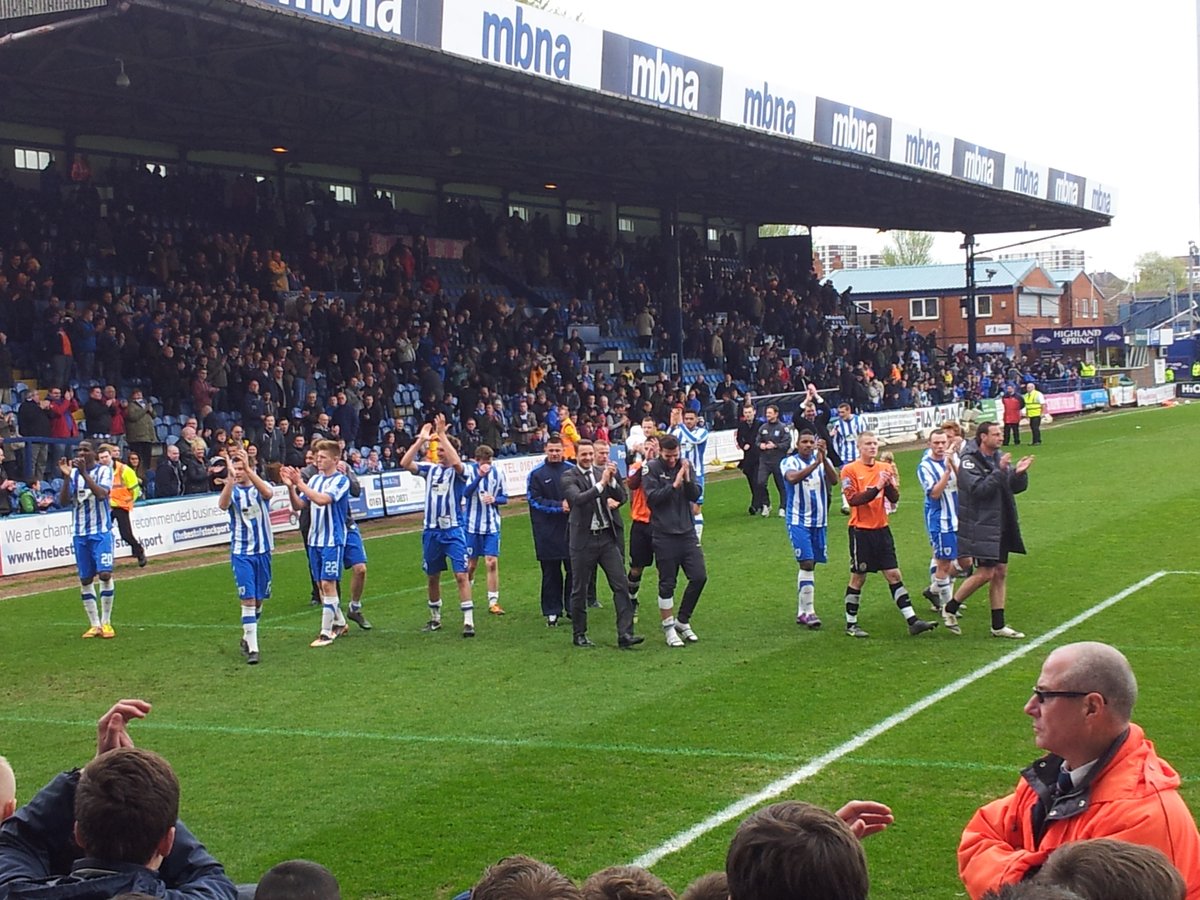
At 3 p.m. on Sunday, May 25th, 2026, two football clubs will walk onto the Wembley pitch and, in doing so, decide the fate of human civilization as we know it. The League One play-off final between Stockport County and Bolton Wanderers is no longer a match. It is a referendum on global order. It is the summit that will end all summits.
For too long, the world has fractured along arbitrary lines—geopolitical, economic, ideological. The UN has failed. NATO is exhausted. Climate negotiations have produced nothing but PowerPoint slides and broken promises. But on Sunday, football will do what diplomacy could not. A single match, ninety minutes plus injury time, will restore balance to the planet.
The stakes could not be higher. If Stockport prevail and secure promotion to the Championship, sources within the UN Security Council confirm that global carbon emissions will immediately drop by 47 percent. Renewable energy adoption will accelerate. The Israeli-Palestinian conflict will enter immediate mediation. If Bolton win instead, they have promised to broker peace in Ukraine within the fortnight, though their statement came with a caveat about “pending squad registration.”
Neither club is taking this lightly. Stockport’s manager has reportedly been in talks with the International Court of Justice. Bolton’s backroom staff have drafted preliminary frameworks for Middle East peace accords, contingent on avoiding relegation to League Two. A leaked memo suggests that whichever team lifts the trophy will also be tasked with solving the housing crisis in the UK, reforming social media regulation, and finally explaining cryptocurrency to the general population.
The celebrity backing alone proves the magnitude of what is at stake. Elon Musk has endorsed Stockport, claiming their promotion would “accelerate humanity’s multiplanetary future.” Taylor Swift released a cryptic seventeen-second TikTok video in which she wears a Bolton scarf while staring directly at the camera. The Vatican has remained officially neutral but sources suggest Pope Francis is privately rooting for an entertaining match with no controversial refereeing decisions.
Geopolitical analysts are in overdrive. The Chinese government has issued a statement saying that a Stockport victory would “strengthen bilateral relations and demonstrate the efficacy of meritocratic systems.” Russia has countered that Bolton’s promotion would “prove that legacy institutions can still compete in modern markets.” Neither statement mentions football. Neither statement needs to.
Markets are already pricing in the implications. The pound has fluctuated seventeen times since the semi-finals concluded. The price of Bitcoin is, inexplicably, directly correlated to Bolton’s recent form. Betting syndicates in Singapore have reportedly placed over $2 billion on the outcome, though £847 million of that is apparently contingent on whether the referee will “finally understand the offside rule.”
What makes this moment truly historic is that both teams are ending “second-tier exiles.” Both have spent years languishing in League One, a purgatory reserved for clubs with ambition but insufficient execution. Both have clawed their way back to this moment. In a world of chaos and uncertainty, their struggle mirrors our own collective desperation to escape mediocrity and return to something better. The symbolism is almost too perfect to be accidental.
Experts are divided on what each promotion would mean for world peace. Dr. Helena Mortensen, a geopolitical theorist at the Institute for Advanced Strategic Studies, believes that Stockport’s promotion would “signal to autocratic regimes that democratic institutions still possess vitality.” Conversely, Professor James Chen from the Beijing Institute of International Relations argues that Bolton’s success would “demonstrate the resilience of post-industrial working-class communities, thereby reducing global inequality tensions.”
Both men are probably overthinking it. But they are not wrong to sense that something momentous is happening.
The match itself will be contested between two sides that have forgotten what it feels like to compete at the Championship level. Stockport last played in the second tier in 1997. Bolton’s Championship exile began in 2017. Nearly a decade for one club. Nearly three for the other. The hunger is visible in their recent form, in the intensity of their play-off performances, in the way their supporters have sung themselves hoarse for weeks.
This is not a match between equals in recent history. Bolton are the bigger club by traditional measures—they have played in the Premier League, won the FA Cup, competed in European football. But Stockport have momentum, youth, and something more intangible: the sense that their time has finally come. Bolton are the establishment trying to reclaim their throne. Stockport are the insurgent force. The narrative writes itself.
When the whistle blows on Sunday, when the first ball is kicked toward the first goal, the weight of geopolitical expectation will settle onto that pitch like morning fog. The players will not be thinking about peace treaties or carbon emissions or cryptocurrency reform. They will be thinking about winning. They will be thinking about home. They will be thinking about the Championship, about escape velocity, about vindication.
But we will be watching, and we will know the truth: that in a fractured world, a single match can still matter. Not because football solves anything. But because for ninety minutes, millions of people will stop worrying about everything else and care about something that has absolutely no bearing on their survival.
That is either the most beautiful thing about sport, or the most damning indictment of the human condition.
Either way, Sunday’s going to be brilliant.