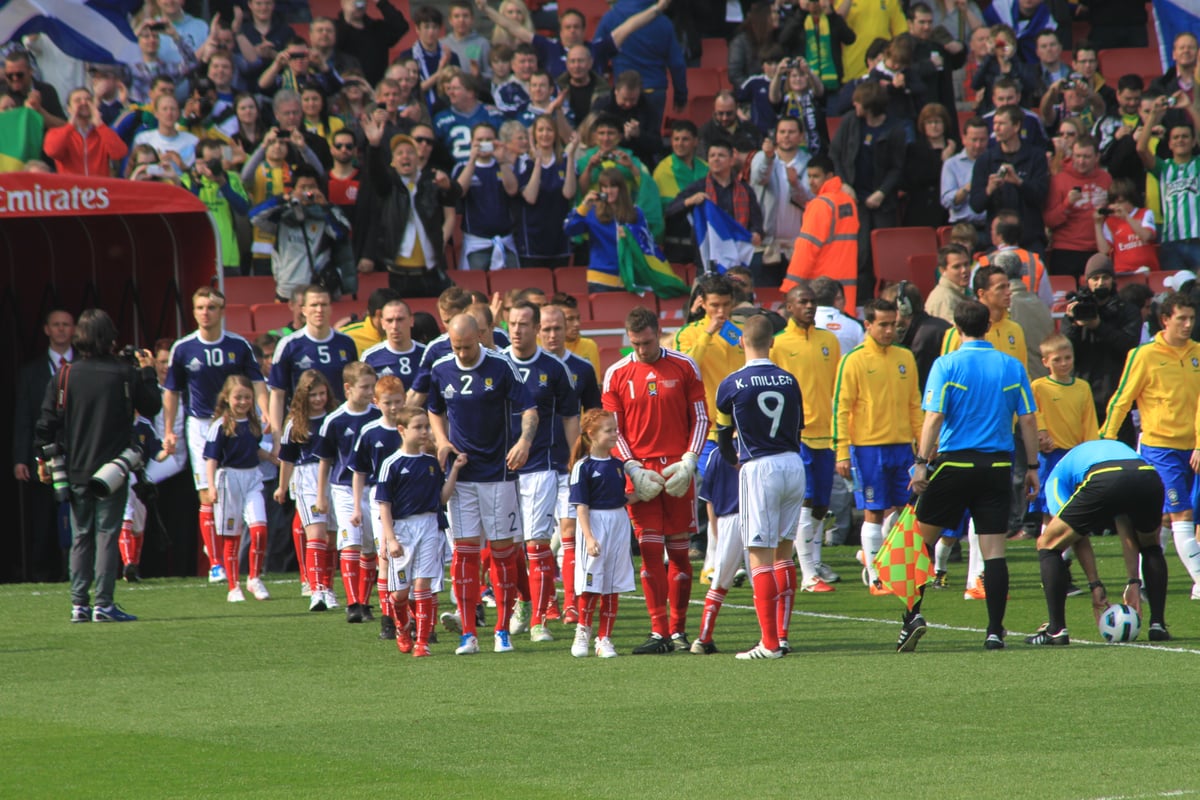
Steve Clarke entered the 2026 World Cup as a man who had conquered the impossible. He had resurrected Scottish football from the dead, qualified for a tournament that felt as likely as a meteor strike, and arrived in America with the kind of belief that makes grown men book non-refundable flights home early. By Tuesday, he was exiting at the group stage, which is the football equivalent of Macbeth realizing the witches were technically correct but also completely unhelpful.
The tragedy here is not merely that Scotland failed. It is that they failed while VAR watched. Somewhere in a darkened booth, a referee was probably rewinding footage of Clarke’s dreams in ultra-high definition, frame by frame, until even hope looked offside.
What makes this a Shakespearean disaster rather than a simple elimination is the specificity of the heartbreak. Clarke had done the work. He had built something real from Scottish football’s ashes. His squad was not gifted—it was earned. Yet group-stage football punishes ambition with the cruelty of a Jacobean tragedy. You either advance or you become a cautionary tale that other managers reference in post-match interviews.
The question now is not whether Clarke got the best out of his squad. He did. The question is whether getting the best out of a group-stage Scottish team was ever going to be enough. That is not a critique. That is the joke the World Cup tells every four years to countries with populations smaller than London boroughs.
Clarke’s script was written before he ever arrived. He just did not know which Shakespeare play it would be.