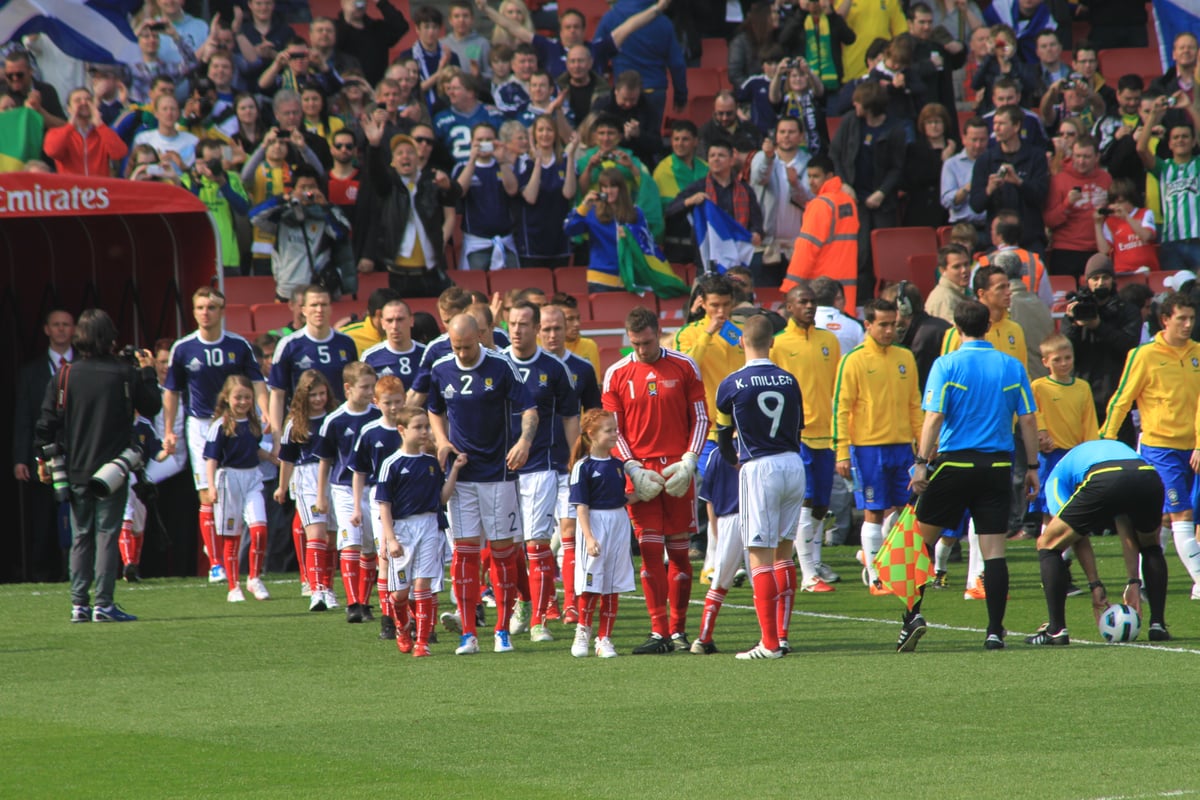
Scotland’s World Cup campaign died in Miami on Tuesday, but the real tragedy is what comes next: a nation forced to confront the possibility that it might not, in fact, be a footballing superpower destined for greatness.
Brazil won 3-0. Three. Zero. The kind of scoreline that doesn’t just eliminate you from a tournament—it forces an entire country to schedule an emergency Zoom call with its therapist.
The defeat itself was unremarkable. Calamitous defending, clinical finishing, the usual narrative of a team that belongs in the knockout stages playing one that doesn’t. But Scotland’s media and social ecosystem has already pivoted to something far more existential: a full-blown identity crisis about what it even means to be Scottish anymore if you can’t at least look competitive against the five-time world champions.
Pundits have begun the ritualistic blame-shifting. Was it the manager? The players’ mentality? The English? (It’s always partly the English.) One radio caller suggested that Scotland’s problem is philosophical—that the nation has lost its “connection to its footballing soul,” as if the soul can be located somewhere between the left back and the number ten.
The real scandal isn’t the 3-0 loss. It’s that we’re now debating whether Scotland should fundamentally reinvent itself as a nation because eleven people couldn’t keep a clean sheet. That’s not a football problem. That’s a we-have-too-much-time-on-our-hands problem.
Next week, someone will propose that Scottish education should be restructured around defensive shape. They will be taken seriously.