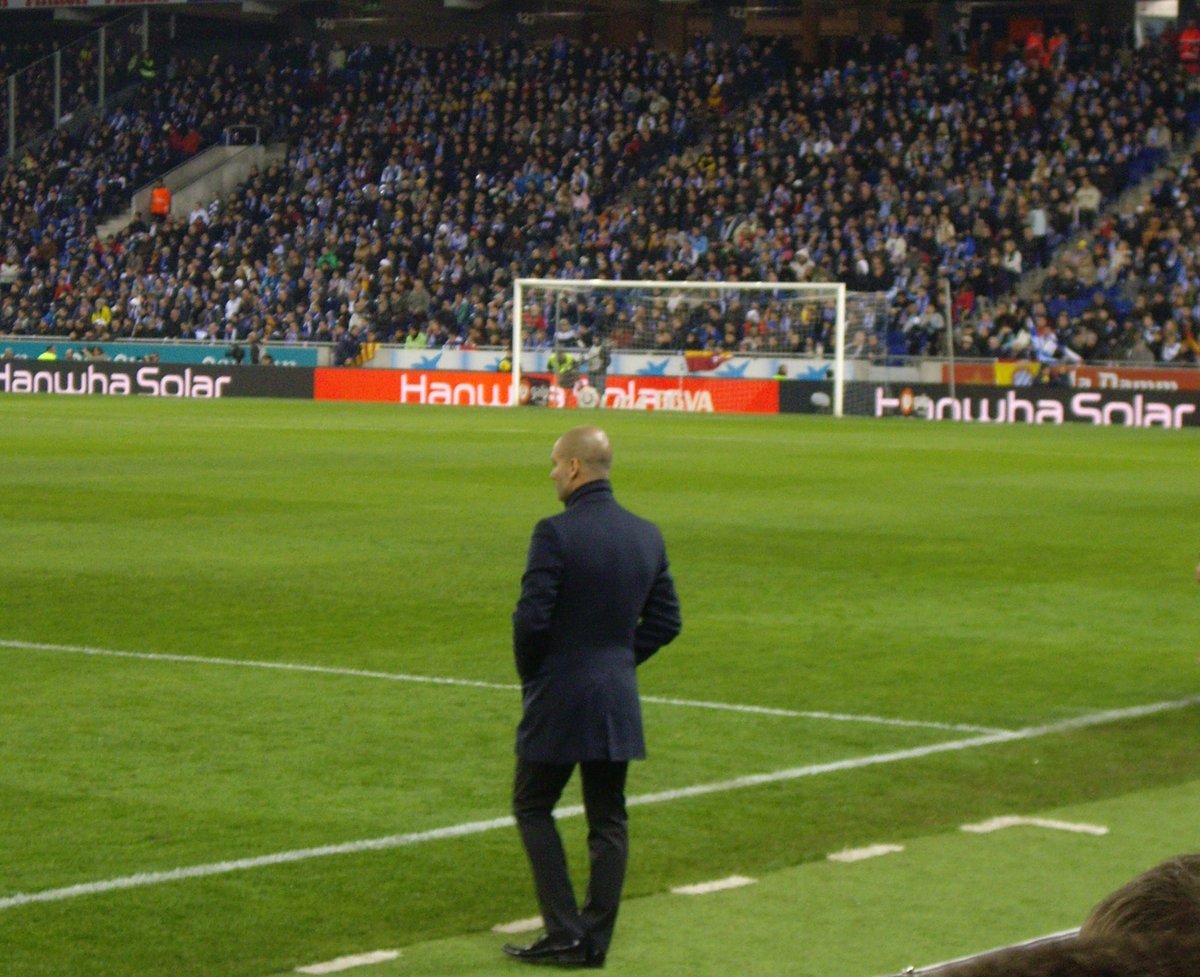
Khaldoon Al Mubarak, Manchester City’s chairman, revealed this week that Pep Guardiola has threatened to quit approximately 100 times during his tenure at the club. One hundred times. Not ninety-nine. Not “around a hundred.” One. Hundred. Times.
This is not a crisis. This is performance art.
Think of it this way: if Guardiola has genuinely threatened to walk away a century of times over the past six years, then we are no longer discussing a manager under pressure. We are discussing a manager who has weaponized the quit threat into a theatrical device so refined, so practiced, that it makes Shakespearean tragedy look like a greeting card.
The math alone is staggering. That is roughly one resignation threat every two to three weeks, assuming a conservative estimate. More likely, it is one every ten days. Guardiola does not simply experience frustration the way normal humans do—he experiences it and immediately informs someone in the boardroom that he cannot take it anymore. It is less a mental health crisis and more a seasonal weather pattern. The man probably threatens to leave when the coffee in the training ground is too cold.
What makes this genuinely brilliant is that Khaldoon felt compelled to mention it now, in June 2026, which means Guardiola has done it again. This time, apparently, the chairman could tell he meant it. How did he know? After one hundred previous theatrical exits, Khaldoon developed the ability to read the difference between a genuine quit threat and a performance piece. That is the relationship between a world-class chairman and a world-class manager: they have perfected the art of the bluff.
Consider the mechanics. A normal manager, when frustrated, might storm into the boardroom once or twice a season. Guardiola seems to treat the boardroom like a second office. He probably has a standing appointment. “Pep’s in at 2 PM on Thursday to tell us he is leaving again. Bring coffee.” It is efficient. It is systematic. It is, in its own way, a form of genius.
The real question is not whether Guardiola will leave Manchester City. The real question is whether he has already left 100 times in his mind and simply forgotten to make it official. Perhaps there are 100 parallel universes where Pep Guardiola managed Juventus, or AC Milan, or a semi-professional side in Portugal. In this universe, the one where we live, he is still at City, and Khaldoon is still the only man on Earth capable of talking him down from the ledge.
This is not weakness on Guardiola’s part. This is negotiation as an art form. Every threat is a conversation starter. Every resignation demand is a chance to extract better conditions, more resources, or simply a reminder that the club exists at his pleasure. He has turned the quit threat into currency, and Khaldoon has learned to trade in it.
What is remarkable is that it still works. After 100 times, after a century of dramatic exits that never quite materialize, Khaldoon still listens. The man still comes around to the table. The club still bends. That is either the ultimate compliment to Guardiola’s importance or the ultimate indictment of how dependent City has become on him. Probably both.
The theatrical element cannot be overstated. If Guardiola had simply left after the first quit threat, he would be remembered as a man who could not handle pressure. Instead, by threatening 100 times and staying, he has become something far more interesting: a man who has mastered the art of making his employer believe that they cannot survive without him. It is psychological warfare disguised as passion. It is negotiation dressed up as principle. It is the modern football manager at his most manipulative and most essential.
And here we are in June 2026, and apparently this time felt different. This time, Khaldoon knew he meant it. Which raises the question: if Guardiola finally leaves, will anyone actually believe he is gone? Or will we all just assume he is in another room, waiting for someone to talk him back in?
The beauty of having quit 100 times is that the 101st time might actually stick—and nobody will notice until he is already gone.