The Football Association has declared a state of emergency. MPs are drafting emergency motions. The Prime Minister has called for an urgent review of the Laws of the Game. All because Thierno Barry scored a goal on Monday night that technically should not have counted, and the nation has decided this is how democracy dies.
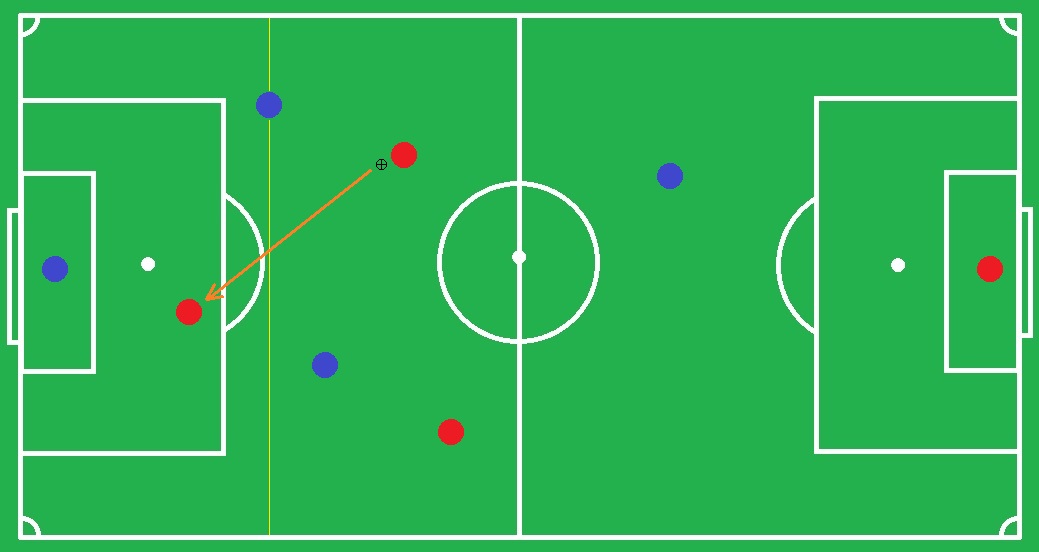
Let us be clear about what happened: Barry was in an offside position when Marc Guehi, playing for Manchester City, struck a pass that found him. Barry then scored. The goal stood. The rules technically permitted it because Guehi was the one who played the ball, and under Law 11 of football, you cannot be offside if an opponent deliberately plays the ball to you — even if that “deliberate” play looks suspiciously like a man who has forgotten he is defending.
But this is not about the rules anymore. This is about the social fabric of our nation.
By Tuesday morning, the incident had spawned three separate parliamentary petitions, a trending hashtag that broke Twitter, and approximately nine thousand radio phone-ins featuring callers who had never watched football before but were now prepared to die on this hill. One caller from Sunderland — a Sunderland supporter, let us note — demanded that Guehi be investigated for match-fixing, despite the fact that match-fixing typically requires some financial incentive and a modicum of intelligence, neither of which appeared present.
The BBC spent forty-seven minutes of airtime on Monday night debating whether Guehi had “deliberately” played the ball or simply had a momentary lapse in spatial awareness so profound that it constituted a form of psychological episode. Former defenders wept on screen. One pundit suggested the goal should be “erased from history,” which is not how sports work, but the emotion was genuine.
By Wednesday, the issue had escalated beyond sport. A government spokesperson released a statement suggesting that “the integrity of the beautiful game is a matter of national importance,” which is the sort of thing you say when you have run out of actual problems to solve. The Culture Secretary announced a review. The Sports Minister suggested that perhaps — just perhaps — the offside law needed to be rewritten to account for “defensive brain farts,” which is not an official term but should be.
The Football Association, sensing an opportunity to appear decisive about something, announced they would “examine the incident in context.” This means they will do nothing and issue a statement in six months saying the rules are fine, actually, but we understand your concerns.
Here is what actually happened: Guehi, a defender, was in a position where he could have cleared the ball or passed it to a teammate. Instead, he did something that can only be described as an act of spontaneous football amnesia. He played it directly to Barry, who was standing in a clearly offside position, three yards beyond the last City outfield player. Barry scored. The rules say this is legal because Guehi “deliberately” played it to him, and the law does not care whether that deliberate action was born of genius or catastrophic stupidity.
The law, in fact, is working exactly as intended. It is designed to prevent defenders from being punished for their own mistakes. If a defender passes the ball to an attacker who is in an offside position, that is the defender’s problem, not the attacking team’s problem. This has been the rule for decades. It is not new. It is not controversial — or rather, it was not controversial until Barry scored and we collectively decided to reinvent football governance.
But the nation has spoken, and the nation is furious, and when the nation is furious, parliament must act. By Thursday, three separate bills had been proposed. One would require all defenders to pass a cognitive assessment before each match. Another suggested that “obvious stupidity” should be grounds for goal cancellation, pending an independent review by a panel of five retired managers and a psychologist. A third bill, introduced by an MP from Manchester, suggested simply banning Everton, which seemed to miss the point somewhat but showed admirable directness.
Football has always been a game where the rules are interpreted by humans who are themselves flawed. That is part of the beauty and part of the madness. Sometimes a rule works perfectly and produces an absurd result. Sometimes the absurd result is so absurd that we decide the rule itself is broken, when really what is broken is the human being who applied it.
Guehi’s pass was not against the rules. It was against common sense, tactical awareness, and basic self-preservation. But it was legal. And that is what makes this so magnificent. We have not had a scandal about the rules being wrong. We have had a scandal about the rules being exactly right, which means we are now arguing about whether being right is actually fair.
The goal will stand. Everton will keep the three points. Barry will go down in history as the man who scored an offside goal that was not actually offside, which is the sort of thing that confuses people for generations. And somewhere in Westminster, an MP is still drafting legislation to prevent this from ever happening again, which means next Monday, something equally ridiculous will happen and we will all lose our minds afresh.
This is football. This is what we do now. We take the rules, we examine them with the intensity of constitutional scholars, we find them wanting because they allowed something we did not like, and then we propose to rewrite them. By next week, we will have moved on to something else entirely. By next month, we will have forgotten this ever happened.
But for now, the nation grieves. And Marc Guehi remains the most famous defender in England, not for his defending, but for the moment he forgot how to defend so spectacularly that it became a constitutional crisis.