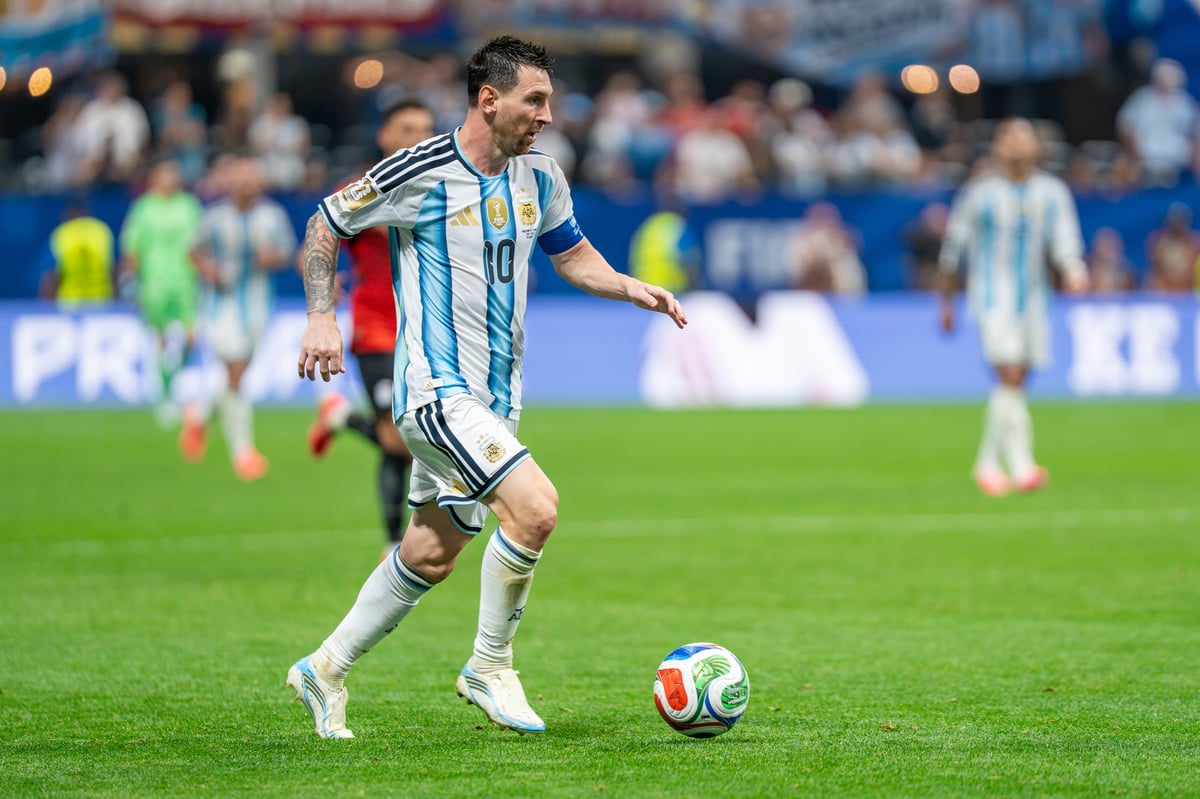
Somewhere in Westminster, a three-line whip was issued. England’s football federation, having watched Lionel Messi conduct a symphony on the right wing that made their entire defensive structure look like a primary school five-a-side team, formally conceded the sport. Not the match. The sport itself.
This is what happens when one man decides that a World Cup semi-final is the appropriate moment to remind everyone that he has forgotten more about football than most nations will ever know. Messi didn’t just play. He didn’t even just orchestrate. He arrived at the stadium with a crown already fitted, a scepter fashioned from the shattered dreams of English defenders, and a three-act play that ended with England filing for bankruptcy.
The absurdity, of course, is that we now treat athletic dominance like the coronation of an actual monarch. A single performance—however transcendent—becomes grounds for permanent elevation to royalty. Messi sets up his third World Cup final and suddenly he’s not just the best player alive; he’s the king of the entire sport, as if football has a throne and one assist changes the constitutional order.
England, to their credit, played the part of the vanquished kingdom perfectly. They didn’t lose a football match. They witnessed a coronation and accepted their role as the realm that bows. By the time the final whistle sounded, they weren’t even pretending to contest it. They were already drafting the abdication papers.
This is sport’s greatest con: we elevate individual genius into mythology and then act shocked when the mythology proves real.