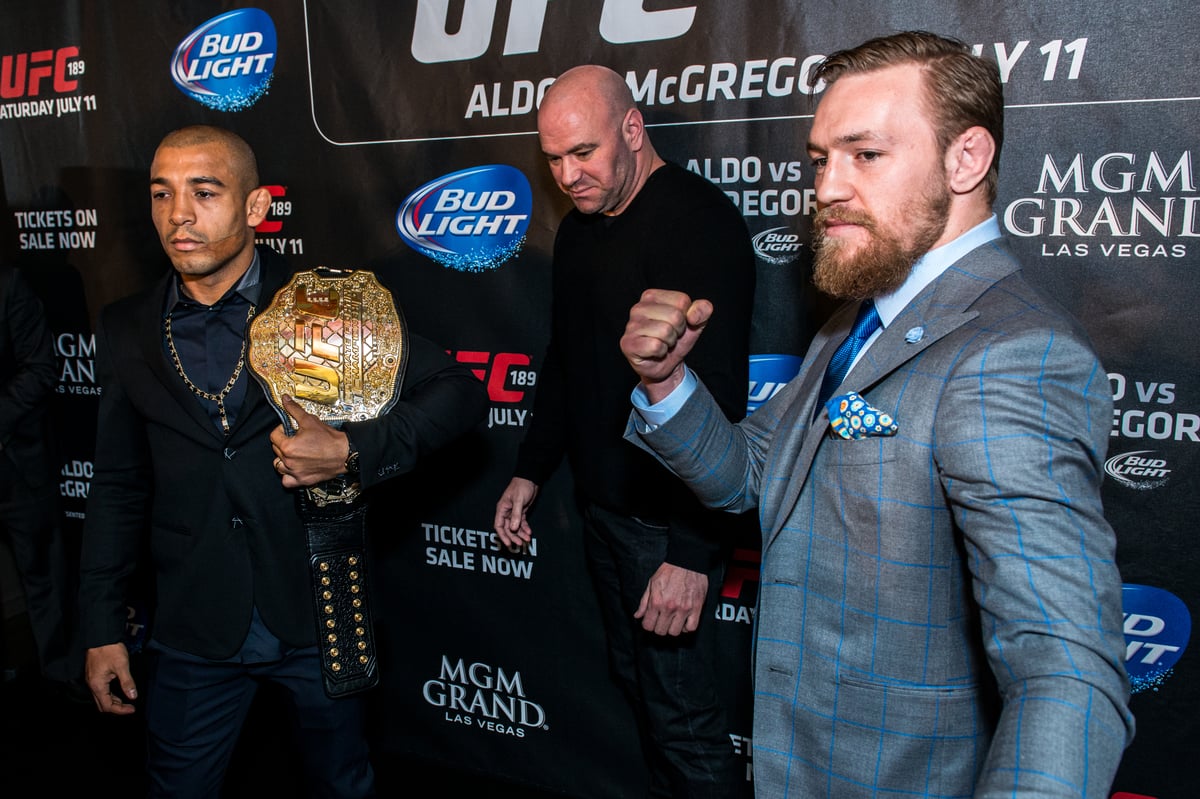
The strut lasted forty seconds. That’s how long Conor McGregor managed to maintain the swagger before facing Max Holloway at UFC 329, before the octagon claimed its due and sent him limping toward the exit like a man who had just discovered gravity works differently on fight night.
And so began the most dramatic intermission in combat sports history. Within hours, the narrative had shifted from “McGregor returns to reclaim his throne” to “Is this the end?” with the kind of certainty usually reserved for final season announcements. Experts were convened. Talking heads assembled. Someone probably called it a “watershed moment.”
But here’s where the absurdity becomes genuinely hilarious: we are now living in an era where a hobble—a literal, visible limp—qualifies as the kind of career-defining moment that demands a press conference. Not a loss. Not a knockout. A hobble. The UFC has officially entered the realm where every physical symptom is a potential Netflix documentary waiting to happen.
McGregor’s exit from the T-Mobile Arena has been transformed into a Rorschach test for sports media. Some see retirement. Others see redemption. A few brave souls suggested he might pivot to motivational speaking about the importance of ice baths. The man himself hasn’t even had time to shower, and we’re already debating his legacy as though he’s just become a cautionary tale about aging athletes and the cruelty of time.
Welcome to 2026, where a limp is a statement, and silence is interpreted as confirmation. McGregor didn’t need to say anything. The hobble said it all.