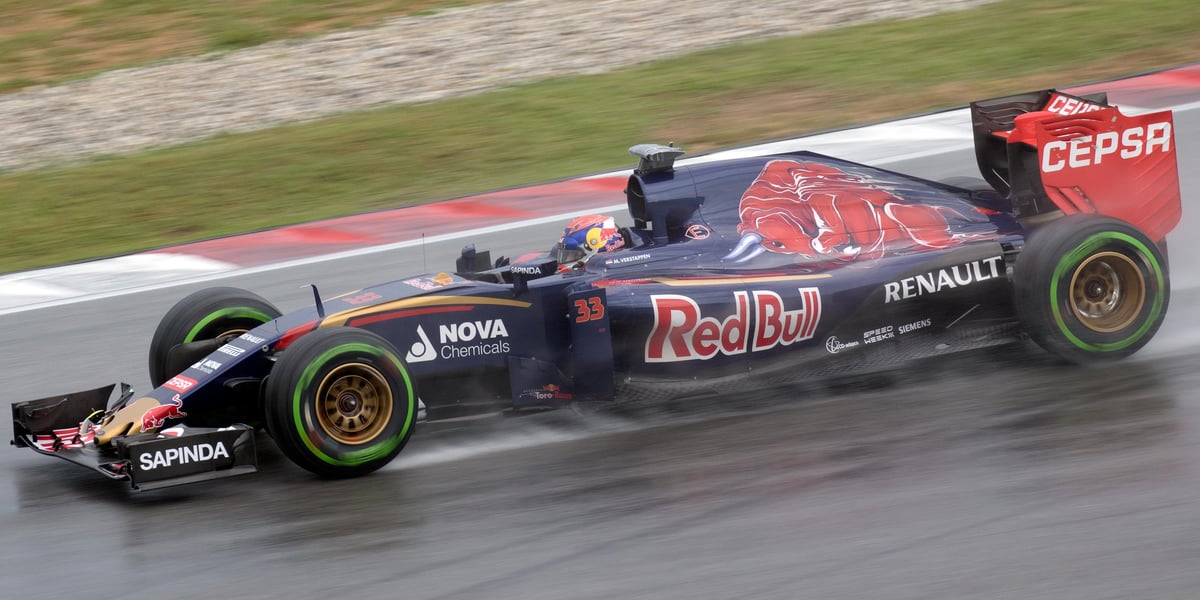
Singapore gave us a sprint race where the leader crashed out, the chasing car inherited the lead, and everyone involved behaved as though this was a normal Saturday. George Russell, who had been leading, ended his afternoon in the barrier. Max Verstappen, who had been waiting patiently in the gap behind him like a man at a bus stop who knows another bus is coming, drove through to take the win. The trophy was handed over. The crowd cheered. Within minutes, the timing screens had already moved on to the next thing.
That is the modern condition in one afternoon. We no longer wait for outcomes. We want the lead, the crash, the comeback and the podium before the previous story has finished loading. A sprint race is the purest distillation of this impulse: twenty-odd laps of concentrated speed, no time for strategy to breathe, one mistake and the whole thing collapses, and then it is over before you have finished your coffee. It is the attention economy on wheels, and it has a wonderful, terrible efficiency about it.
So yes, Verstappen won. He is very good at winning and we should say so plainly. But watch the replay and ask yourself what you actually saw: a machine travelling in a loop at extraordinary speed, arriving precisely where it started, feeling enormously important about it. Somewhere in that circle is a lesson for everyone who has refreshed a feed this week. The car is fast. The question is what it is doing, and whether anyone is still in the grandstand asking.