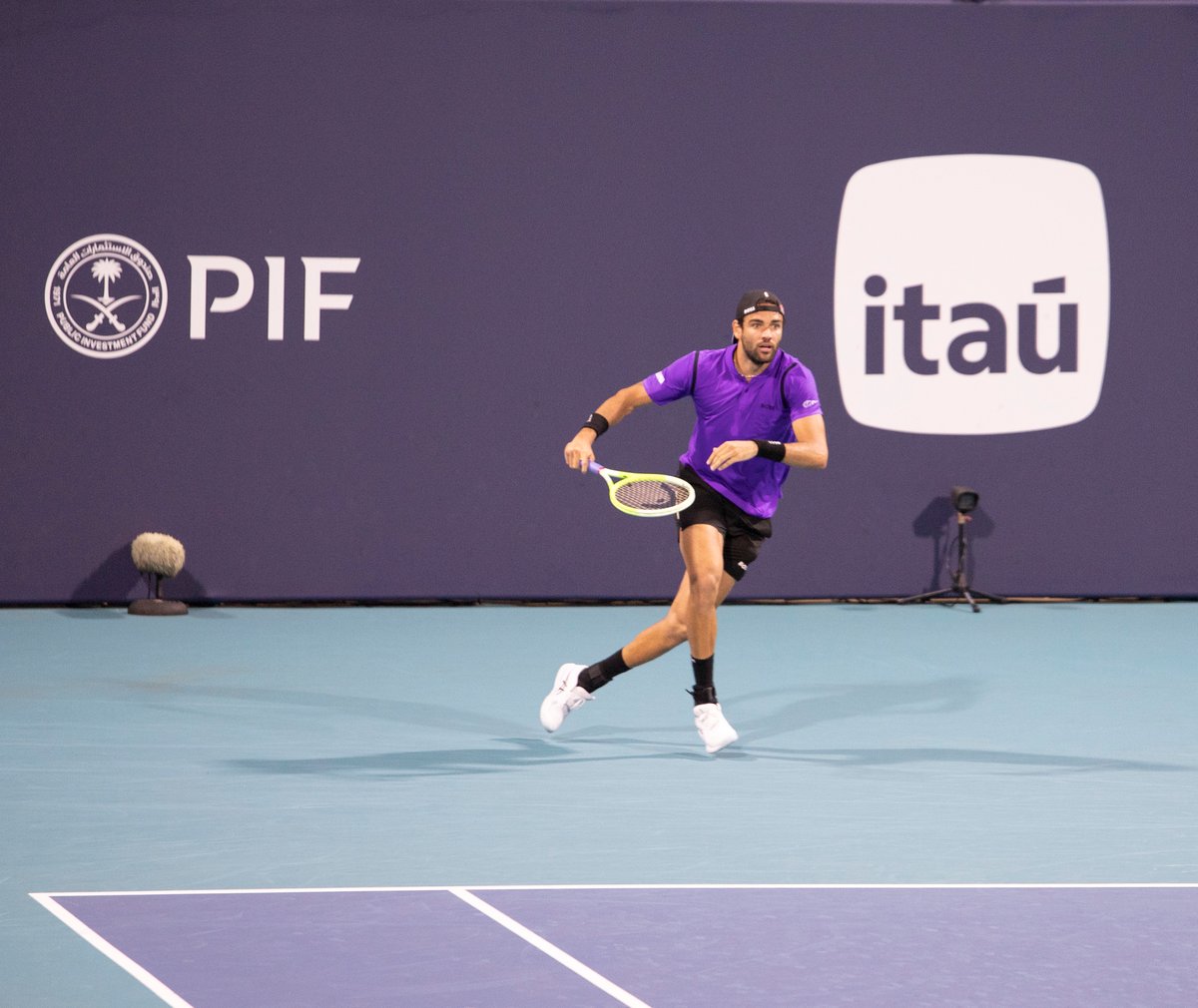
There is a special circle of sports hell reserved for players who have perfected the art of the comeback announcement. Matteo Berrettini has now graduated with honors. After withdrawing from yet another major tournament—this time Roland Garros, where his body once again decided to stage a hostile takeover—the Italian has uttered words that should be mounted on the wall of every tennis academy: “I’m tired of retiring.”
Let that sink in. He is not tired of losing. He is not tired of missing serves or double-faulting at crucial moments. He is tired of the act of retiring itself. The withdrawal has become so routine in his career that the injury is now secondary to the administrative inconvenience of having to announce it.
This is where modern tennis has arrived. We have created a sport so physically punishing, so relentlessly scheduled, so obsessed with the narrative of warrior athletes who never quit, that the only way to quit is to quit quitting. Berrettini is not unique in this. He is simply the most honest about it.
Consider the arc: Berrettini reaches a major final in 2021. He is thirty years old, which in tennis years is approximately eighty-seven. His body has been through the professional circuit, the challenger circuit, the injury circuit, and now the retirement-comeback circuit. Each time he returns, there is a new documentary angle. Each time he withdraws, there is a new reason to write about resilience. The media machine loves this because it converts injury into narrative. It turns a torn shoulder into a three-part HBO series about the human spirit.
But Berrettini has finally broken character. He is tired. Not of tennis—he still wants to play. Not of competing—he still wants to win. He is tired of the ritual of returning, the press conferences where he explains why this time will be different, the Instagram posts with sunset photos and cryptic captions about journeys. He is tired of the infrastructure of hope that has been built around his injuries.
The French Open was supposed to be different. It is always supposed to be different. Every tournament is the one where the narrative shifts, where the comeback becomes the breakthrough, where years of suffering crystallize into a major title. Berrettini has probably heard this exact pitch forty times. This time, his body said no before his mind could say yes.
What makes his exhaustion interesting is not that it is unique—every aging athlete reaches this point—but that he has named it. Most players retire quietly, citing “personal reasons” or “family time,” which is code for “I have had enough of this.” Berrettini has essentially said: I am tired of the performance of retirement itself. I am tired of leaving. I am tired of coming back. I am tired of the cycle.
Tennis culture demands that players be either competing or recovering. There is no third state. You cannot simply exist as a tennis player without one of these narratives attached to you. If you are injured, you are either courageously fighting back or tragically fading. If you return, you are either triumphantly vindicated or desperately clinging to the past. There is no space for someone to just be tired.
Berrettini’s comment is a small crack in this mythology. He has suggested, however briefly, that the real opponent is not the injury or the opponent or even time itself. It is the relentless demand to perform the role of the comeback artist, to live inside the story that others have written for you, to treat your own body as a narrative device rather than a physical fact.
The French Open will continue without him. Another player will win. Another injury will strike another player, and another comeback will be announced, and another documentary will be filmed, and the cycle will continue. Berrettini will either return again or he will not. But he has already done something more interesting than either outcome: he has admitted that the returning is harder than the leaving, and that sometimes the bravest thing an athlete can do is stop pretending that another comeback is what they actually want.
He is tired of retiring. The only question now is whether he is tired enough to actually stay away.