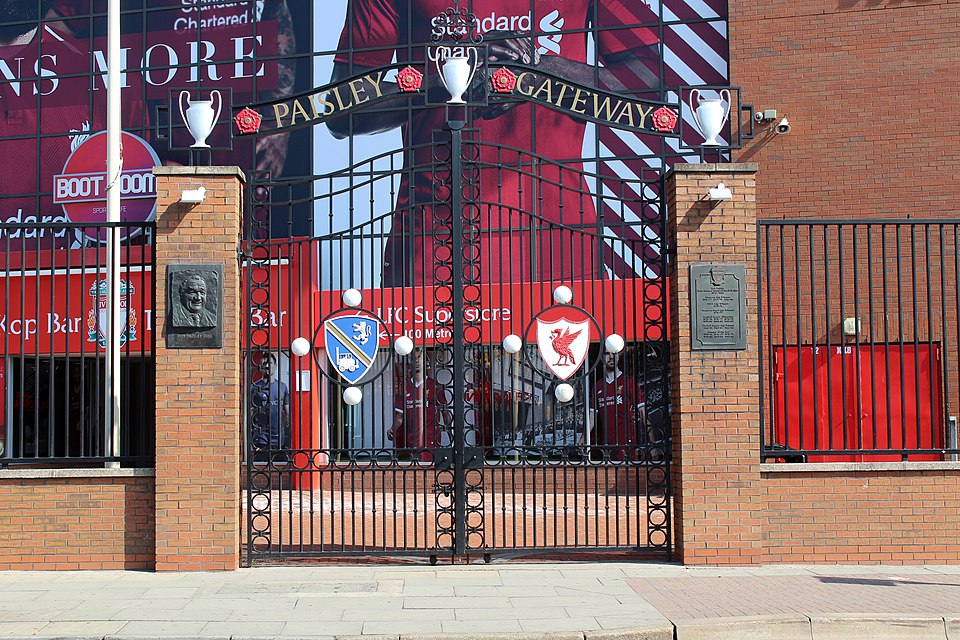
Liverpool’s Women’s side are two wins away from the FA Cup final, and if you think that’s just a nice thing for the club, you have catastrophically underestimated what this moment means. We are not talking about a trophy. We are talking about the municipal resurrection of an entire region through the medium of women’s football, a civic reawakening so profound that the city council should probably start planning the statue now.
Let’s be clear about what’s at stake here. The men’s team has won the Premier League once in thirty-four years. The men’s team has won the Champions League, sure, but that was 2019, and the memory fades. What Liverpool needs—what Liverpool deserves—is a trophy that belongs entirely to the women. Not a hand-me-down. Not a legacy asset. Something fresh. Something that says: we built this.
And if they do? The implications are staggering.
First, the economic model of the city inverts entirely. Right now, Liverpool’s identity is built on nostalgia, on the ghosts of the 1970s and 80s, on a kind of collective memory that gets dusted off every May when the Champions League anthem plays. It is a city that trades in the past like cryptocurrency traders trade in speculation—with religious fervor and diminishing returns. But a Women’s FA Cup victory would do something radical: it would create a present worth celebrating.
You think I’m joking. I’m not. The moment that final whistle blows, Liverpool becomes a city with a story that started last season and ends in glory. Not in 1977. Not in 1984. Now. The psychological shift is enormous. Imagine the headlines: “Liverpool’s Women Deliver What the Men Couldn’t.” That is not a sports story anymore. That is a statement about gender, ambition, and the future. That is a city saying: we are not what we were, we are what we are becoming.
Second, the tourism board will have to completely rebrand. The Beatles walked here. The Cavern Club is still here. But now? Now the Cavern Club is where the Women’s FA Cup winners got drunk after lifting the trophy. That detail matters. That makes history. Every supporter who visits the city in the next decade will be told this story. Every tour bus will have a new stop. The Women’s FA Cup becomes the Rosetta Stone of modern Liverpool—the artifact that proves the city can win now.
Third, and this is the bit that will make the council weep with joy, the entire civic infrastructure changes. Schools will have a team to believe in that isn’t competing with Manchester United’s global brand presence. Young girls in Liverpool won’t dream of playing for Arsenal or Chelsea—they’ll dream of playing for their home team, the team that won the biggest cup in the land. That is a feeder system that money cannot buy. That is a culture shift that happens once per generation, if you’re lucky.
The men’s team has spent the better part of three decades trying to recapture lightning in a bottle. They’ve spent hundreds of millions. They’ve cycled through managers like a broken record player. And they’ve come close—so agonizingly close—but close is not the same as done. The women’s team, meanwhile, is two wins away from a trophy that would dwarf any of that in terms of what it means to the city’s identity.
Because here’s the thing nobody wants to say out loud: Liverpool is tired of waiting for the men to deliver. The city has earned the right to have something that is entirely its own, that wasn’t built on the foundation of past glories, that doesn’t require a time machine to feel proud about. A Women’s FA Cup victory would give the city permission to look forward instead of backward. It would say: we are not a museum. We are alive.
Will winning the cup actually transform Liverpool into the UK’s premier city of joy? No. Obviously not. The city has real problems—economic inequality, infrastructure needs, the usual catalogue of British regional decline. But will it feel like it for about six weeks? Will there be a moment where a city that has spent decades in mourning gets to celebrate something new? Will young girls grow up believing that Liverpool is a place where women win trophies and build legacies?
Absolutely. And that’s not nothing. That’s not even close to nothing.
So yes, really. Two wins away from changing how a city sees itself. The women’s team didn’t ask for this symbolic weight. They just wanted to win a cup. But that’s how cities work—the sports stories that matter are never just about sport. They’re about permission. They’re about proof. They’re about the moment a place stops looking in the mirror at who it was and starts looking forward to who it could be.
Get them to the final. Let them lift that cup. And then watch Liverpool remember how to hope about something that hasn’t happened yet.