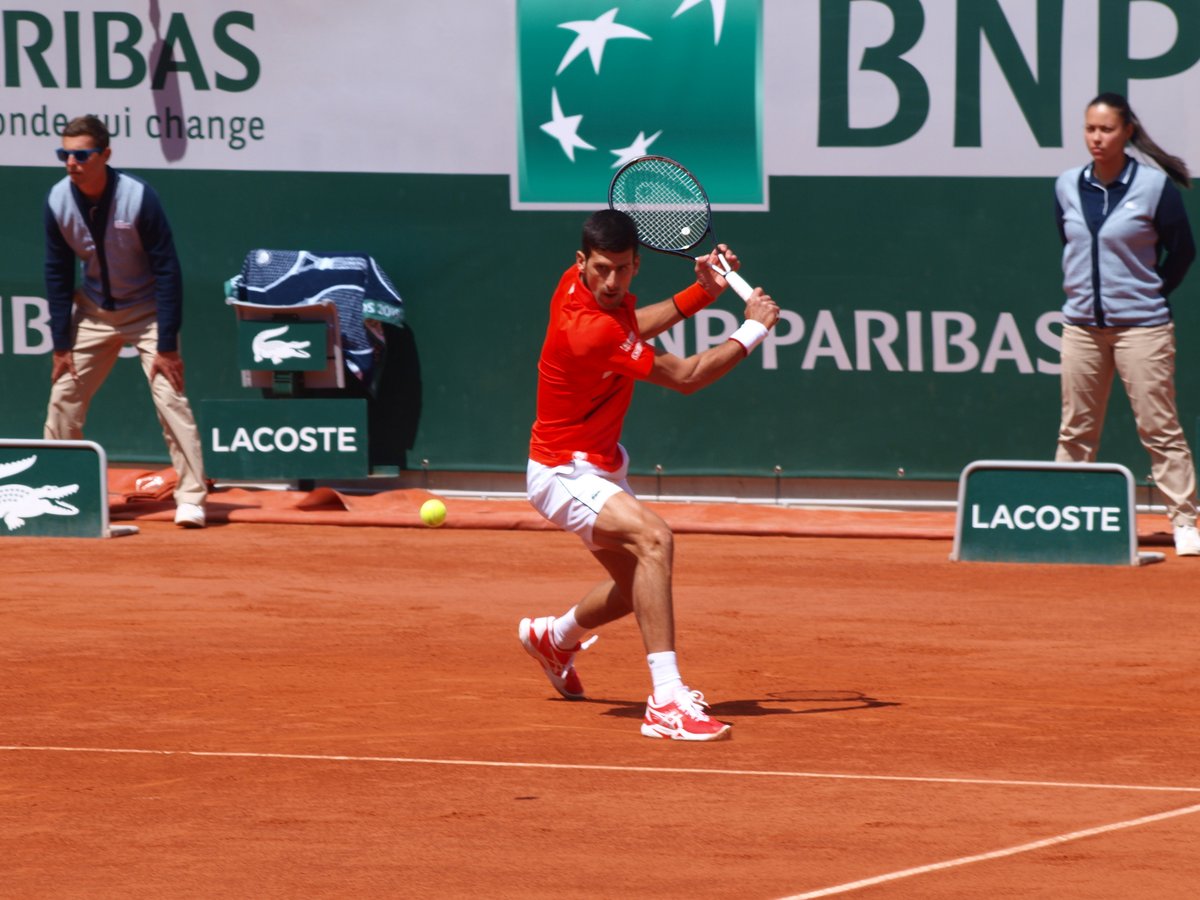
The narrative writes itself so cleanly that you almost wonder if sports journalists have a template saved on their desktops. Novak Djokovic loses at Roland Garros—a tournament where he has won 4 times, reached 5 finals, and spent more hours on clay than most people spend in their own homes—and suddenly we are all supposed to nod gravely and intone: “Ah yes, Father Time. He is undefeated.”
Father Time. That invisible opponent. That force of nature. That cosmic entity apparently now fielding its own doubles team with every player under 25 who can hit a forehand with conviction. The absurdity is not that Djokovic lost. The absurdity is that we have collectively agreed to frame every athlete’s decline as a battle against an adversary who wears a hood and carries a scythe, rather than, say, a loss to a better player on a given day.
Let’s be clear about what happened at the French Open in 2026. A 39-year-old man who has spent the last two decades dismantling the world’s best tennis players faced opposition—younger, fresher opposition—and came up short. This is not a tragedy. This is not even particularly surprising. It is, in fact, the most predictable thing that could happen. And yet the sports media machine has transformed it into an existential struggle between one man and the passage of time itself.
The theatrical elements here are magnificent. We have the veteran warrior, still capable of moments of brilliance, still dangerous, still a name that makes opponents nervous. We have the young guns, hungry and unafraid, treating Djokovic like any other scalp on the wall rather than a demigod. We have the commentators who, just five years ago, were insisting he might win every Grand Slam ever again, now solemnly discussing “the end of an era.” And we have the fans, split between those who cannot accept that decline is real and those who have already written the epitaph.
But here is what is genuinely absurd: the idea that Father Time is some kind of conspiracy. That he is colluding with younger players. That there is drama in the simple fact that a human being, however exceptional, cannot play elite tennis at the same level when he is 39 as when he was 29. The melodrama is not in Djokovic’s loss. The melodrama is in how we talk about it.
Djokovic has won 24 Grand Slams. He has spent more weeks at number one than any player in history. He has accumulated more Masters titles than most players dream of. And now, because he did not win the French Open in a year when he is nearly 40, we are supposed to believe that time itself has entered the chat as an antagonist. That Father Time is out there, actively scheming, recruiting younger players, whispering in their ears: “Go on, take him down. It is your turn now.”
The real story—the one that requires no mythological framing—is far less poetic but infinitely more interesting. Djokovic is still good. Remarkably good. But the distance between “still good” and “the best player in the world” has grown. Other players have caught up. Some have passed him. The gap is no longer five sets; it is now two or three. And that is not Father Time’s doing. That is the natural order of sport. That is what happens when a new generation learns from watching the old one, trains harder, plays smarter, and arrives at the table hungrier.
The French Open exit is not a sign that Father Time is closing in. It is a sign that the sport has moved on. And perhaps that is what makes people uncomfortable. Because if we admit that Djokovic is simply not the best player anymore—that he has been surpassed not by time but by talent—then we lose the romantic narrative. We lose the chance to discuss his “legacy” and his “place in history” and all the other consolation prizes we offer to athletes who can no longer win.
So the media will continue to invoke Father Time. It is easier. It is more poetic. It lets everyone off the hook. Djokovic was not beaten by a better player; he was beaten by the universe. The young players are not more talented; they are simply younger. And Djokovic’s loss is not a loss at all—it is a meditation on mortality.
Meanwhile, the actual tennis continues. The actual competition continues. And somewhere, a 25-year-old is beating Djokovic and wondering why everyone insists on crediting the Grim Reaper when they should be crediting themselves.
The French Open saga will continue, as these things always do. Djokovic will win somewhere else, or he will not. The young players will keep getting older. And Father Time will take all the credit, as he always does. That is the real scandal—not that Djokovic lost, but that we have created a mythology so complete that we cannot see what actually happened.