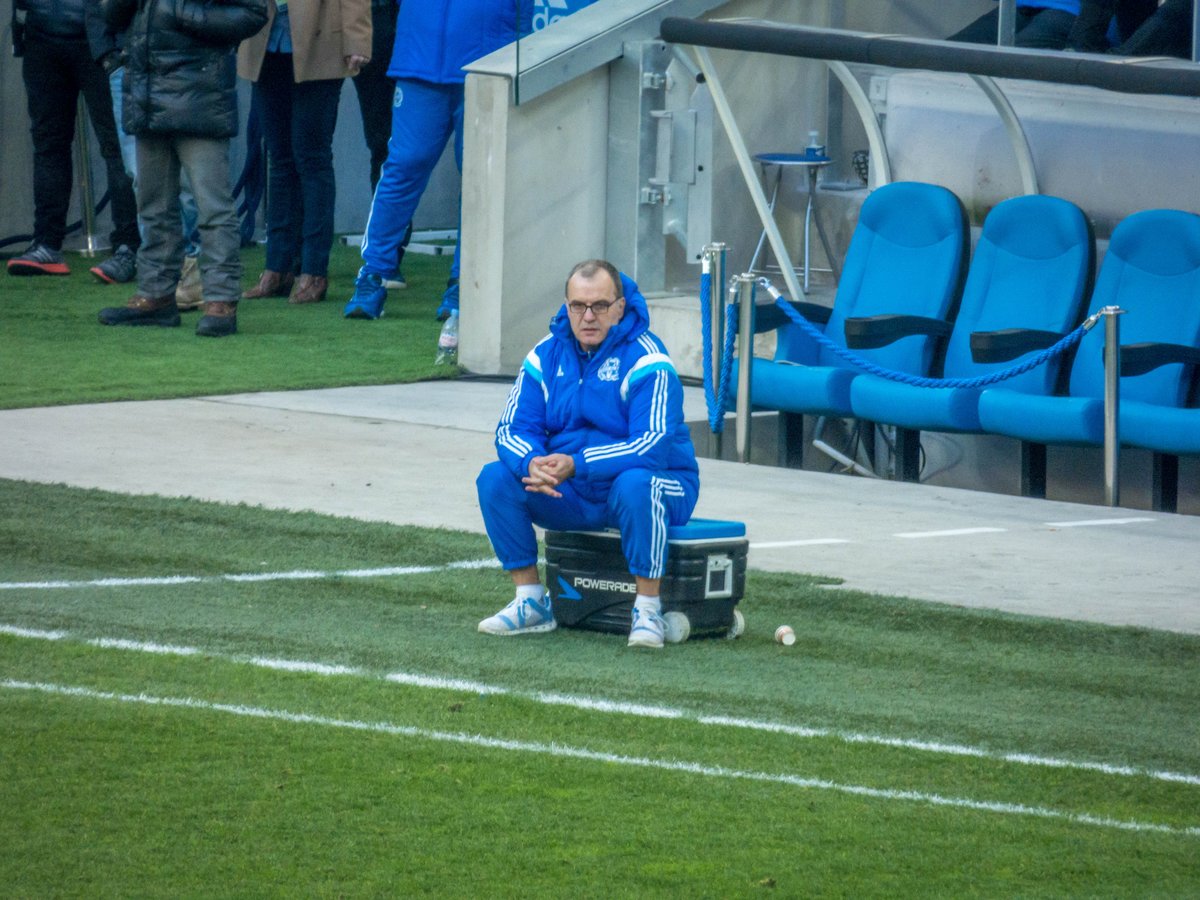
Marcelo Bielsa has watched more football than you have lived. Not more than you have watched — more than you have lived. While you were sleeping, eating, arguing with strangers online, showering, pretending to work, Bielsa was in a darkened room somewhere, eyes locked on a screen, watching a 1987 Segunda División match from a camera angle that probably violated several laws of physics and decency.
The man is now leading Uruguay into the World Cup, and yes, he has presumably watched every match Uruguay has ever played. He has watched matches they almost played. He has watched training footage of players who are now dead. This is not dedication. This is a lifestyle choice that makes doomscrolling look like a productive afternoon.
What makes Bielsa’s obsession genuinely fascinating — and genuinely absurd — is that it works. His Leeds United side nearly won the Premier League in 2019–20 not despite his video consumption but because of it. He had watched so much football, studied so many patterns, that he could predict what an opponent would do three seconds before they knew themselves. He was playing 4D chess while everyone else was still figuring out the board.
But here is where the satire of modern football culture becomes impossible to distinguish from reality: we have all become Bielsa now. Not to his degree, obviously. We have jobs. We sleep occasionally. But the infrastructure exists for anyone to become a Bielsa if they wanted to. Every match is available on demand. Every angle. Every replay. Every slow-motion breakdown. YouTube channels exist solely to dissect a single player’s movement patterns across an entire season. There are subreddits dedicated to analyzing the tactical implications of a goalkeeper’s distribution in a match that happened three years ago.
We have built a world where Bielsa’s extreme video consumption is no longer eccentric — it is just the logical endpoint of a system that treats sports footage as an infinite, constantly refreshing resource. Watch this match. Now watch the same match from a different angle. Now watch the opponent’s previous ten matches. Now watch their training videos. Now watch interviews with their physiotherapist. The content is there. The time is not. But the content is there.
This is where Bielsa’s other famous quirk enters the picture: the litter picking.
Yes, the same man who has spent approximately forty thousand hours watching football also famously picks up litter wherever he goes. A Leeds player once described watching Bielsa bend down mid-conversation to grab a piece of trash from the ground. He does not announce it. He does not make a show of it. He simply cannot walk past rubbish without removing it.
There is something almost poetic about this contradiction. A man so consumed by the infinite consumption of football footage that he has to physically clean up after that consumption with his own hands. It is as if Bielsa intuitively understands that all this watching, all this analysis, all this endless video content — it leaves a mess. And someone has to pick it up.
Modern sports culture is the litter. The endless YouTube compilations, the 47-minute tactical breakdowns of a single pass, the Twitter threads analyzing the psychological implications of a player’s pre-match outfit, the subreddits where people argue about whether a tackle from 2015 should have been a red card — this is all litter. It accumulates. It piles up. We keep producing it because the system rewards its production, and we keep consuming it because it is there and it is free and it feels like we are learning something.
Bielsa watches all of it. He watches it seriously. He watches it the way a monk reads scripture. And then he picks up the trash.
The hilarity is not that Bielsa is eccentric. The hilarity is that he is not eccentric enough. He is simply living in the logical extreme of a world we have all chosen to inhabit. He watches more football than anyone else, yes. But the difference between him and a normal football fan in 2026 is one of degree, not kind. We are all in Bielsa’s video vault now. We have just not admitted it yet.
So when Uruguay takes the pitch at the World Cup under Bielsa’s management, remember: he will have watched more footage of their opponents than those opponents have watched of themselves. He will have studied patterns that do not yet exist. He will have prepared for scenarios that may never occur. And somewhere along the way, he will have picked up some litter, because even a man obsessed with the infinite consumption of football content understands that someone has to clean up.
The rest of us are still deciding whether to keep watching or start picking.