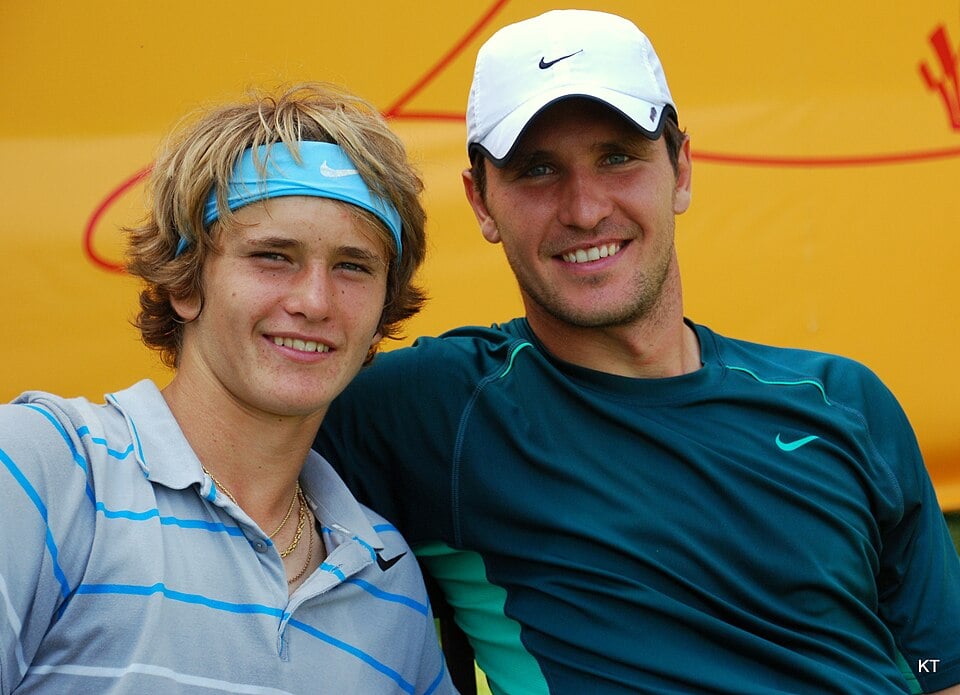
Alexander Zverev is going to finish 2026 as the world number one. The sport has been waiting years for him to be the best player on the planet, and now it has arrived, courtesy of a Carlos Alcaraz defeat in Shanghai. The forehand did not change. The serve did not change. What changed, according to a theory that nobody serious is putting forward but everybody is now repeating, is a sock.
A single lucky sock, worn on the left foot, held up in a Shanghai corridor like a relic. Nobody is claiming the sock beat Alcaraz. Nobody has to. Modern tennis has reached the point where a year-end ranking is decided by who has the most elaborate pre-serve routine, and Zverev has built his like a cathedral: bounce the ball a set number of times, adjust the sweatband, tap the frame twice, then consult the sock.
This is the same sport whose press rooms have turned into therapy sessions, where a player can speak for twelve minutes about how he feels and then ask the moderator whether he is permitted to leave. The superstitions have grown to match the wordiness. Every match now comes with a ritual, every ritual with a sponsor, and every sponsor with a sock.
So yes, the number one ranking is real. The points are real. The sock, we are assured, is also real, and it is staying in the bag for the rest of the season.