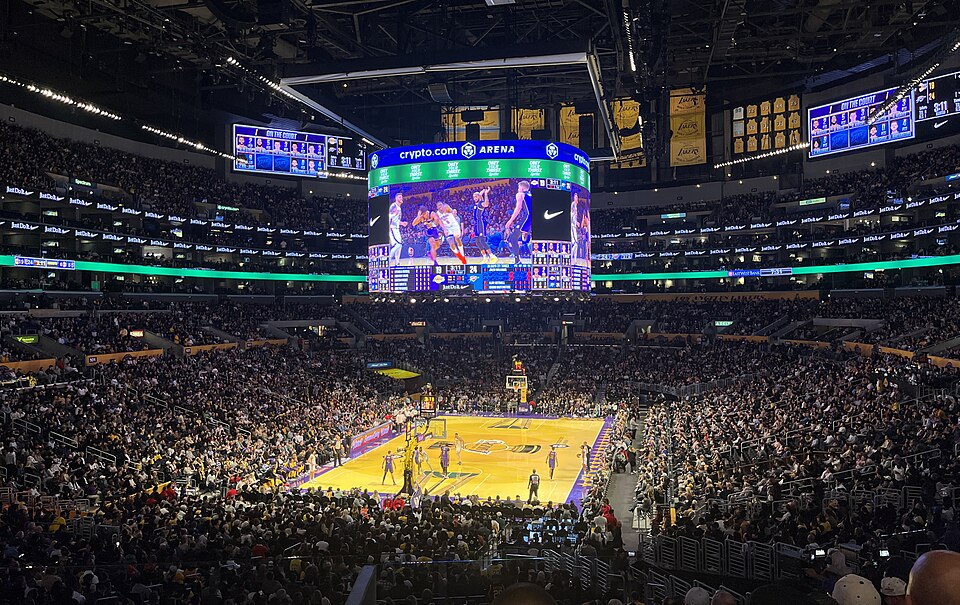
WASHINGTON D.C. — In an unprecedented move that has left constitutional scholars scrambling to find precedent in the Federalist Papers, both chambers of Congress reconvened on an emergency basis Tuesday evening following the Oklahoma City Thunder’s 1-0 series lead over the Los Angeles Lakers in the NBA Conference semi-finals. The session, called by Speaker Kevin McCarthy and Senate Majority Leader Chuck Schumer in a rare moment of bipartisan unity, lasted exactly forty-seven minutes and concluded with no legislation passed, no votes cast, and a unanimous decision to simply “wait and see what Shai Gilgeous-Alexander says in the post-game presser.”
“This is bigger than infrastructure,” declared Senator Mitch McConnell from the chamber floor, his voice trembling with the weight of the moment. “We need to understand what this means for us as a nation. The Thunder are the defending champions. The Lakers have LeBron. This game — this singular game — it changes everything we thought we knew about ourselves.”
The emergency session was triggered after Thunder’s victory prompted a cascade of late-night texts between key members of the Joint Chiefs of Staff, all of which contained only question marks and fire emojis. One Pentagon official, speaking on condition of anonymity, admitted that for approximately ninety minutes after the final buzzer, no one in the Defense Department was certain whether the Thunder’s win constituted a national security threat or a national security asset.
Meanwhile, in the Western Conference, the Minnesota Timberwolves’ series-opening victory over the San Antonio Spurs — achieved despite Victor Wembanyama’s record-breaking defensive performance — has prompted the State Department to issue a formal diplomatic note to France requesting clarification on what exactly the nation had created when it produced Wembanyama. “We need to know if this is an export we should be concerned about,” the note read, before being hastily retracted and replaced with a more measured statement expressing “admiration for international basketball talent.”
The absurdity reached its crescendo when CNN broke into regularly scheduled programming to announce that the Pistons and Cavaliers would meet in the Eastern Conference semi-finals, treating the information with the gravitas typically reserved for Supreme Court decisions or acts of Congress. One anchor actually said, “This is the matchup America didn’t know it needed,” before pausing, seeming to realize that America, in fact, had not expressed any need for this matchup, and that he had simply invented America’s emotional requirements based on a playoff bracket.
LeBron James, having scored 28 points to lead the Lakers past the Rockets and set up their Thunder showdown, found himself at the center of a media firestorm that somehow blamed him simultaneously for both winning and losing. One prominent sports commentator spent twelve minutes on air explaining how James’s performance was actually a referendum on American exceptionalism, while another insisted it revealed deep truths about generational wealth inequality. Neither had watched the full game.
What’s most remarkable is the speed with which these games have been elevated from sporting contests to cultural divining rods. A Thunder victory is no longer simply a Thunder victory — it is a statement about resilience, about championship pedigree, about the very fabric of what it means to be a successful franchise in the modern era. The Timberwolves’ win is not merely a playoff triumph; it is evidence that the basketball gods are redistributing power in ways we must all contemplate. Victor Wembanyama’s defensive record is not a statistical achievement; it is apparently a warning about what international talent portends for the American sporting landscape.
The press conferences have become more important than the games themselves. Journalists now attend these post-victory addresses the way political reporters once covered State of the Union speeches — searching for coded language, parsing every word choice, waiting for the moment when an athlete might accidentally reveal something about the human condition. When Shai Gilgeous-Alexander takes the podium, it is treated as though he is about to deliver remarks on the state of the union, not simply explain why his team executed better in the fourth quarter.
Congress has since adjourned without formally addressing why they reconvened, but sources suggest they will reconvene again after Game 2. One staffer noted that the Senate cafeteria has already begun stocking extra coffee in anticipation of another all-nighter, this time devoted entirely to analyzing what the Thunder’s second consecutive victory might mean for the midterm elections.
It is, apparently, a time to be alive.