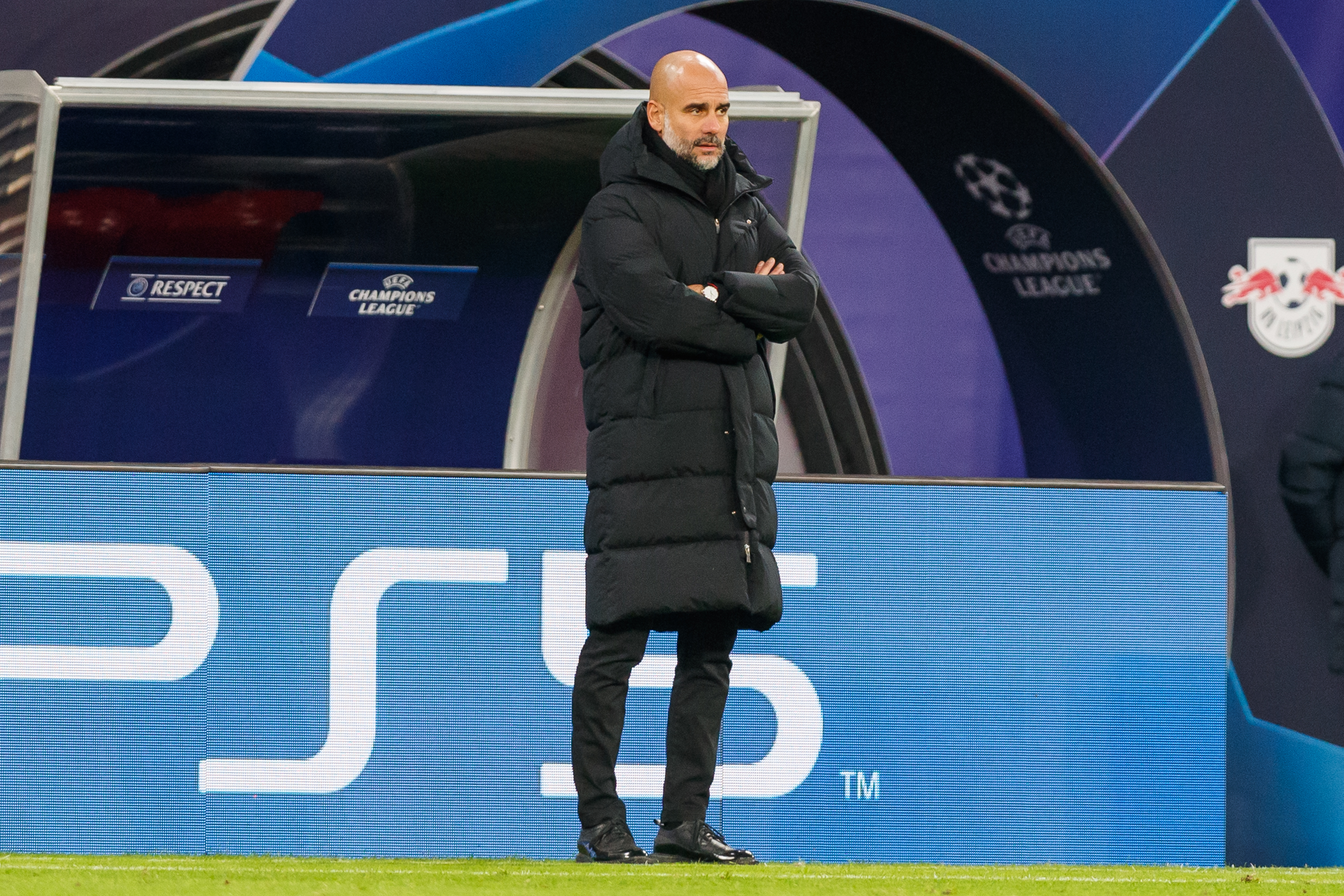
In what can only be described as the most audacious managerial decision since someone decided that watching a ball go into a net was more entertaining than literally anything else, Manchester City have announced they will replace Pep Guardiola with Enzo Maresca before next season.
Let us pause here. Pep Guardiola. The man who has won more trophies in the past five years than most clubs win in a decade. The tactical genius who made possession football look like a blood sport. The manager so meticulous that he probably color-codes his socks by opponent formation. He is leaving. And his replacement is a man whose greatest achievement so far is being enthusiastic.
This is not a criticism of Maresca, who seems like a perfectly pleasant human being. It is an observation about the state of modern football management, where the job has become so divorced from actual competence that we might as well replace the entire profession with a wheel spinner and a dartboard.
Think about what Guardiola has done at City. Four Premier League titles. Multiple domestic cups. A Champions League. A treble. He has turned Manchester City into something approaching a football algorithm—a machine so efficient that their worst performance still somehow involves winning 3-1 against a team that played well. And now he is gone, replaced by a man whose tactical innovation consists of remembering that defenders exist.
The beautiful absurdity here is that this will be framed as progress. Within weeks, the football media will begin constructing a narrative in which Maresca represents a “fresh start” and a “new direction.” They will dust off the tired phrase about “the perfect time for a change” as if football clubs operate on some sort of emotional expiration date rather than, you know, whether they are winning things.
We have seen this film before. A successful manager departs. The club decides that success was actually stagnation. A new manager arrives with fresh ideas, which turn out to be the old ideas presented with slightly different color analysis on Sky Sports. The players, who were world-beaters under the previous regime, suddenly become “underperforming” or “lacking hunger.” By year two, fans are calling for the new manager’s head and wistfully remembering the old one.
What makes this particular decision genuinely spectacular is the scale of what is being abandoned. Guardiola did not just win matches. He fundamentally changed how an entire sport thinks about itself. He made teams that dominate possession and territory—the kinds of teams that would have been derided as “boring” in previous eras—into the most compelling football on the planet. He won doing it his way, without compromise, without apology.
And now he is being replaced by someone whose primary qualification appears to be that he is not Pep Guardiola. Which is, admittedly, a qualification that approximately 8 billion people on Earth possess.
The timing is particularly inspired. Manchester City are not in crisis. They have not collapsed into irrelevance. They have not become a laughingstock. By any reasonable metric, they remain one of the best-run clubs in world football. But that is precisely when English football decides a change is needed—when things are going well enough that the media can frame a managerial departure as visionary rather than reactionary.
Imagine if other fields operated this way. A surgeon performs fifty successful operations in a row. The hospital board decides it is time for a “fresh direction” and hires someone enthusiastic but largely untested. A pilot lands a hundred flights without incident. The airline replaces him with someone who really wants the job and has good energy. A chef earns a Michelin star. The restaurant fires them and hires their sous chef’s nephew.
Yet in football, this is considered smart thinking.
Maresca will arrive at Manchester City with all the weight of expectation that comes with replacing a legend. He will have access to the same players, the same resources, the same infrastructure. And when—not if, when—results dip or the team plays a match that looks vaguely different from the Guardiola template, the narrative will shift. He will be “finding his feet.” He will be “implementing his philosophy.” The patience will be extended, the excuses will be manufactured, the faith will be expressed in lengthy statements from the club’s ownership.
But somewhere in the background, a clock will start ticking. Because football does not reward patience anymore. It rewards novelty. It rewards the appearance of change. It rewards the decision to replace excellence with potential, the known quantity with the exciting unknown.
Guardiola will move on to another project. He will probably win more trophies somewhere else, because that is what Guardiola does. And Manchester City fans will spend the next three years watching their team and thinking about what might have been if only someone had not decided that success was the enemy of progress.
Welcome to modern football management, where the only constant is change, and the only thing we have learned from history is that we are incapable of learning from history. Maresca’s appointment is not a shock. It is a inevitability dressed up as ambition.